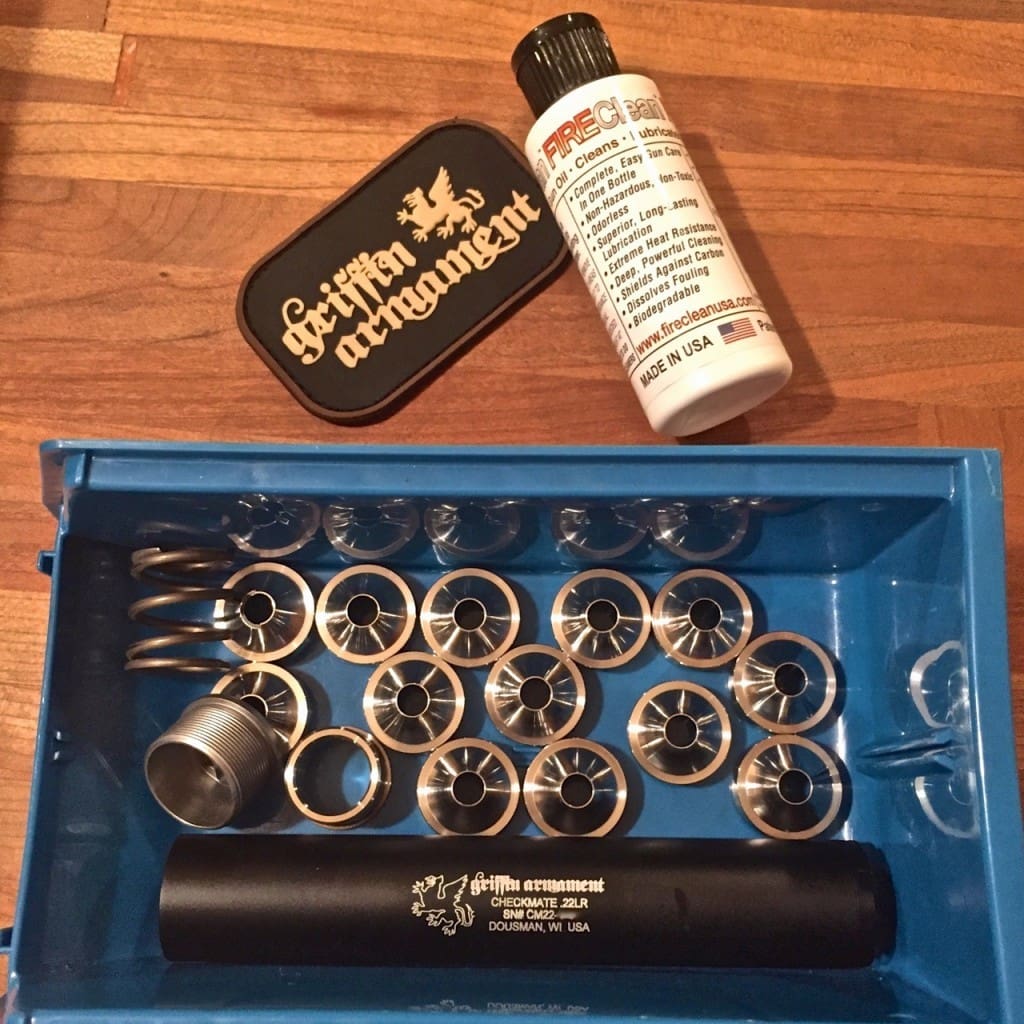
Suppressors are very difficult to clean. Unsuppressed, all the hot gas and lead is expelled out of the barrel, however in addition to the sound a silencer also has to catch all the hot gas, lead and carbon from the cartridges ignition. This creates a cleaning nightmare in rimfire and low pressure handgun suppressors.
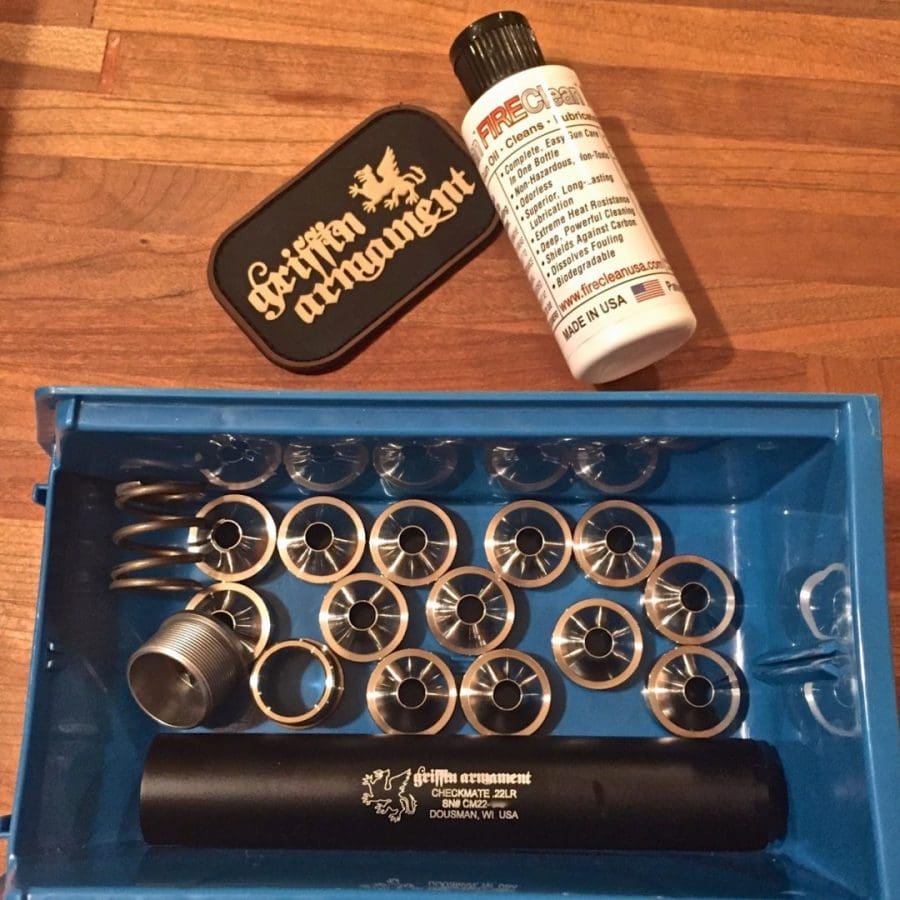
Rimfire suppressors are the worst. So before I even shot my new Griffin Armament Checkmate .22lr suppressor I heated it and coated it several times with FireClean. I’ve used FireClean in our Marksmanship Camp rifles with great success, so I wanted to see how it would perform on a virgin suppressor. After over 500 rounds I was pretty impressed with the results. Note that the owner’s manual recommends cleaning every 250 rounds. I doubled that easy:
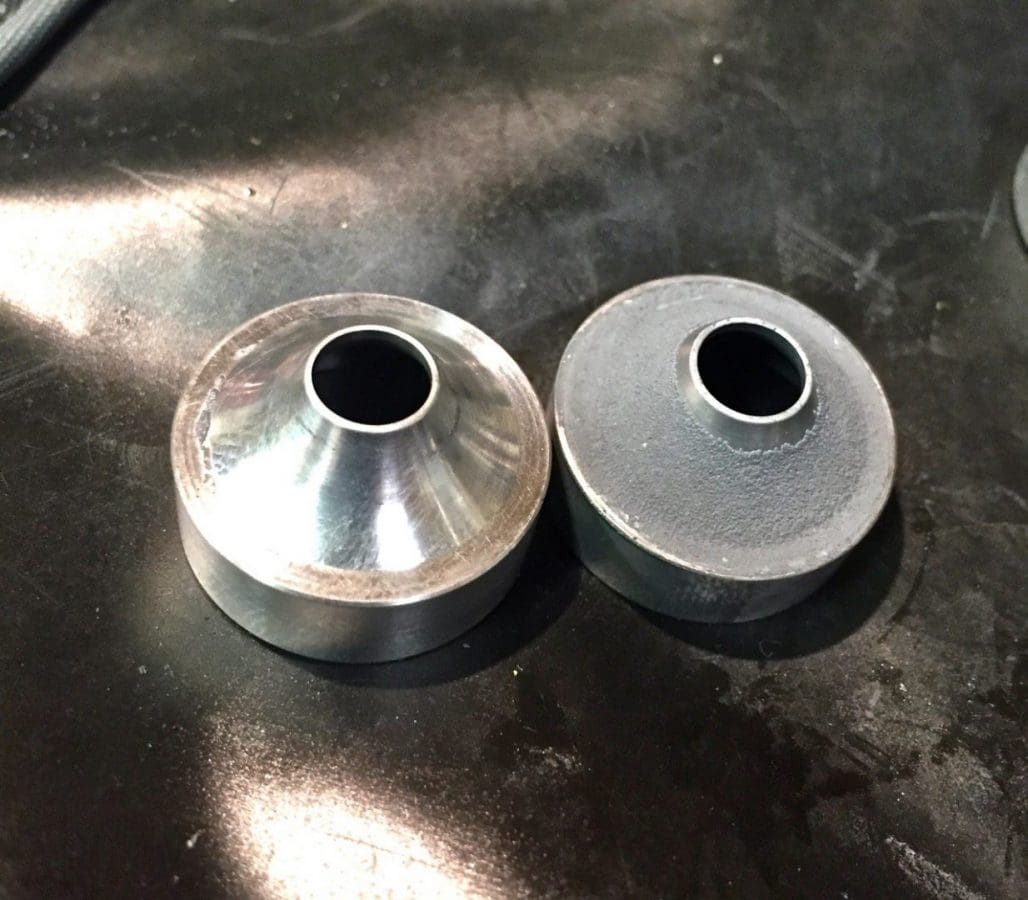
The FireClean still wet inside the can is a testament to how well sealed the Checkmate is, most of that blew out of course, but I treated on April 12, shot several hundred rounds though it in 3-4 range sessions, then took it apart on July 3 for this video. Next time I’ll take some better pics of all the fouling, but here is a pic of 2 baffles side by side, before and after cleaning: