

Late Fall Brings the Best of Both Worlds

SABINE LAKE & PASS
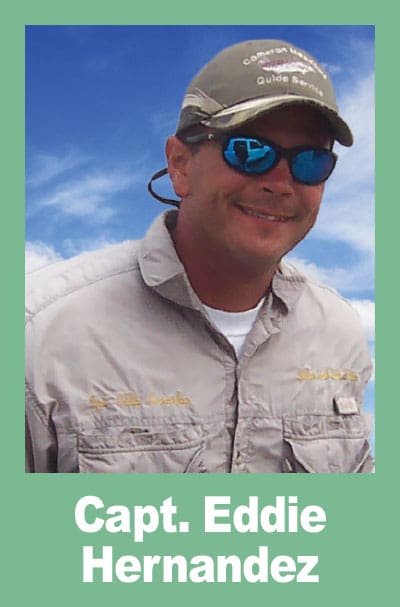
Reported by CAPT. EDDIE HERNANDEZ
Email Eddie Hernandez at ContactUs@fishgame.com
ANOTHER WINTER SEASON is rapidly approaching and we all have so much to be thankful for. Everyone is excited about getting to spend quality time with family and friends during the holidays and the children are all anxiously awaiting Santa’s arrival.
Texas coastal fishermen should also be excited for all these things as well as the great angling opportunities that this season brings. Late fall and early winter is unique when it comes to trout fishing on the upper coast of Texas. What makes it special is that we get to experience two very different fishing patterns while targeting speckled trout in November and December.
Basically, we have the best of both worlds. With our usual mild winters, December gives us an extension of the fantastic fall bird action that typically lasts through about the first half of the month. Then, as if someone flips a switch, we can have an Arctic front that drops the temperature into the lower 30’s for a few days.
We have, on numerous occasions been running the birds on mild December mornings, and then, the next thing you know, one of those fronts pushed through and the next day we were launching the boat in 33 degree temperatures. Our strategy changed overnight and we were drifting the flats the next day.
Fortunately, for us here on the upper coast we have some nice cold water real estate that holds some good fish at least fairly consistently when the mercury dips down into the chill zone.
Making long drifts on the flats or shorelines of Galveston and Sabine until you are able to zero in on them can result in a box of hefty wintertime trout. Morning Glory, Red Shad and Glow Assassins on 1/8 or ¼ oz. lead heads work really well, as do Corkys, Catch 2000’s and topwaters.
Another thing that is exciting to us is the number of redfish that we catch in early winter. The shorelines and bayous hold lots of reds year round but November and December are two of our favorite months to seek them out. The presence of bait especially mullet is a big player, so if you see mullet on the bank there’s a very good chance there will also be hungry reds there too. Straight tailed soft plastics rigged on 1/8 oz. lead heads should be hard for them to resist. Darker colors like Root Beer, Morning Glory, and Red Shad will usually draw more strikes.
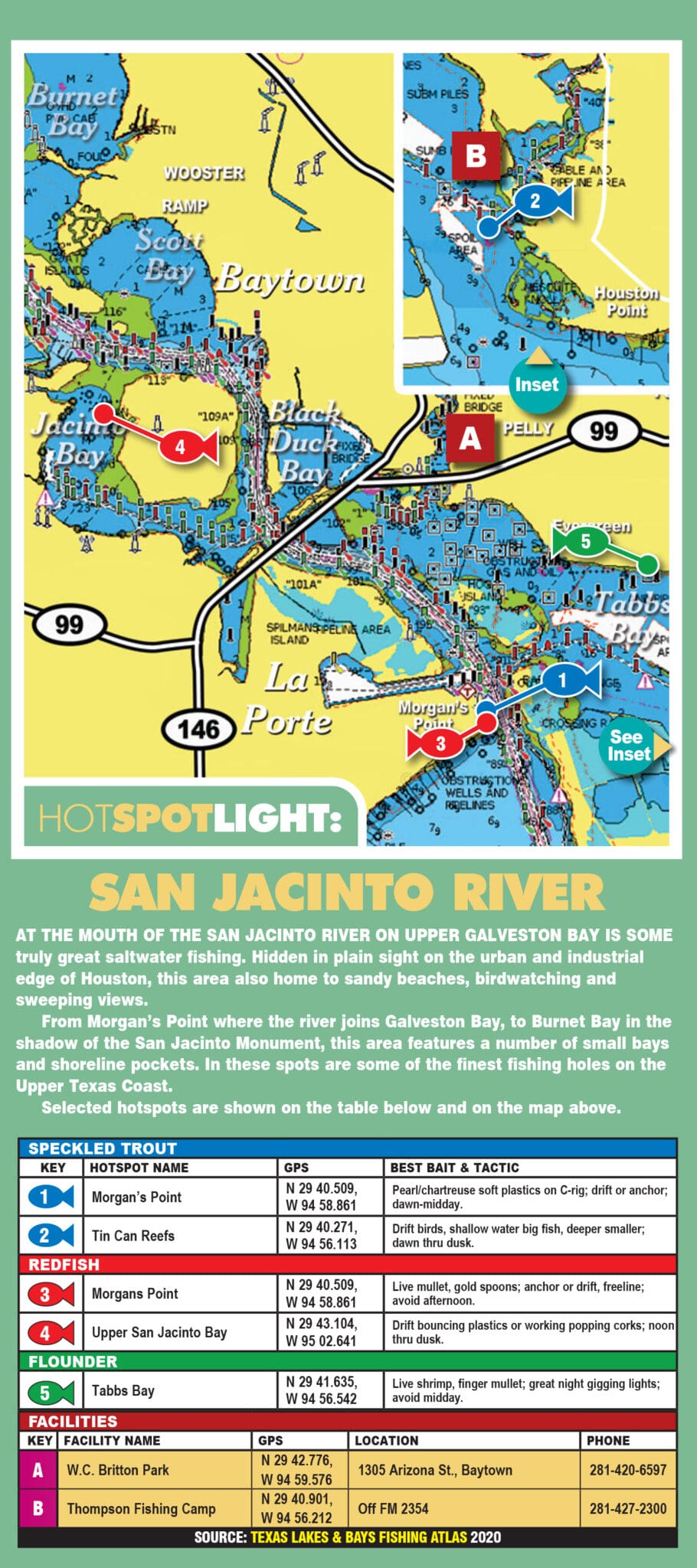
THE BANK BITE
Location: Mesquite Point (South end of the lake by the Causeway Bridge).
Species: Black Drum, Reds, Whiting.
Best Baits: Fresh Dead Shrimp, Cut Mullet.
Best Times: All day with tidal movement
• • •
• • •

Location: Chocolate Bay
Hotspot: Chocolate Bay Shoreline
GPS: N 29 7.797, W 95 9.54
(29.1300, -95.1590)
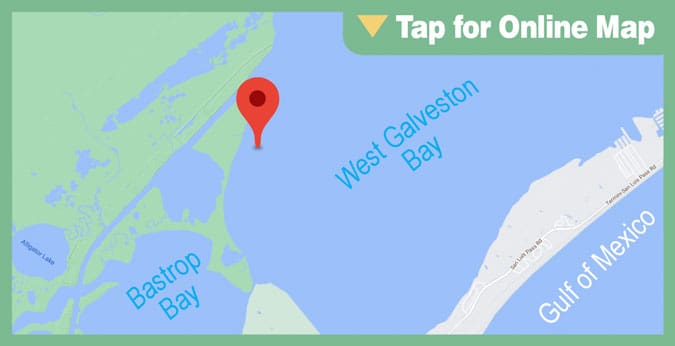
Species: Speckled Trout
Best Baits: Live Shrimp under a popping cork
Tips: The fish are going through a transition period, moving from one type of structure to another, from sand bottom too a muddy shell bottom.
Location: Chocolate Bay
Hotspot: The Narrows
GPS: N 29 10.983, W 95 6.4
(29.1831, -95.1067)
Species: Redfish
Best Baits: Down Soft Paddle Tails
Tips: Bigger fish will eat fin fish in the winter less, whereas the smaller trout and school fish will eat lots of shrimp and smaller baits.
Location: Christmas Bay
Hotspot: Wildlife Refuge Shoreline
GPS: N 29 3.6329, W 95 12.1849
(29.0606, -95.2031)
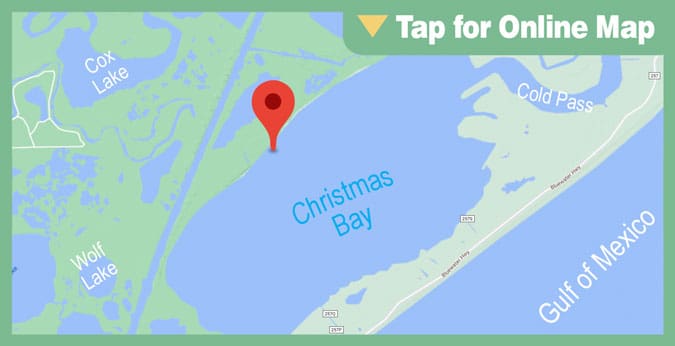
Species: Speckled Trout
Best Baits: TTF Trout Keller soft plastics
Tips: You will see birds working in the middle of the bay. The trout will be in the deeper water.
Location: Christmas Bay
Hotspot: Christmas Point
GPS: N 29 4.663, W 95 10.495
(29.0777, -95.1749)
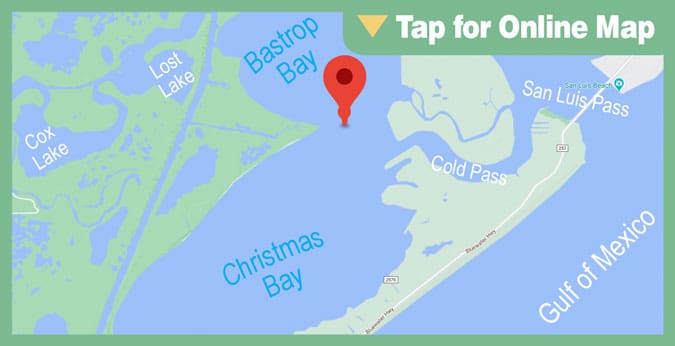
Species: Redfish
Best Baits: TTF Trout Keller soft plastics
Tips: Redfish will be schooled up in the back lakes, sitting on the banks feeding on shrimp, finger mullet, etc.
Location: Galveston East Bay
Hotspot: Hanna’s Reef
GPS: N 29 28.92, W 94 43.6559
(29.4820, -94.7276)
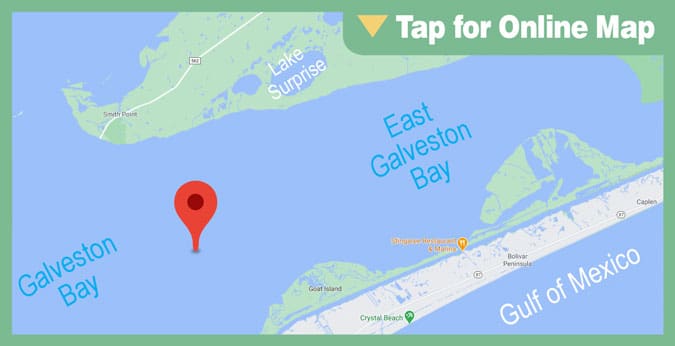
Species: Speckled Trout
Best Baits: Bass Assassin soft plastics
Tips: Use 1/8- and1/4-ounce jig heads. The 1/8 is good for when the fish are up and under working birds. If you are fishing slicks, throw the 1/4 ounce.
Location: Galveston East Bay
Hotspot: Richard’s Reef
GPS: N 29 31.429, W 94 45.3229
(29.5238, -94.7554)
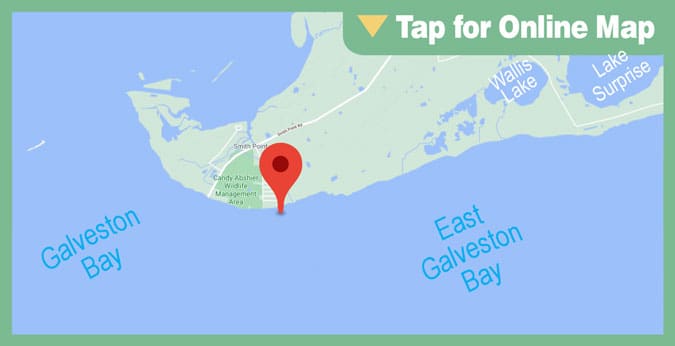
Species: Redfish
Best Baits: Topwaters
Tips: A good topwater is the She Dog in the 808 (orange/black/gold) colors. It works in any color of water, and it has a higher pitch rattle.
Location: Galveston East Bay
Hotspot: Tong Reef
GPS: N 29 32.2319, W 94 30.3509
(29.5372, -94.5059)
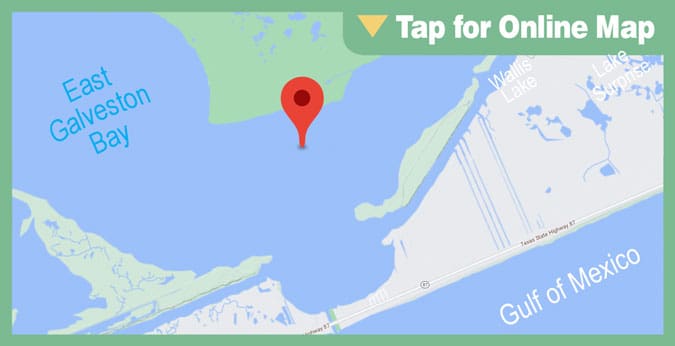
Species: Speckled Trout
Best Baits: Bass Assassin soft plastics
Tips: If you are catching a bunch of little fish from under the birds or out a slick, cut off the jig and tie on a topwater, and you will catch the biggest fish in the school.
Location: Galveston Trinity Bay
Hotspot: Hodges Reef
GPS: N 29 34.963, W 94 44.574
(29.5827, -94.7429)
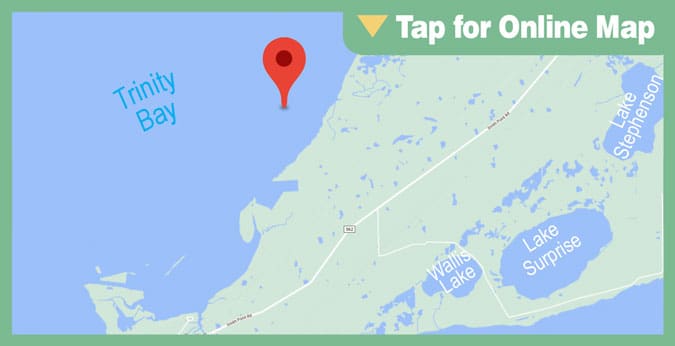
Species: Speckled Trout
Best Baits: Soft Plastics
Tips: Fish the shell reefs, beginning in 2-3 feet of water, working out to deeper locations. Watch continuously for slicks, birds working.
Location: Galveston Trinity Bay
Hotspot: Dows Reef
GPS: N 29 38.8579, W 94 54.1999
(29.6476, -94.9033)
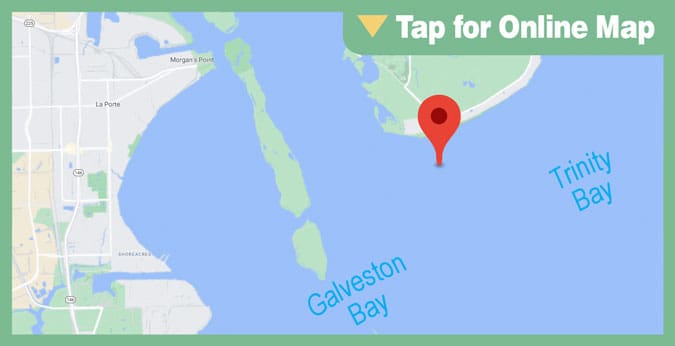
Species: Speckled Trout
Best Baits: Soft Plastics
Tips: Fishing the slicks … “Normally we throw tails or Corkys,” says Capt. Frazier. His favorite soft plastic is the Sea Shad from Bass Assassin.
Location: Galveston Trinity Bay
Hotspot: Beasley Reef
GPS: N 29 40.2679, W 94 52
(29.6711, -94.8667)
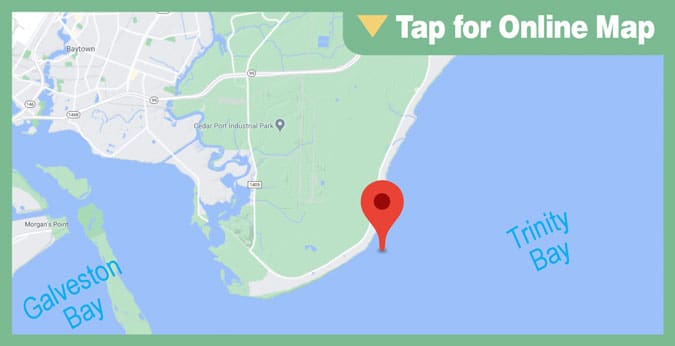
Species: Speckled Trout
Best Baits: Soft Plastics
Tips: If the water is extremely clear, fish a dark color…Limetreuse is the color of choice for most guys. A favorite dark color is Drunk Monkey with a Limetreuse tail.
Location: Galveston Trinity Bay
Hotspot: Burnet Bay
GPS: N 29 46.1136, W 95 3.0462
(29.7686, -95.0508)
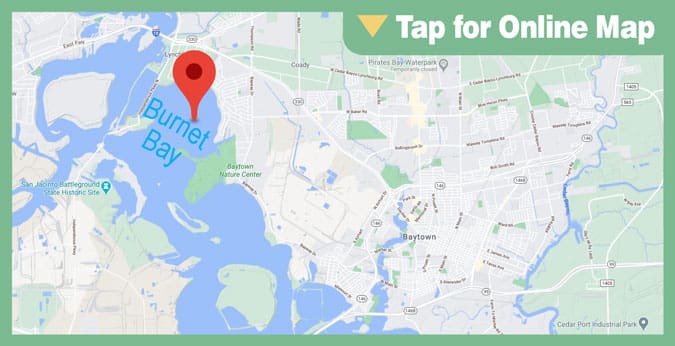
Species: Speckled Trout
Best Baits: MirrOlure MirrOdene
Tips: Favorite lure colors are pearl, chartreuse, black or plum, depending on what the water color is. He uses a 1/4-ounce jig head, dragging it along the bottom, letting the fish pick it up.
Location: Galveston Trinity Bay
Hotspot: Scotts Bay
GPS: N 29 44.628, W 95 2.364
(29.7438, -95.0394)
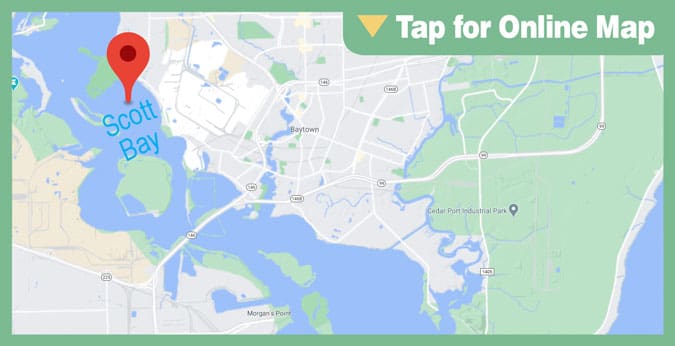
Species: Speckled Trout
Best Baits: MirrOlure MirrOdene
Tips: Concentrate on finding some mullet action. You won’t find a great deal, just a mullet or two, and then really work that area; don’t give up on it. I will spend 30-45 minutes casting in 180 degrees around me, making sure I have worked the whole area.
Location: Galveston West Bay
Hotspot: Greens Lake
GPS: N 29 16.248, W 94 59.538
(29.2708, -94.9923)
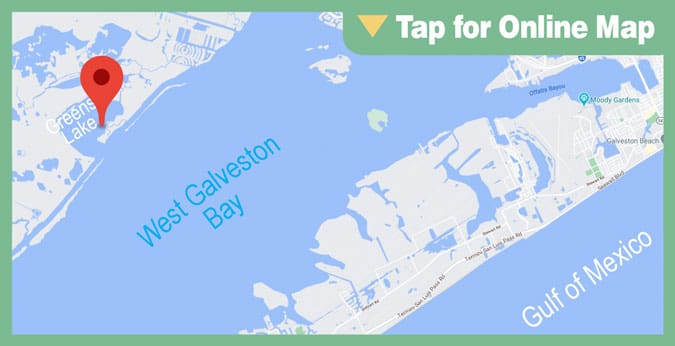
Species: Speckled Trout
Best Baits: MirrOlure MirrOdene
Tips: Your best bite is probably going to happen after 10:00 a.m., and probably be closer to 3:00 p.m., depending on moon phase and tidal flow.
Location: Galveston West Bay
Hotspot: North Deer Island Flats
GPS: N 29 16.954, W 94 56.223
(29.2826, -94.9371)
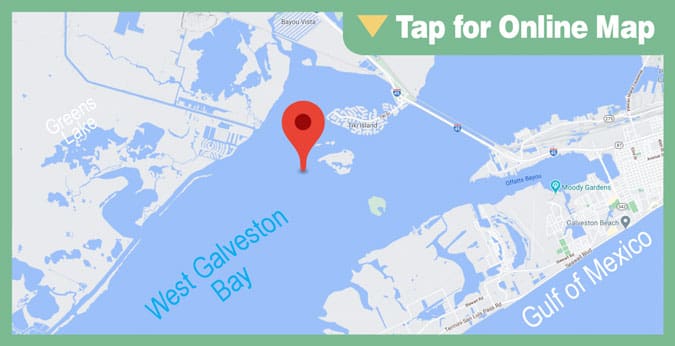
Species: Speckled Trout
Best Baits: MirrOlure MirrOdene
Tips: Fishing in December is more based on frontal passages than anything else. Fishing the day of the front, in his, opinion, is not time well spent.
Location: Galveston West Bay
Hotspot: South Deer Island Flats
GPS: N 29 16.2109, W 94 51.96
(29.2702, -94.9204)
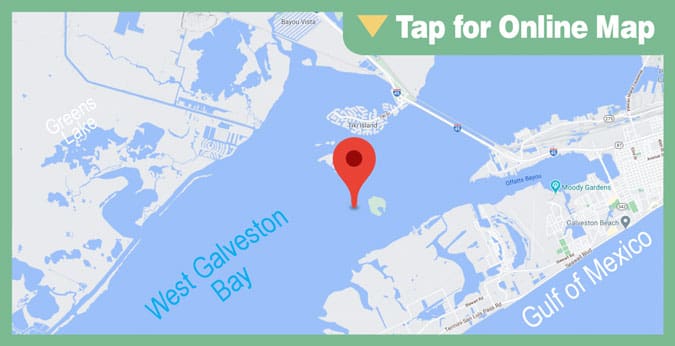
Species: Speckled Trout
Best Baits: MirrOlure MirrOdene
Tips: Best fishing will be two days after a cold front. Your water levels are going to be 2-3 feet lower than normal. Water temperatures in a normal December, should be in the higher 50s.
Location: Galveston West Bay
Hotspot: Confederate Reef
GPS: N 29 15.7549, W 94 55.177
(29.2626, -94.9196)
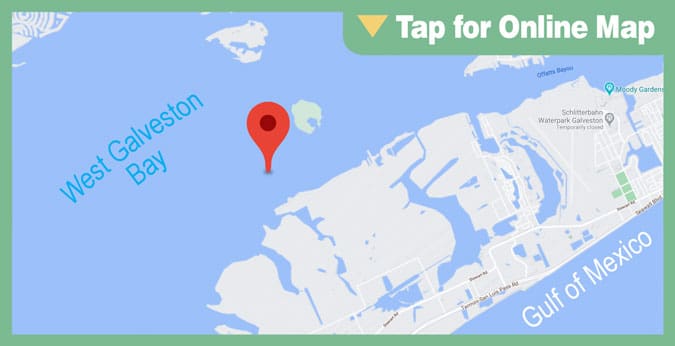
Species: Speckled Trout
Best Baits: MirrOlure MirrOdene
Tips: In West Bay, the number one spot for wading is Confederate Reef, North Deer Island. The bottom is pretty solid. Moving tides are essential. I don’t care which way it’s moving, as long as it’s moving.
Location: Galveston West Bay
Hotspot: San Luis Pass
GPS: N 29 4.851, W 95 6.7759
(29.0809, -95.1129)
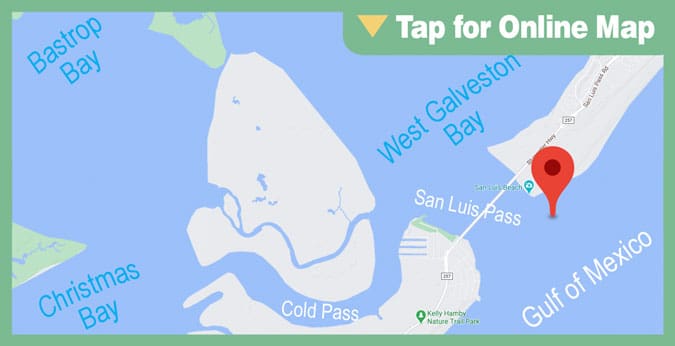
Species: Speckled Trout
Best Baits: Bass Assassin soft plastics
Tips: Determining how fast to fish the lure is based on how deep the water you are fishing… 1/8 ounce if the fish are up; under slicks, a 1/4 ounce jig head.
Location: Galveston West Bay
Hotspot: Dana Cove
GPS: N 29 12.768, W 94 58.308
(29.2128, -94.9718)
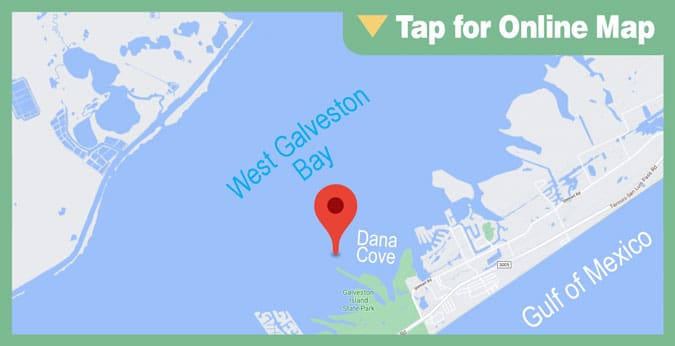
Species: Speckled Trout
Best Baits: Bass Assassin soft plastics
Tips: With a shad soft plastic, throw it out as far as you can and reel it back at different speeds until you find the speed the fish want. You don’t have to impart any action to the bait. The little paddle tail on the bait does it all.
Location: Matagorda East Bay
Hotspot: Boiler Bayou
GPS: N 28 38.4682, W 95 35.6479
(28.642089, -95.897222)
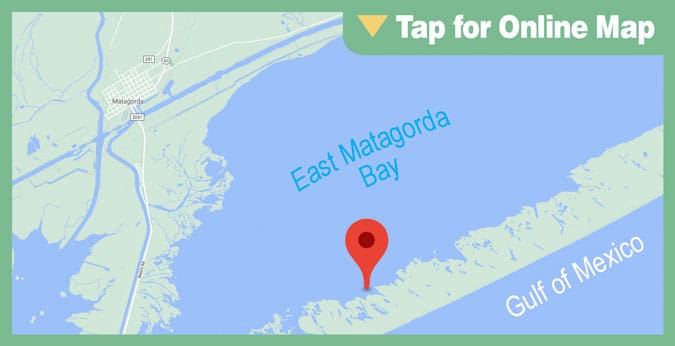
Species: Speckled Trout
Best Baits: Soft Plastics
Tips: Normally sometime in mid to late December this area will start getting some cold snaps that will start dropping the water temperature and that will drive the shrimp off.
Location: Matagorda East Bay
Hotspot: Half Moon Shoal
GPS: N 28 43.345, W 95 46.392
(28.7224, -95.7732)
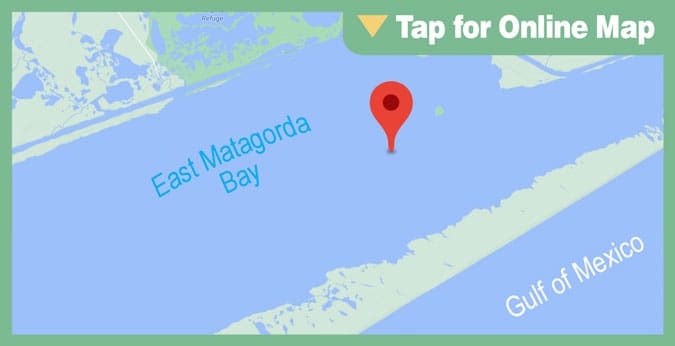
Species: Speckled Trout
Best Baits: Soft Plastics
Tips: One is on the east end, some big mud flats that we drift. They seem to concentrate a lot of fish on them.
Location: Matagorda East Bay
Hotspot: Burkhart Cove
GPS: N 28 38.4829, W 95 55.5829
(28.6414, -95.9264)
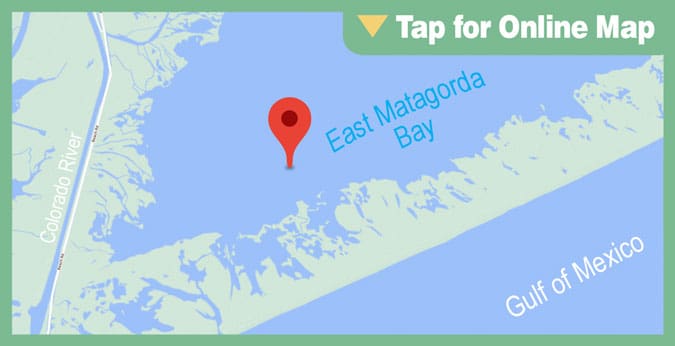
Species: Speckled Trout
Best Baits: Soft Plastics
Tips: The bird action could be anywhere on the bay, shorelines, middle of the bay in November.
Location: Matagorda East Bay
Hotspot: Old Gulf Cut
GPS: N 28 42.919, W 95 53.2099
(28.7153, -95.8868)
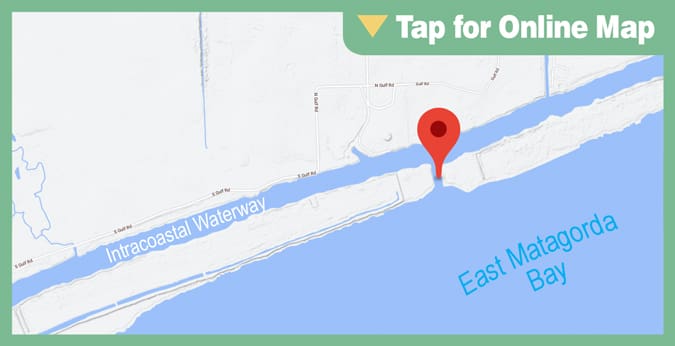
Species: Speckled Trout
Best Baits: Soft Plastics
Tips: Matagorda East Bay doesn’t have a strong tidal movement. Most of the water movement in and out of the drains is caused by winds. Fish shorelines that stretch adjacent to the drain.
Location: Matagorda East Bay
Hotspot: Live Oak Bay Cut
GPS: N 28 44.8339, W 95 44.391
(28.747483, -95.748902)
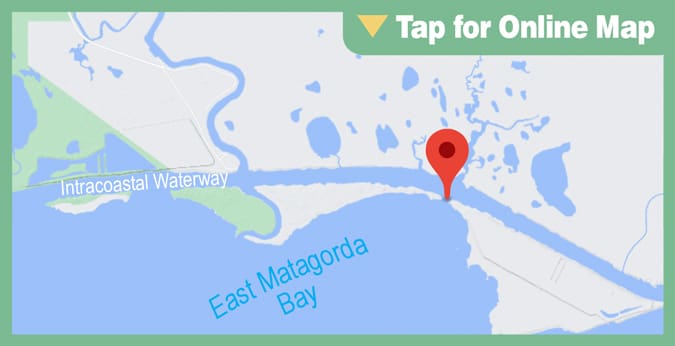
Species: Speckled Trout
Best Baits: Soft Plastics
Tips: When fishing from a boat, use a 1/8 ounce jig head; when wading, throw a 1/16 ounce Screw Lock jig head.
Location: Matagorda East Bay
Hotspot: St. Mary’s Bayou
GPS: N 28 39.621, W 95 56.667
(28.6604, -95.9445)
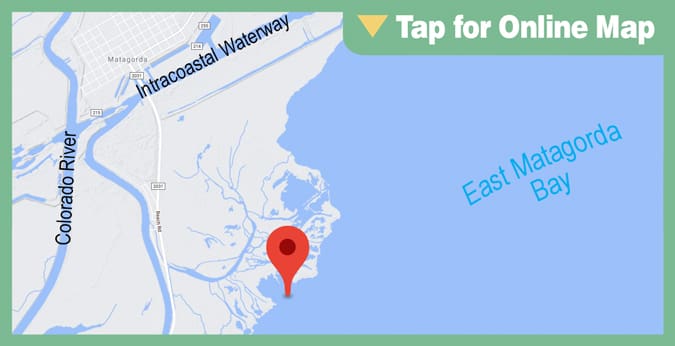
Species: Redfish
Best Baits: Topwaters
Tips: A good lure is the Dog Walker by Unfair Lures. It has more of a sway back to it; walks a lot tighter.
Location: Matagorda East Bay
Hotspot: Oyster Farm Drain
GPS: N 28 41.452, W 95 48.627
(28.6909, -95.8105)
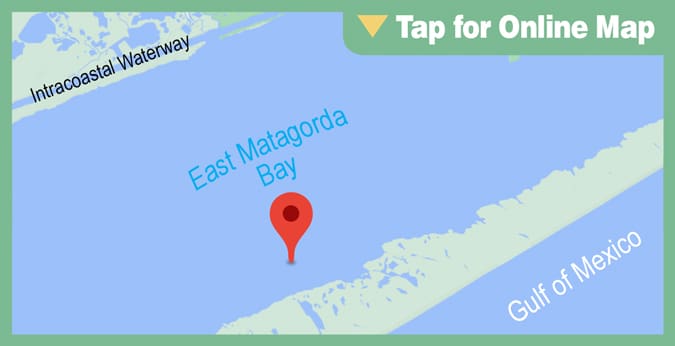
Species: Speckled Trout
Best Baits: Soft Plastics
Tips: Fish the birds. If they stay grouped together, I’ll troll from 40-50 yards away from them, and drift into them. They have been small fish, but last November we caught three fish between 28-29 inches.
Location: Matagorda
Hotspot: Selkirk Island
GPS: N 28 45.3324, W 95 59.3808
(28.7555, -95.9897)
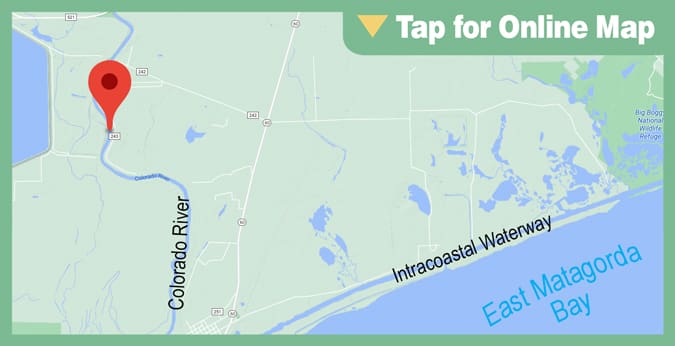
Species: Speckled Trout
Best Baits: Soft Plastics
Tips: The 521 bridge is about 8 miles above the Intracoastal. Most of the fish will be in an area around Selkirk Island.
Location: Matagorda
Hotspot: Colorado River
GPS: N 28 35.683, W 95 58.981
(28.5947, -95.9830)
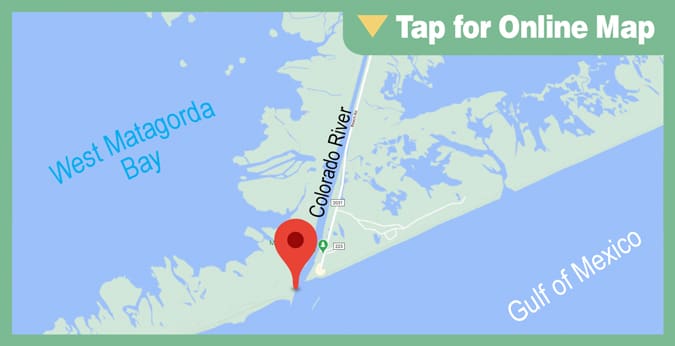
Species: Speckled Trout
Best Baits: Soft Plastics
Tips: The nice thing about fishing the river in the wintertime is that you can have a Norther blowing and you can find some protected areas that wind doesn’t seem to bother you that much.
Location: Matagorda West Bay
Hotspot: Cottons Bayou
GPS: N 28 30.45, W 96 12.3816
(28.5075, -96.2064)
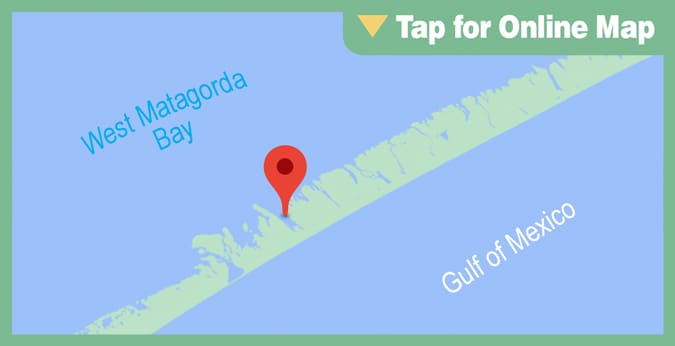
Species: Redfish
Best Baits: Soft Plastics
Tips: You want to be tickling the shell with your bait. As you drift you have to work it so you don’t hang up a bunch, but you want to keep it pretty close to the bottom.
Location: Sabine Lake
Hotspot: Black Bayou
GPS: N 29 59.866, W 93 45.1819
(29.9978, -93.7530)
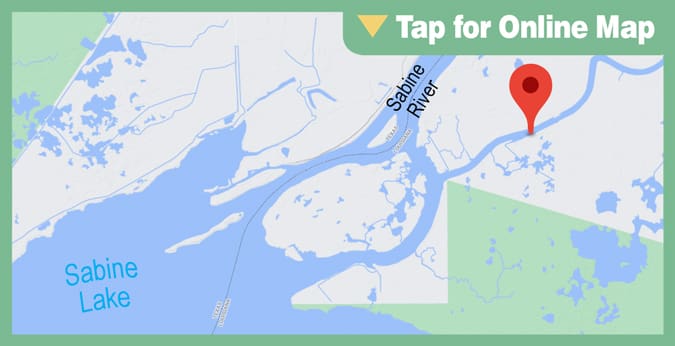
Species: Speckled Trout and Redfish
Best Baits: Soft Plastics with 1/4 jig heads
Tips: Effective colors are white/glow chartreuse, red and gold flake/chartreuse tail and Chartreuse Gold. Dip the tails with a limetreuse color or white to get a little contrast.
• • •
Cool Water Recipe for Speckled Trout

SAN ANTONIO BAY AREA
Reported by CAPT. CHRIS MARTIN

Email Chris Martin at bayflats@gmail.com
Visit Online: BayFlatsLogde.com
NOVEMBER AND DECEMBER are times when change has taken hold, and folks are prepping for the holiday season along with other seasons, such as duck season and deer season.
Fishing gets really good this time of year along our Texas coast. Many anglers try planning their trip based on forecasted tidal movements and predicted weather patterns.
Others, however, have to plan their trip around their availability. This can make locating speckled trout somewhat of a challenge.
Trout love clean water, water movement, and a food source. Put those three ingredients in one place at one time and you’ll almost certainly find an active trout bite.
Unfortunately, the odds are not in favor of the angler forced to fish on a particular day merely because his schedule says so. Here are a few tips on how we’ve continued to catch pre-winter trout when things aren’t always in your favor.
A big thing to remember about late fall and early winter trout is their dislike for idle water. They prefer water movement, whether it’s a brisk flow, or just a slight current. You need water movement to catch trout right now. If you can find moving water with active bait, you’re ahead of the curve.
Moving tides are great for speckled trout fishing, but don’t let a slack tide keep you from fishing this month, or next. When the cooler weather sets in, look to the flats located just adjacent to the deeper waters of the Intracoastal Waterway between Port O’Connor and San Antonio Bay.
A lot of those flats are mud flats with occasional grass and shell. They’re great places to explore on windy days, especially when the morning is cold, and the afternoons are warm.
Other options include the many back lakes strung across Matagorda Island. If you can locate a drain area emptying water from one lake to another, or emptying into San Antonio Bay, set up on the outside and fan the area with casts.
You might draw a surface strike with a top water bait, but most often the fish are going to be feeding in the lower portion of the water column in these areas.
Those who have fished the Texas coast know that when things start getting colder, trout start hitting baits worked primarily in the bottom half of the water column. We’ve fished a lot of different baits over the years, but some of the today’s best are those that worked so well decades ago, such as the MirrOlure crankbaits, and of course the Catch 2000.
Corkys will also become very popular in cooler weather and will usually remain at the top of many lists throughout April and May.
Other great cool water bait options include the multitude of plastic tails offered on the market today. Some of the oldies-but-goodies include tplastic shrimp tails by H&H, Hogie, and of course the ever-popular Gulp shrimp. White with a chartreuse tail often works great under a popping cork. Some of the more popular colors are the Texas Roach, Chicken on a Chain, Root beer/Chartreuse, Morning Glory, and Tequila Sunrise.
For those who are not artificial bait enthusiasts, don’t ever count out using live bait. Suggestions for live bait in our neck of the woods include live shrimp, live mullet, and live mud minnows, especially for flounders. Flounders love live mud minnows. If you’re going to use live mullet, try finding some of the smaller ones.
If you’re fishing these baits in shallow water of three to five feet, try suspending them beneath a popping cork. Remember to gently keep the bait moving by popping the cork on a regular basis—the more popping, the better.
If you’re in deeper water, try free-lining these guys for a while. When the trout takes the bait, you’ll feel it. Try to be patient and let the trout run with the bait for a few seconds before gently setting the hook.
Trout have soft mouths, especially at this time of year. So, be careful to not jerk the hook right out of the trout’s mouth.
If it’s trout you’re looking for, remember to find clean, moving water along with some bait activity. That recipe won’t fail you.
Have fun out there and be safe.
• • •
ROCKPORT AREA
Reported by CAPT. MAC GABLE

Email Mac Gable at captmac@macattackguideservice.com
Or Visit Online: macattackguideservice.com
MY FIRST YEAR of guiding came with much anticipation. I was like a poor kid in a candy store and had high hopes of being the best guide in Texas, making my fortune and living the dream.
Money was tight, but that was normal. My phone was not exactly ringing off the hook with trips. To make matters worse, I had decided to start guiding in the month of October, not exactly the peak of the fishing season.
Most of my trips to date had come via other guides who were either already booked or just didn’t want the trip for various reasons. When the phone rang that Friday night, I was hoping for a trip.
The man introduced himself and said he had read my advertisement in a local magazine (not TF&G, shame on me).
I thought, “Wow! Things are finally beginning to work.”
The usual questions were asked and answered, and the trip was slated for the following morning. I was excited. It was my first trip NOT forwarded by another guide.
I busied myself getting my old boat and my well-used rods ready, and was praying I could get bait. The next morning, I was up at 3 a.m. eager to get bait. I was waiting when the bait stand owner arrived.
“You goin’ out today?” the owner asked.
“Got a trip!” I beamed back proudly as I helped him open the stand.
“Eager beaver,” he said shaking his head. “Have you checked the weather?”
In fact, I had not, being so excited, it slipped my mind.
“Well, get your fish and get off the water,” he told me, sternly. “A front is due here this afternoon, and my shrimp boat captain says the water will be no place to be when it comes in.”
My only source of weather was a not-very-good marine radio I had picked up at a garage sale. Honestly, it needed to be thrown away. Cell phones were something you saw on Star Trek, so I was pretty much blind in one eye and couldn’t see with the other this day.
The marine forecast said the front would hit around 1500 hours, if I heard it correctly. 1500 hours was 5 p.m. I said to myself, plenty of time to get a trip in. (You can fix young and stupid, but it takes a while).
The signs were there. I just didn’t know what they meant. The bait stand owner started locking up after I paid for the bait. At the boat ramp, not a single guide was there—and on a Saturday of all things.
The morning had a calm crispness to it and an ever so faint cool breeze that felt wonderful, but I should have known it was truly out of place.
To my young, naive mind, the day promised greatness for fishing. The man and his son arrived on time, and we were off. The fishing was enough to keep things interesting, but not stellar.
As we approached noon, things changed. A slight north wind with cooler temperatures and a barometric change had turned the bite on. We were on a small reef on the southern edge of San Antonio Bay with more than 200 square miles of open water to our backs. A blue norther, dubbed a “Texas norther,” is a fast-moving cold front, carrying with it extreme drops in temperature, hellacious winds, and trademark dark blue-black skies.
Like a freight train, the blue norther was heading south, and we were directly in its path—one of the worst places you could be for such a front. Excited by the bite, we never noticed the whitecaps heading our way, or the flocks of seagulls blown offshore right over the top of us.
When the wind hit, it went from one knot to 40-plus knots in under two minutes. The temperature dropped more than 30 degrees in under a few minutes.
At first, we were reluctant to leave the great fishing, but safety has a way of quickly becoming a priority. The father and son were soon rattled and cold.
I was scrambling to get my mid-deck anchor line loose. We were taking waves over the side. The boat was filling with water, so I grabbed PFDs. At the top of my voice, barely being heard, I told the father to get one on while I worked to take care of his son.
The anchor rope had too much pressure and could only be cut. In a lame attempt, I hooked a line and a cork in the braided rope before I cut it, in hope that I could come back and find my anchor.
I didn’t think to start the motor before cutting the anchor rope, so now we were drifting. My then-carbureted motor would not start because of the high waves getting under the cowling and the rapidly dropping temperature.
We were in a world of hurt.
The man grabbed his son, who was now crying, and the two huddled up on the front console seat.
My plan was simple: the boat would not sink, even full of water, but we would need to get off to an island, which was about a mile away. I saw my push pole and grabbed it. I ran to the front of the boat and lashed it to a front cleat then stabbed it into the soft bottom.
It was being dragged along, but it did put the bow into the wind. I told the father to get behind the console to block the wind as I wrestled the cowling loose only to be greeted by a gush of water from underneath. I snapped it back into place and headed for the console.
Before hitting the start button, I remembered a mechanic telling me that if an outboard won’t start, try to tilt the motor forward, then give it a minute or two before trying to start. (It was the first good thought I had all day.)
It worked!
The motor finally started after about 20 cranks. Everything was floating now, ice chests, fish box, seat box, tackle boxes, rods were covered in saltwater and we were wetter and colder than a puppy in a rainstorm.
I had to run the water out of the boat, which is not easy with four- and five-foot waves, but at least we were underway.
Trying to lighten the moment, I said, “Now the motor’s running, I’ll turn on the heater.” It helped, but not much.
Navigating back was a nightmare. Nothing looked the same. Reefs were hidden, and GPS was non-existent in those days. Trial and error got us back to the dock.
The waves were such that I missed my trailer three times. I thought my clients were going to kiss the ground after stepping off my boat.
I went to clean the many trout we had, and the father said, “Keep ‘em.”
He handed me my fee and a hundred-dollar tip, grabbed my hand and said, “Thank you for getting us back alive!”
I grew up that day as a guide, and the lessons learned have served me well for more than 25 years. As I stood there still a bit stunned, I wondered, “Reckon I can find my anchor?”
• • •
Copano Bay: Croakers fished at Lap Reef work well for trout and the occasional red. Free line is best. New Penny Jerk shad is the go-to soft plastic around the Turtle Pen area (Copano Creek). Some large trout hang here this time of year.
St. Charles Bay: East Pocket is the place for reds using finger mullet on a light Carolina rig. It’s a short trip from the boat ramp and a quick ride home if the weather gets bad. The grass area around Egg Point is a good place to drift using a bubble cork and live shrimp. This is mostly red country, but on the deeper edges trout can be caught as well.
Aransas Bay: If you have limited time, the one spot to go to is the north side of Mud Island. This time of year, the sand holes surrounded by grasses hold some nice reds and trout. Be patient and move short distances ‘til you get into the bite. Deadman’s Reef is a good spot for black drum using live shrimp under a silent cork.
Carlos Bay: On high tide with a north wind, drifts across Carlos Lake are good for trout using soft plastics in morning glory and new penny colors.
Mesquite Bay: The northeast shoreline is a good wade using free-lined croakers. Some nice trout frequent this area this time of year. A short distance away, the mouth of Cedar Bayou is a good wade spot for trout. Many use croakers, but have found live shrimp just as productive, free-lined.
Ayers Bay: Ayers Reef for trout using free-lined shrimp. Second Chain is a good spot for reds using finger mullet on a light Carolina rig.
Bank Bite: The boat channel between St. Charles Bay and Aransas Bay is good spot to wade to. Access can be gained through Goose Island State Park. This area is a natural fish pass this time of year. Live shrimp or Berkley Gulp shrimp under a rattle cork work well.
• • •
CORPUS CHRISTI AREA
Reported by CAPT. JOEY FARRAH
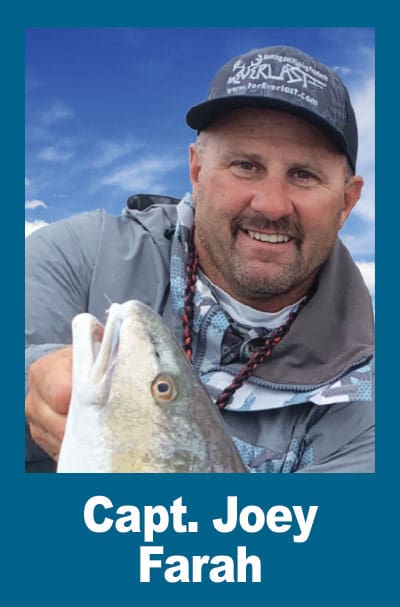
Email Joey Farah at jfarah@gmail.com
AS WE DESCEND into fall here in the Coastal Bend, coastal fishing is as crisp as a fresh north wind.
Here on the coast, the drop in temperatures, and lack of fishing pressure will supercharge our fishery. Water temperatures will be hovering around that magical 70-degree mark, pushing monster speckled trout into their fall spawn.
The shallow grass flats along the back of Saint José Island, Shamrock Cove, the protected north shoreline of Nueces Bay, and of course the King Ranch shoreline of the Laguna Madre and Baffin Bay are all excellent places to start looking for that fall trophy speck.
Topwater plugs will put the odds in your favor. Time-proven favorites such as the MirroLure SheDog in bone/chrome, and the Super Spook in natural colors are all good.
Working the shallow flats, look for areas with scattered sand pockets within thick grass, preferably gravely sand. This is where big sow trout will group together with mature males to spawn and build up their bodies for the upcoming winter.
Big stringers of trout will come from anglers drifting three to five feet of water with soft plastics. I love the D.O.A. 3-inch C.A.L. Shad as my most productive bait.
Using a smaller plastic mimics pin perch, finger mullet, and mud minnows in their natural size and swim patterns. Match these with a D.O.A. short-shanked jig head in varied sizes. For wade fishing 1/16- to 1/8-, and from the boat 1/8- to 1/4-ounce sizes. Mix up your color patterns between darks, naturals, and bright colors.
Mixed boxes of reds, drum, and sheepshead will be easy to build, drifting with live shrimp under popping corks this fall. Plan your drifts over changes of bottom structure along shorelines.
Look for oyster reefs in Nueces Bay, and the flats south of Bird Island in the Laguna Madre. Some of the best spots are around the spoil islands along the ICW canal.
The beach fishing here is great during the fall months as schools of giant bull reds have been making their annual migrations toward the beach front to have their spawn. Fish the first two guts along the beach, or one of the public jetties we have here.
Port Aransas, Fish Pass, and Packery Channel jetties all have great access and will let you get out and into the outer reaches of the surf line during rough seas. Those first northers of the year are when the bull reds are aggressive.
Live and cut mullet are the most popular, along with large blue crabs. Whiting, croakers, and sand trout will be easy to catch around the gulf passes on shrimp and small pieces of cut bait.
There is no limit size or quantity. Small hooks are the key to catching these great eating fish.
Take some time and come see the bountiful opportunities we have to share here in the Corpus Christi area. Visit the Coastal Bend and get hooked up. Follow all our hookups on Facebook at Joey Farah’s Backwater Fishing.
• • •
• • •

Location: Aransas Bay
Hotspot: San Jose Shoreline
GPS: N 28 0.7279, W 96 58.365
(28.0121, -96.9728)
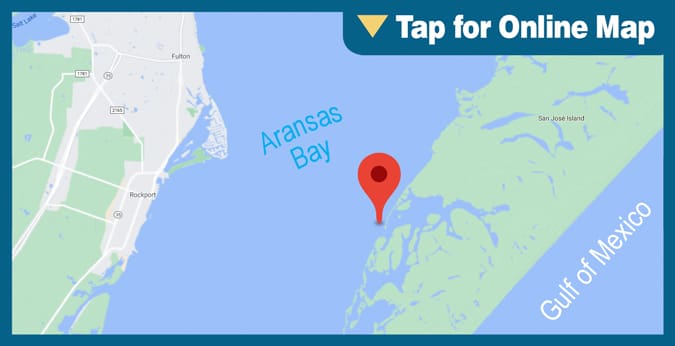
Species: Flounder
Best Baits: Finger Mullet
Tips: Flounder fishing should be good for at least the first two weeks of December. It all depends on how severe our cold fronts are.
Location: Aransas Bay
Hotspot: Half Moon Reef
GPS: N 28 4.5259, W 96 59.062
(28.0754, -96.9844)
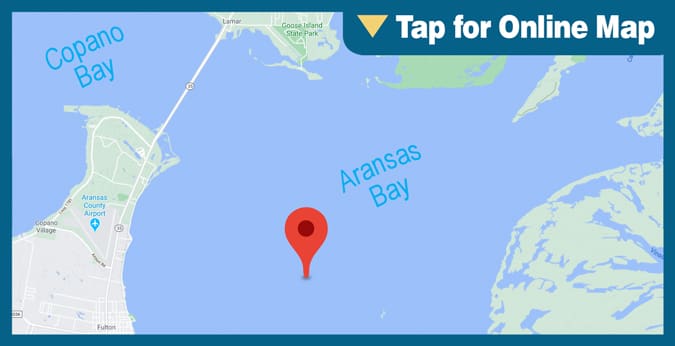
Species: Speckled Trout
Best Baits: Soft Plastics
Tips: Trout should be on deeper structure. Free lining a soft plastic bait should work once they are located. A favorite color is Pumpkin Seed/chartreuse.
Location: Espiritu Santo Bay
Hotspot: Fish Pond
GPS: N 28 21.867, W 96 24.415
(28.3645, -96.4069)
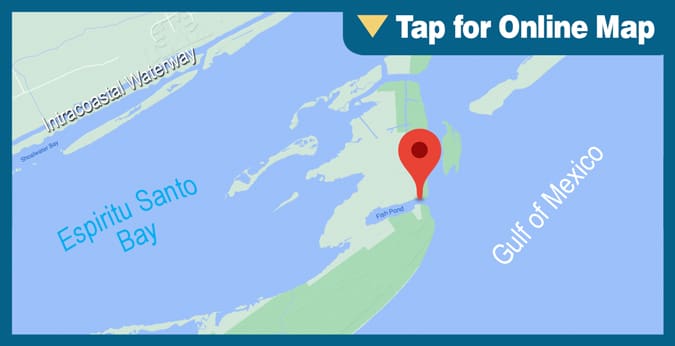
Species: Redfish
Best Baits: Sardines or cracked crab
Tips: Pinfish will nibble on the sardine, breaking the sardine up, creating a slick. A redfish comes up and just hammers it. When you get that solid bite, lower the rod and then ‘flag pole’ it
Location: Corpus Christi Bay
Hotspot: Packery Channel Jetties
GPS: N 27 36.8549, W 97 11.976
(27.6143, -97.1996)
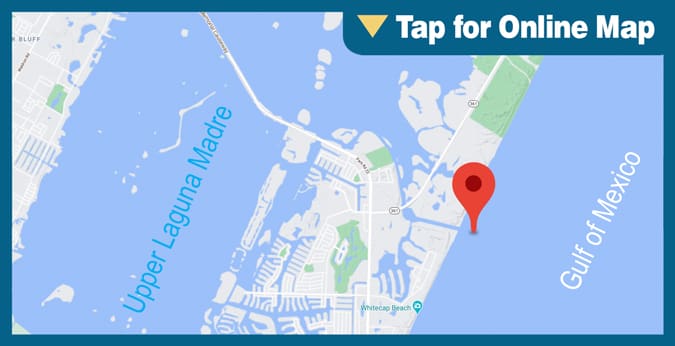
Species: Flounder
Best Baits: Finger Mullet
Tips: A full moon at times can affect how good the founder fishing can be, “But sometimes with a full moon they won’t move at all,” says Capt. Jack. “I’ve see the bite get better after the moon has gone down.
Location: Corpus Christi Bay
Hotspot: Portland Shoreline
GPS: N 27 52.51, W 97 18.013
(27.8752, -97.3002)
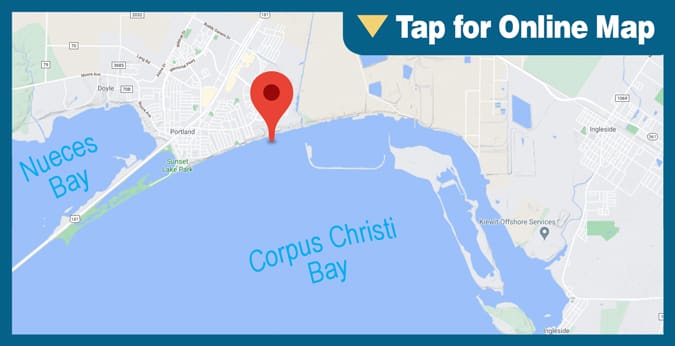
Species: Speckled Trout
Best Baits: Live Bait or Gulp under a popping cork
Tips: This time of the year is great time to find a spot on the surf line. Look for diving birds in surf to try your luck.
Location: Port Aransas
Hotspot: South Jetty
GPS: N 27 49.966, W 97 2.548
(27.8328, -97.0425)
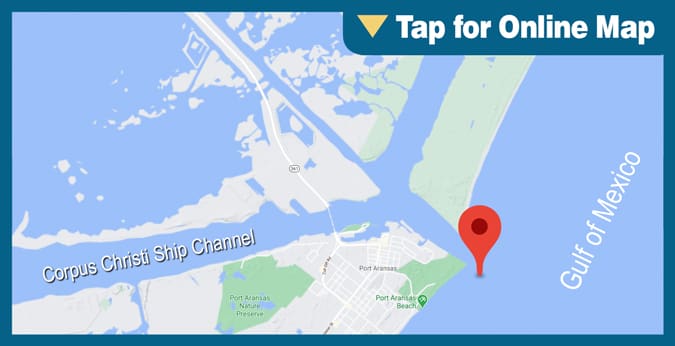
Species: Flounder
Best Baits: Finger Mullet
Tips: The flounder will be making their major migration move out into the Gulf. Any place, such as the jetties or channels, is a good place to intersect a flatfish on his journey.
Location: Port Aransas
Hotspot: Dagger Island Flats
GPS: N 27 49.754, W 97 10.61
(27.8292, -97.1768)
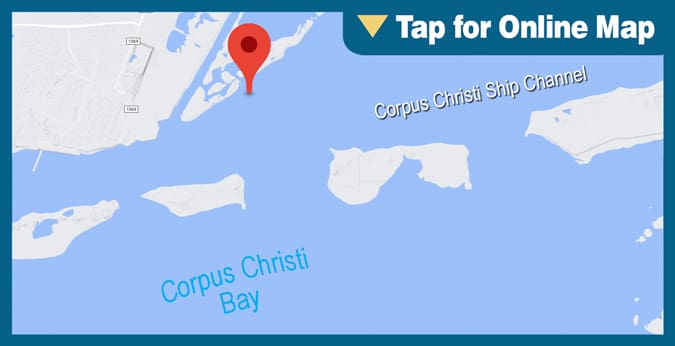
Species: Redfish
Best Baits: Gold or Silver Spoons
Tips: The redfish should up on the flats around the islands or along the shorelines.
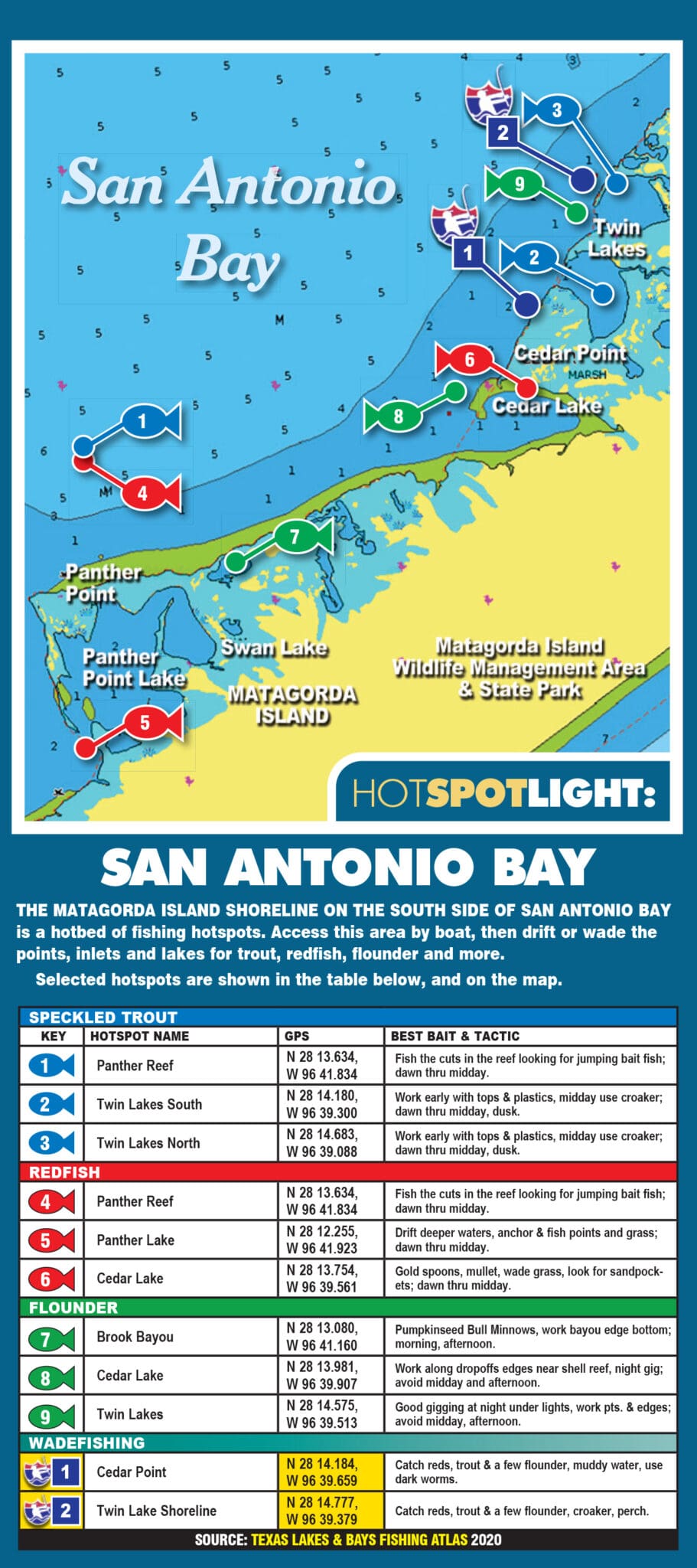
LOCATION: San Antonio Bay
HOTSPOT: Chicken Foot Reef
GPS: N28 15.92496, W96 47.34588
(28.265416, -96.789098)
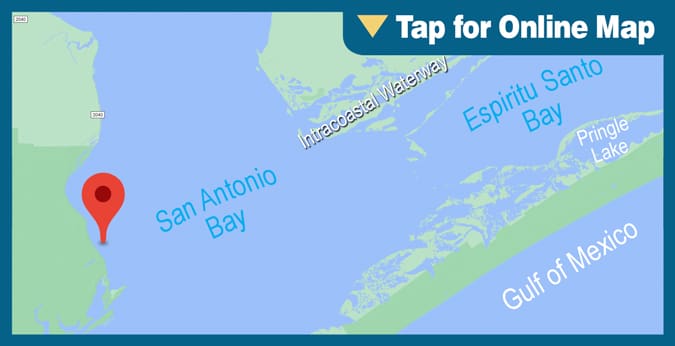
SPECIES: speckled trout
BEST BAITS: Kelley Wigglers and Down South soft plastic lures mainly in dark colors with 1/8-ounce jig heads
TIPS: We will be concentrating on deeper reefs as the water cools down–shell and mud. Look for baitfish action and stay close to the channels.
Location: Upper Laguna Madre
Hotspot: King Ranch Shoreline
GPS: N 27 29.134, W 97 21.108
(27.4856, -97.3518)
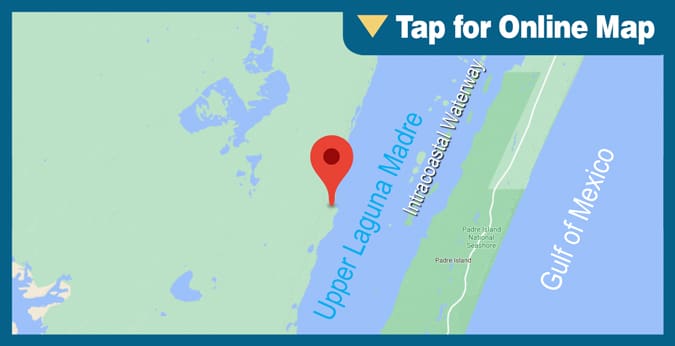
Species: Speckled Trout & Redfish
Best Baits: Gulp under a Popping Cork
Tips: The STX Tackle popping cork is a solid cork, but it has a ceramic bead underneath the cork about the size of a marble, and then a little bead under that. Pop it and it has a deep sound.
• • •
Hit the Baffin Flats for Fat Winter Specks

BAFFIN BAY
Reported by CAPT. GERAD MERRITT
Email Gerad Merritt at GeradMerritt@gmail.com
Visit Online: ParadiseGuideServices.com
WINTER IS A completely different experience than summer when it comes to fishing Baffin Bay. This is the typical time for female trout, filled with eggs, to make their appearance. Let’s get into winter fishing on Baffin Bay and how you can find these beautiful trout.
These next several months are critical to look for the heavier Baffin Bay trout. Remember I said heavier, not bigger. From November to the end of March, our trout are in their biggest spawn, which obviously makes them hungrier and fatter. The flats where bait runs will be good for fishing shallow water, when the sun is out and heating things up. However, warming temperatures will also cause the fish to move a little deeper, once water temperature heats up.
The cooler water helps them calm down and get to a more comfortable body temperature. Most of the time, when I see the fish transitioning from warm to cooler water (or vise-versa); I tend to try two different things. The first strategy I attempt to do is work my bait or plastic way more aggressive than normal. I do this in attempt to attract more attention. The second approach would be the opposite. Slowing the bait or plastic will do relatively the same thing, if the fish already knows it is there. All you are trying to do allow them more time to decide to eat the bait. Your rocks and structural bottoms will continue to help you during the cooler months but may not be as productive. I look at it as bait still tries to hide and the predator still tries to eat. This time of year is also when I try to find new spots to fish and play around with different strategies. Like wildlife, we are also creatures of habit, and it is easy to get stuck in the same routine. I attempt to make every other trip on the bay this time of year something new, such as new spots or techniques. Switching up bait or lures is also exciting. It is important for all anglers to try different brands and designs. Just because one works for me or another angler, does not mean something else will not work for you. I have found that getting back to my roots and throwing a traditional top water, such as a “broke back”, or even just a gold or silver spoon, is still successful and can be very appealing to the fish. Not to mention, going back to those techniques can be fun for an angler who is learning. I want to wish everyone good luck during these cooler months of fishing. Remember, do not be afraid to change things up and try something new.
• • •
• • •

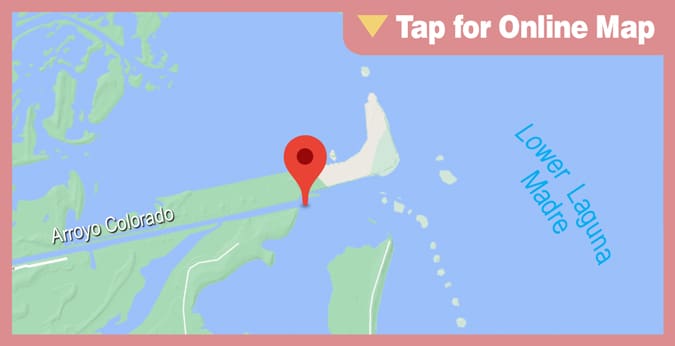
Location: Arroyo Colorado
Hotspot: Mouth of Arroyo Colorado River
GPS: N 26 21.485, W 97 20.835
(26.358092, -97.347243)
Species: Speckled Trout
Best Baits: Soft Plastics
Tips: Avoid the “big lure” in December. If you’re a fish, you’re going to hit something small and easy to catch. The smaller the lure the better chance you have in enticing fish to eat.
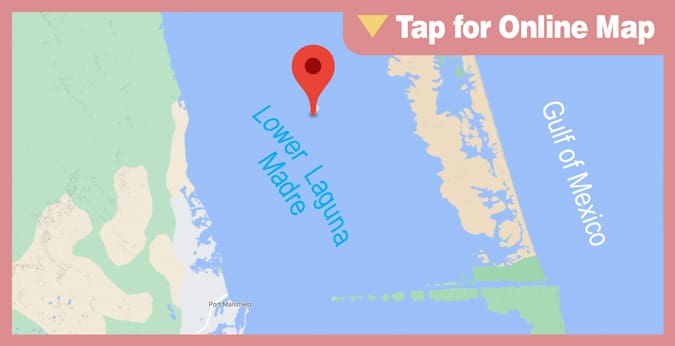
Location: Lower Laguna Madre
Hotspot: Butchers Island
GPS: N 26 38.1019, W 97 23.149
(26.6350, -97.3858)
Species: Speckled Trout
Best Baits: Soft Plastics
Tips: Fish the transition from grass to sand in December, right on the drop-offs, working his lure from deep to shallow. The fish are going to be sitting low waiting for any opportunity to feed.
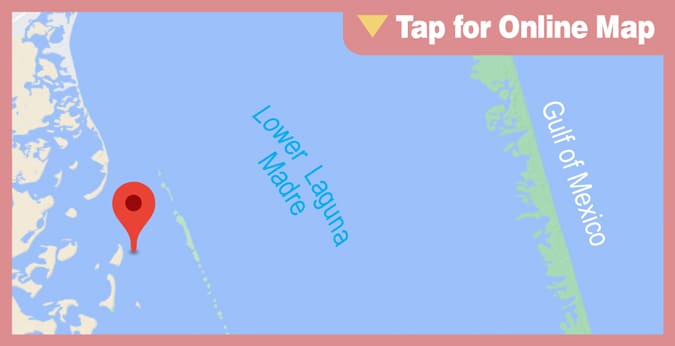
Location: Port Mansfield
Hotspot: The Saucer
GPS: N 26 28.149, W 97 23.874
(26.4692, -97.3979)
Species: Redfish
Best Baits: Topwaters, soft plastics in LSU, Black/Chartreuse, Gold spoons.
Tips: Redfish will be pushing bulges of water in front of them as they cruise around and scaring up small fish and crabs. A live shrimp or finger mullet can be fished under a popping cork, or sight cast into the holes themselves.
LOCATION: Lower Laguna Madre
HOTSPOT: Queen Isabella Causeway
GPS: N 26 5.20602, W 97 11.03898
(26.086767, -97.183983)
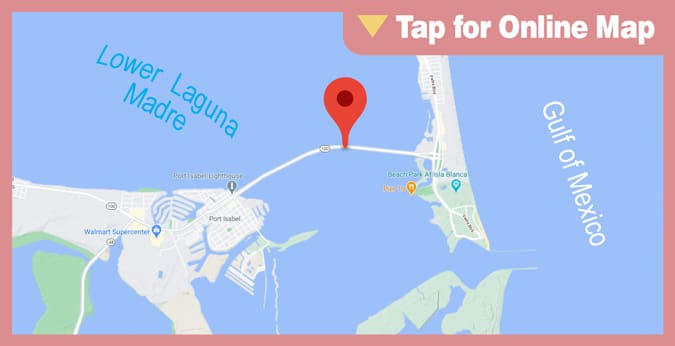
SPECIES: sheepshead
BEST BAITS: Live shrimp, fresh shrimp.
TIPS: Fish live or fresh shrimp around causeway pilings on split shot rigs. These guys are notorious bait-stealers, so a smaller hook is the way to go. Some fishermen use a #2 long-shank hook like the Eagle Claw 066N to zap them, but a more effective hook may be a 1/0 LazerSharp L7226 Octopus-style hook. The short shank and wide gap has a higher hook-up ratio, and they seem to lodge in the corner of the sheepie’s mouth .
LOCATION: Lower Laguna Madre
HOTSPOT: Color Change
GPS: N 26 7.5, W 97 13.99998
(26.125, -97.233333)
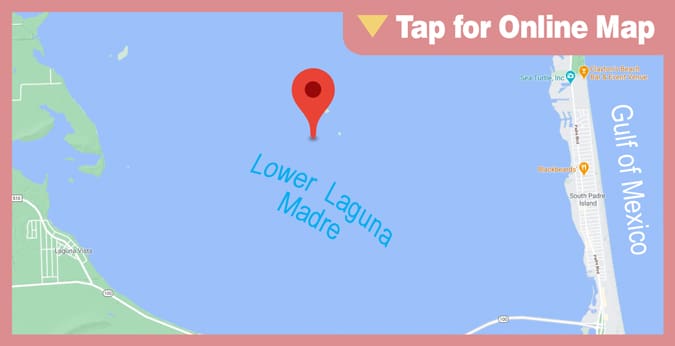
SPECIES: Speckled trout
BEST BAITS: Live bait. Gulp! Shrimp in glow, new penny, gold spinnerbaits with red/white tail
TIPS: Fish just inside the color change between clear and sandy water. The off-colored water retains warmth more effectively and offers cover for predators. You can work live shrimp or Gulp! tails under a popping or Alameda float. Fish slowly and deliberately. These trout may not be as aggressive as in spring, but they are there.

• • •
[button title=”< PREV” link=”https://wp.me/p4qAjM-14Sa” target=”_blank” align=”” icon=”” icon_position=”” color=”#008000″ font_color=”” size=”2″ full_width=”” class=”” download=”” rel=”” onclick=””]
[button title=”Return to CONTENTS Page” link=”https://fishgame.com/2011-november-december-2020-issue/” target=”” align=”” icon=”” icon_position=”” color=”” font_color=”” size=”2″ full_width=”” class=”” download=”” rel=”” onclick=””]
[button title=”NEXT >” link=”https://wp.me/p4qAjM-14SN” target=”_blank” align=”” icon=”” icon_position=”” color=”#008000″ font_color=”” size=”2″ full_width=”” class=”” download=”” rel=”” onclick=””]