
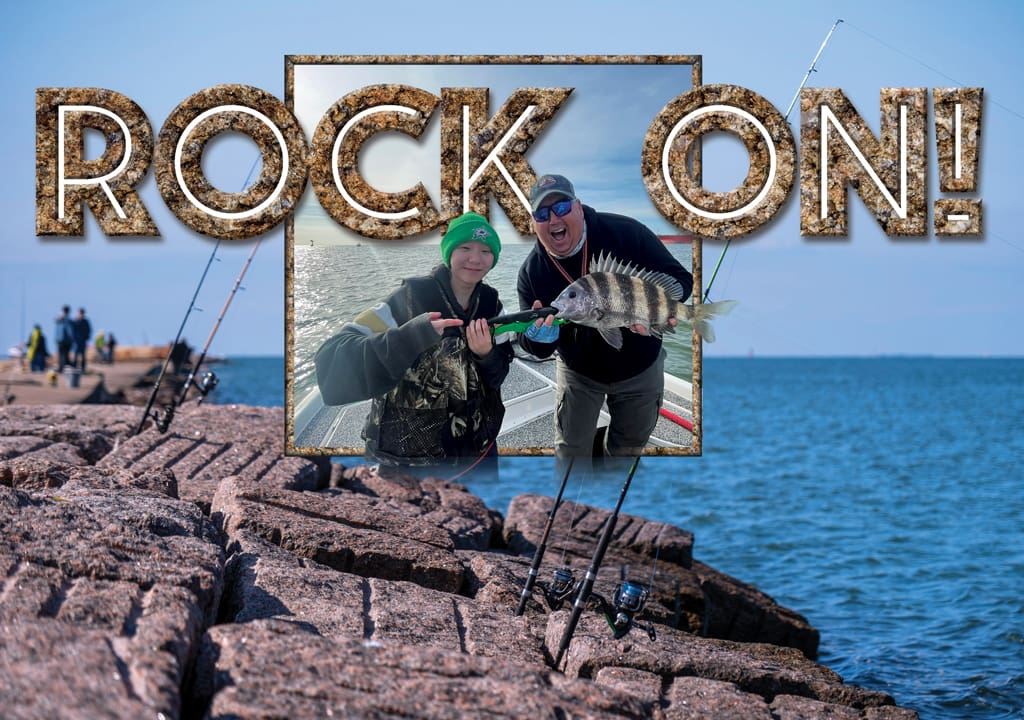
Catching Biodiversity on a Jetty Safari
Feature Story by CHESTER MOORE
LISTEN: (5 minutes, 49 seconds)
JETTIES EMERGE AS PRIME spots for reeling in sizable catches from modest vessels throughout the summer season.
Attracting a diverse array of inland and offshore species, these expansive granite structures mimic the allure of coral reefs. They harbor self-sustaining ecosystems, resembling the intricate food chains of natural reefs.
Within these aquatic realms, a hierarchy of species thrives, reminiscent of typical food chains.
Let’s start near the surface.
The upper reaches of jetties at times hold incredible numbers of speckled trout and the first thing anglers should be mindful of is water clarity.
At jetties, I have seen pockets of clear water produce fish when other areas seemed barren of specks. Sandy green water is good. Clear water is excellent but chocolate-colored water means you need to go somewhere else.
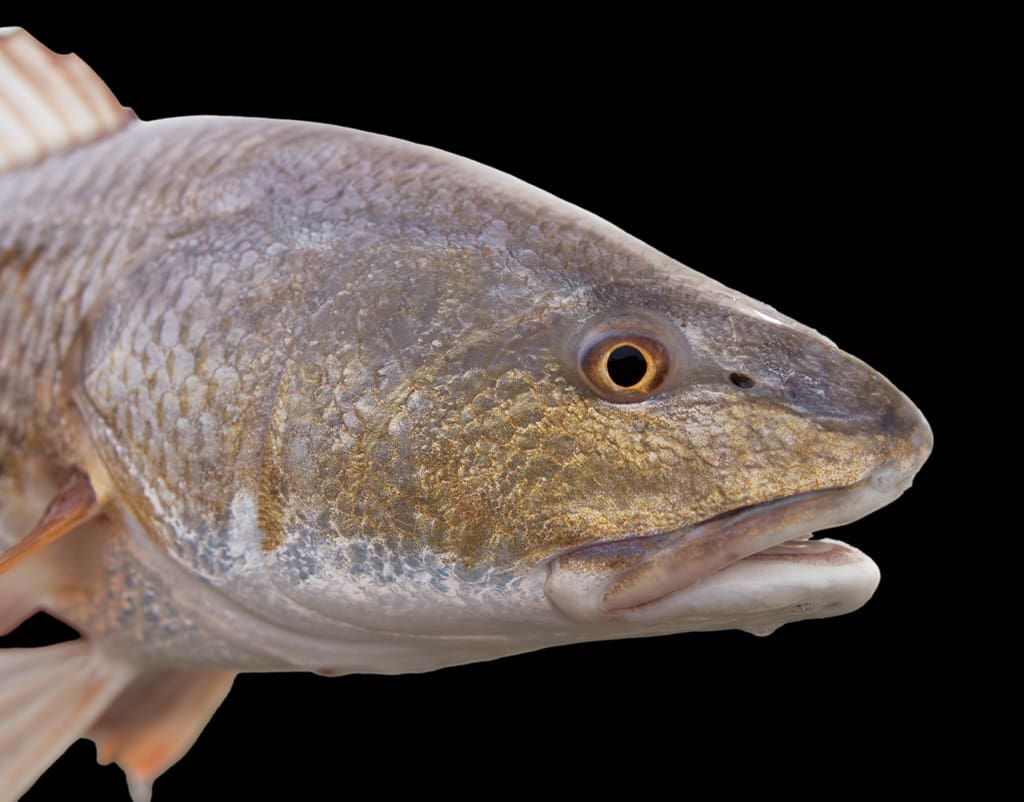
(Photo: Adobe)
Savvy anglers should look for emerging slicks, the small round spots of fish oil spilled when trout feed on shad and other prey items. The smaller the slick the better because it means the fish are still nearby. Avoid fishing slicks around crab traps. Those usually come from the bait inside.
Shrimp jumping along the surface and birds are a more obvious sign although at the jetties birds usually lead to Spanish mackerel more than trout. Birds on the lake, usually trout, are reds. Birds in the surf or at the jetty area could be anything.
While shrimp are not a guarantee of trout, ribbonfish (cutlassfish) can be. If you see the smaller ribbonfish (six to 10 inches) fleeing from the water, there is a good chance trout are under them. Spanish mackerel will prey on these eel-like creatures as well but on almost every experience I have had, trout are the predator.
Throwing some sort of eel imitation or a silver spoon is a good way to score on these specks. Remember, if you come across large ribbonfish jumping, it is likely not trout. They will actually leap from the water feeding on shad and other fish.
Sheepshead feed throughout the jetty water column but most of their activity is in the mid to upper range. My favorite method for catching them is using a 1/4-ounce jighead rigged with a small piece of shrimp and fished vertically over rock outcroppings at the jetties.
I use a braided line in the 20-pound test class. The low stretch line helps with hookset in the hard mouth since there is no stretch and it also aids with sensitivity.
The sheepshead’s bite can be so slight you actually have to watch the line because it can be virtually impossible to detect otherwise. A braided or fusion line can help overcome this, but it can still be tough at times. Many times they thump a jig pretty hard but when they go stealth, few fish can pick a bait off of a hook quicker.
Fishing a live shrimp under a popping cork is also a great way to catch sheepshead along the rocks. When the water clears up, these fish can be line shy so use a fluorocarbon leader under the cork for best results. Fluorocarbon is virtually invisible, and it also has low-stretch properties, which enhances its sensitivity.
Moving toward the bottom layer of the ecosystem, redfish rule.
And this is where my friend Bill Killian rules as well. I have never seen a person score on so many redfish at jetties even when conditions were terrible. Bill always catches big ones.
“The boat cuts are a good place to start because during tidal movements you have a lot of baitfish moving through. The boats cuts in a jetty system are the point with the most intense tidal flow because they are a small opening. You will get lots of shrimp, shad and crabs pushing through and the reds will move in and lie in wait.”
Killian said this is a great spot to throw large lipless crankbaits like a Rat-L-Trap.
“You will need something large so it can get down deep below the current quickly. Just let it sink and rip it as fast as you can. If that doesn’t work you might try lowering it down and letting it simply flow with the current,” he said.
Another great spot to find bull reds at the jetties any time are the deep holes usually found around the southern tip of the rocks and back about 50 yards. These spots are where the current wraps around the rocks and carves out large holes.
The reds in these areas tend to move through in small schools or hold over one piece of rock in large numbers.
And while reds fight hard, they have nothing on another jetty monster—stingrays.
Stingrays come in two size categories at jetties: large and extra large. And the best places to start are the aforementioned boat cuts. The tidal flow can be incredibly strong in these spots, since a huge amount of water is trying to move through a small space in a short time.
Rays will lay on the edge of this flow to mop up on the crabs and baitfish that move through. The same deep holes that reds love are also magnets to rays.
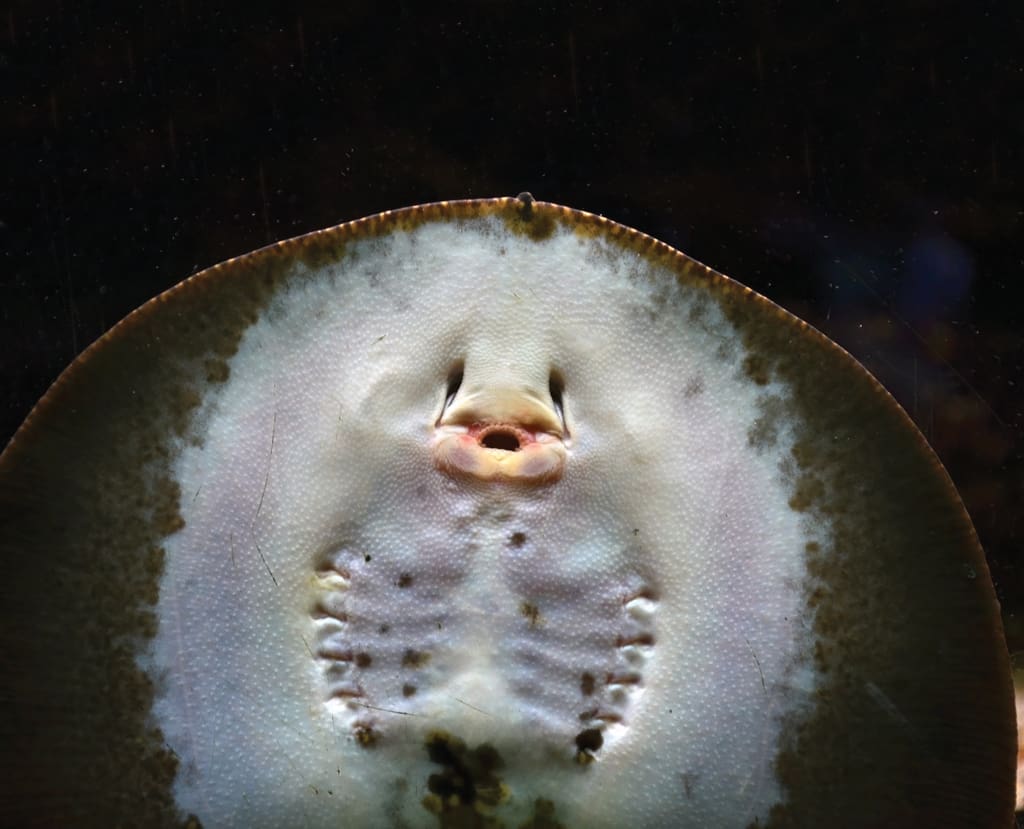
(Photo: Chester Moore)
On stingray quests, I generally put out several lines with a slip egg weight and swivel, finished off with a wide gapped hook baited with cut mullet or croaker.
It is best to use a steel leader of at least three feet in length, as it will help to avoid getting broken off if the ray runs to the rocks.
Rays usually take the bait and run with it, especially if they are extra-large ones.
Jetties are great hunting grounds for anglers seeking big saltwater game. And if you are open to trying some of these strategies and patient enough to give them a chance to work you can score on true trophy-sized fish.
—story by CHESTER MOORE
