
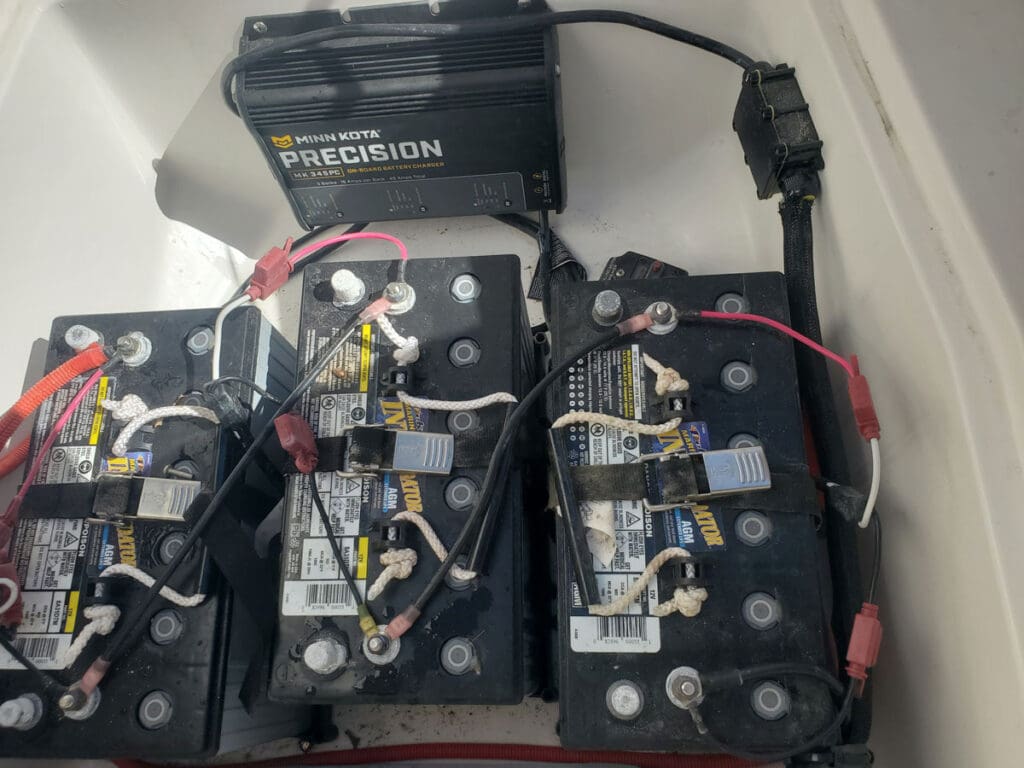
Bow-mounted trolling motors are more popular than ever, and have now just as popular in the saltwater world as they’ve always been on the bass fishing grounds. These days the debate isn’t over whether to get one, but it’s over which one to get – and how to power it. Thanks to the advent of lithium ion, today anglers have a big choice to make as they outfit their boats.
Boaters first viewed lithium ion as they generally view most new tech: with skepticism. But at this point, it’s hard to deny the attraction of having lithiums in your boat. Let’s look at the pros and the cons.
Pro: Lithium ion batteries weigh half as much as lead-acid.
Con: Lithium ion batteries cost twice as much as lead acid (and often a bit more than that).
Pro: When comparing batteries of an equal rating, lithium ions actually pack twice as much useable power. That’s because you get the same voltage for 99-percent of the discharge time. With lead-acid, on the other hand, voltage drops to an unusable level even when much of the power remains inside the battery itself.
Con: Lithium ion batteries cost twice as much as lead acid (and often a bit more than that).
Pro: While you must have the appropriate charger, when being charged properly lithium ions charge up to five times faster than lead acid.
Con: Lithium ion batteries cost twice as much as lead acid (and often a bit more than that).
Pro: Lithium ion batteries have a lifespan and can provide over five times as many discharge cycles.
Con: Lithium ion batteries cost twice as much as lead acid (and often a bit more than that).
Getting the picture? Yes, Lithiums cost a whole lot more, but they’re also hands-down superior in just about every way. And that issue of them blowing up is really a thing of the past, as the deep-cycle batteries on the market these days are LiFePO4 with lithium iron phosphate. Unlike older lithium batteries with more unstable elements, they aren’t subject to unexpected explosion. We can’t say whether these advantages are big enough for you, personally, to shell out those extra dollars, but we can say one thing for sure: with lithium ions on the boat you’ll be able to fish longer and harder than you could before.