
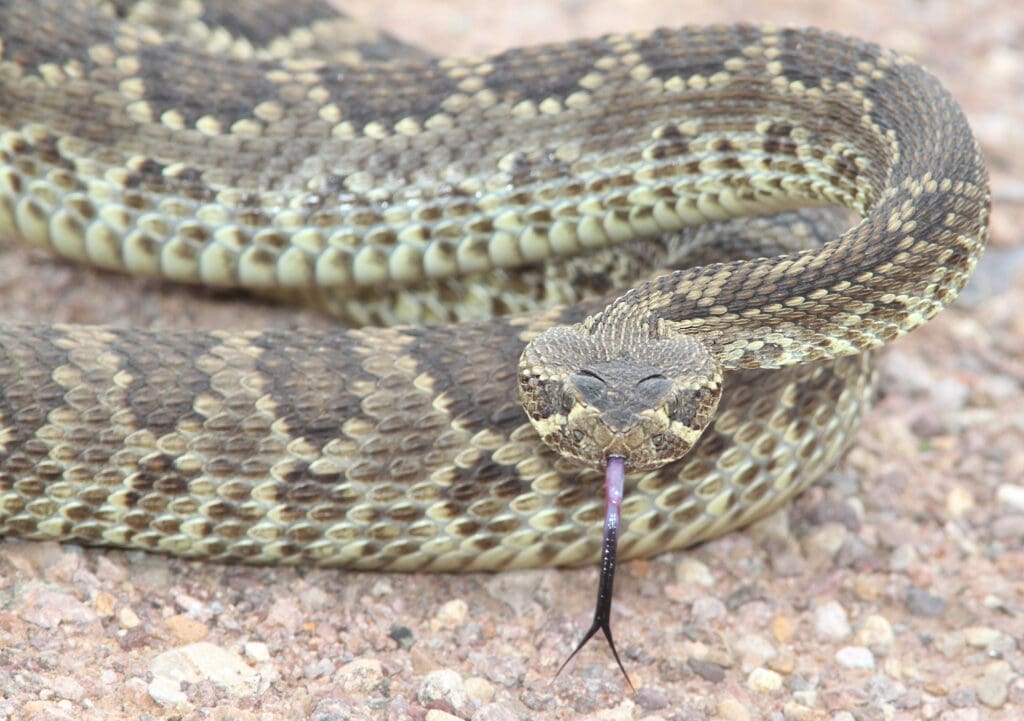
In the vast, arid expanses of Trans Pecos Texas lives Texas baddest rattlesnake-the Mojave. Known scientifically as Crotalus scutulatus, this serpent is revered and feared, not just for its presence, but for its uniquely potent venom.
The Mojave rattlesnake, often referred to as the “Mojave green” due to the greenish hue that some individuals exhibit, is a master of camouflage in its sandy, scrubby environment. Its range extends from southern California through the Mojave Desert, into Arizona, and into the driest areas of West Texas.
What sets the Mojave rattlesnake apart from other rattlesnake species is its venom.
The venom of the Mojave rattlesnake contains two major types of toxins: neurotoxins and hemotoxin. The neurotoxin interferes with the transmission of nerve impulses. The hemotoxin, on the other hand, destroy blood cells and disrupt blood clotting, leading to tissue damage and internal bleeding.
When a Mojave rattlesnake bites, its venom can cause a range of symptoms, including:
- Neurological Symptoms: Muscle weakness, difficulty swallowing, blurred vision, drooping eyelids, and respiratory distress. These symptoms arise from the neurotoxic components and can progress to severe paralysis if left untreated.
- Hemotoxic Symptoms: Pain and swelling at the bite site, nausea, vomiting, coagulopathy (disrupted blood clotting), and tissue necrosis. These effects are due to the hemotoxic elements of the venom.
Despite the potential to do serious damage with a bite, the Mojave rattlesnake prefers to avoid humans. It will only strike when threatened or provoked. Hunters and hikers are advised to be vigilant, wearing high boots and watching their steps, especially during the cooler parts of the day when these snakes are most active.
4o