
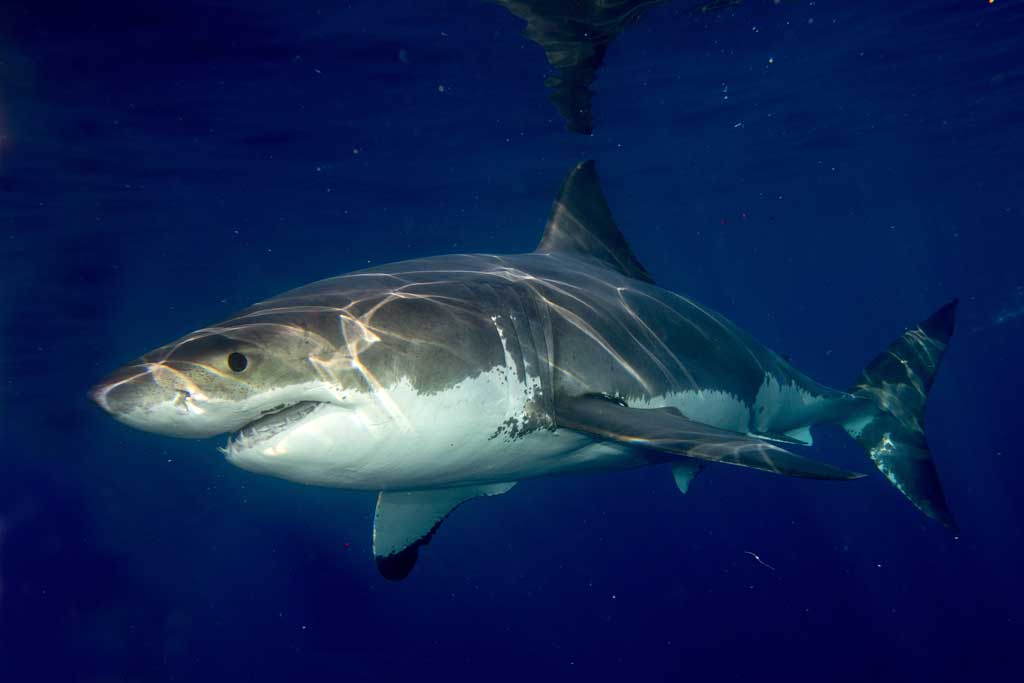
IF YOU’RE HERE, you must be interested in sharks. They sure are fascinating creatures who are often misunderstood. Hollywood movies have done a lot of damage to their reputation, reducing sharks to scary bloodthirsty monsters. More research can shed light on them and show how interesting they actually are. So we made a list of the best research topics to aid in this effort and help you write a truly engaging paper. Let’s put an end to shark slander!
Shark behavior
We will start our shark research topics with the ones that try to understand how these fishes behave and why. Are you interested in animal psychology? Do you want to see the world through a shark’s eyes? Then one of these topics might be perfect for you.
- Why do sharks strand?
Shark stranding, also known as beaching, is still a mystery for researchers. These fishes are negatively buoyant in seawater, so why do they often end up on the shore? Is there a logic to this behavior?
- Why do sharks show their dorsal fins?
You have probably seen in a lot of movies how sharks swim with their dorsal fins above the water’s surface. Is it just a cliche? Or is there a deeply rooted behavioral mechanism behind it?
- Why do sharks rest on the bottom?
Sharks are usually very active, so why do they pick the bottom of the ocean or even caves for their rest? Is it a contradiction? Or does it fit into their instincts?
- Why do sharks engage in cooperative hunting?
Sandtiger Sharks, in particular, are known for their cooperative hunting strategies, but how did they develop this behavior? How do they benefit from it? Why are some sharks more cooperative than others?
- How do sharks develop predatory strategies?
Sharks aren’t all the same; they can pursue their prey very differently. But which factors create these differences? How do biology and environment intertwine in this matter?
- What causes sharks to eat people?
Not all sharks are interested in humans, no matter what fictional stories say. But some will hunt us. Why does it happen? What conditions contribute to this behavior?
Shark physiology
We continue our top list with questions that explore unique physiological characteristics setting sharks apart. They are incredibly diverse, but this diversity rarely gets the representation it deserves. Do you want to understand how they work on a biological level and how their bodies make them special?
Albinism. This trait is very rare in sharks, so why does it exist at all? Which species have it? Why do other species never develop it?
Healing. Sharks are known for recovering amazingly fast, even after severe injuries. Their immune systems can even fight tumors. What makes it possible? How do these healing powers function?
Cartilaginous skeleton. How have sharks developed their notorious cartilaginous skeleton? What is its evolutionary advantage? Why do some people claim that shark cartilage can cure human problems like arthritis and cancer?
Red blood cells. Sharks can develop red blood cells, but the issue is that these cells are typically created in the bone marrow. However, sharks don’t have bones. How is this contradiction possible?
Self-heating. The White Sharks can increase their body temperatures. Why and how do they do it? Does this power come at a cost to other physiological processes?
Saltwater. Most sharks live in saltwater, but not all of them. Why do these exceptions happen? Why is saltwater important for sharks to function, and how can they survive without it?
Pain. Sharks can continue feeding even when they are mortally wounded. Do they not feel pain? Do they prioritize feeding over everything else?
Shark reproduction
Shark diversity extends to their reproduction, which is surprisingly different between species. It’s important to understand these differences if we want to make sure that sharks continue to exist on our planet. Your research paper can contribute to preserving these glorious fishies if you pick one of the topics below!
- Why do sharks pick quality over quantity when it comes to their young?
Sharks are similar to humans in that they raise a few children instead of many. Most other fish species tend to have a lot of tiny offspring to make sure that at least some of them survive. What makes sharks different? What are the advantages and disadvantages of this reproductive strategy?
- Why do fetal sharks prey upon each other?
It’s rare for unborn sharks to eat their womb-mates, but it happens regularly across different species. Why? Does it contribute to their survival? Or is it just a strange quirk of nature without a specific purpose?
- How do sharks reach maturity?
It may be different depending on the species. It’s a matter of size for some, while others reach maturity at a certain age. What contributes to these differences? What does maturity mean for sharks?
- How do sharks approach maternal care?
Sharks are known for being very protective of their eggs and young. The reason is obvious, but does maternal care differ between species? How do their unique characteristics affect how they raise their children?
Sharks are so interesting that they could inspire many more topics for research. Hopefully, our list will give you a starting point and encourage you to explore these fishes more. There is still so much that science doesn’t understand about them, so maybe you will contribute to the ongoing discussion. Maybe you will show people how sharks are largely misunderstood. We are rooting for you!