
Since last winter I’ve been observing a black drum firsthand for hours on end, week after week. No, I wasn’t scuba diving or dropping down a fish-cam – I have a very, very large aquarium. Last year I caught a barely legal black drum, and rather than filleting him decided to put him in the tank for a while. I regularly rotate out different species to observe them, and while it would be a stretch to say I’m observing them in their natural habitat out in the field, it does lead to some very interesting observations.
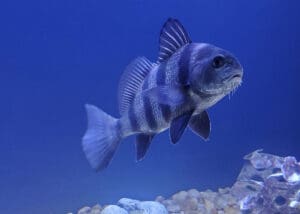
The first big surprise: Every other food source paled in comparison to shrimp. The drum attacked live shrimp and chopped shrimp with abandon, while clams, squid bits, and finfish of any sort were eaten grudgingly in comparison. He showed a bit more interest in crab than those other foods but even crab failed to elicit the same level of enthusiasm.
Another big surprise was just how effectively the fish uses its barbels. If you want to target black drum, put that (shrimp!) bait on bottom. Sure, you’ll catch back drum on everything from trolled spoons to jigged plastics. Yes, they do use their eyes. But this fish spent literally half his time bouncing his chin along the bottom. And if those barbels came into contact with food, WHAM.
Notwithstanding all of the above, black drum do feed via sight and something falling or swimming through the water column definitely got this guy’s attention. However, many fish have a blind spot of sorts right in front of them, and this was very evident with the drum. Items slightly off to one side or the other were almost always spotted, while items right in front of the fish were regularly missed. If you spot a drum and sight-cast to it, always aim slightly off to the side.
Most anglers know that night fishing for black drum can be effective, and this fish’s habits certainly validated that. Interestingly, his greatest time of inaction was in the hours shortly before dawn. Peer into the tank at midnight and he’d be on the prowl, but at 4 o’clock in the morning he’d be sitting on the bottom barely moving more often than not.
There were plenty of other interesting observations that won’t necessarily help you catch more fish: he would regularly grab rocks in his mouth, chew on them for a while, then spit them out. He “scratched” himself on oyster shells now and again. And he was downright curious, swimming over to one side of the tank or the other to look at dogs, cats, and even people. These fish are incredibly interesting – and you can learn a lot by observing them for a while, even if it isn’t in their natural domain.