
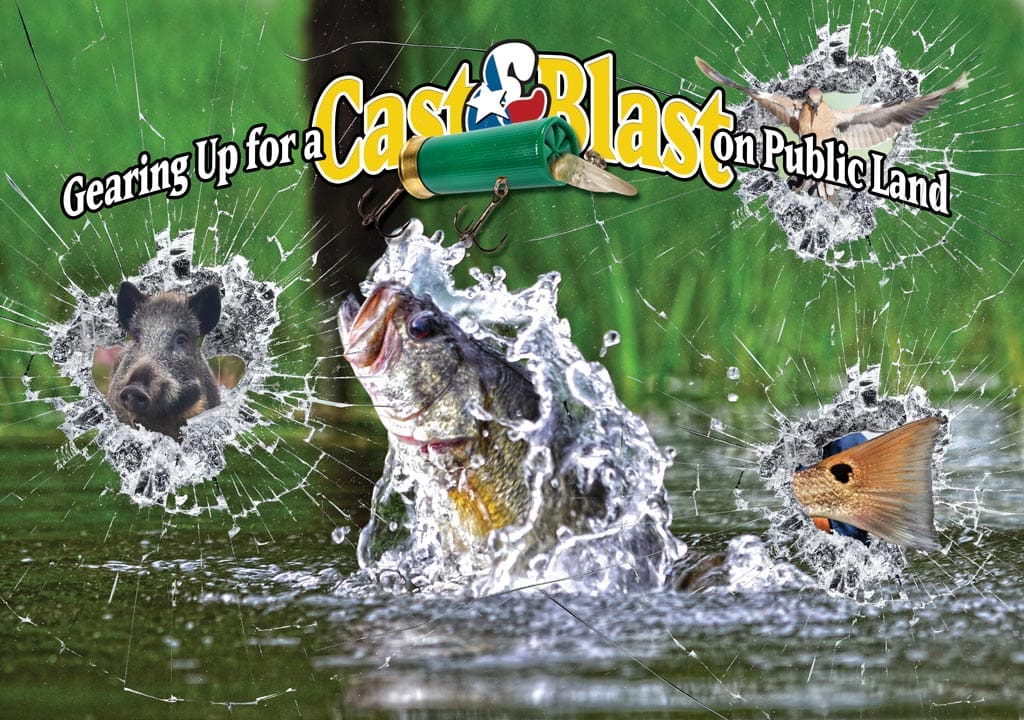
Gear Up for a Cast & Blast on Public Land
Feature Story by TF&G STAFF
LISTEN: (7 minutes, 18 seconds)
A “CAST AND BLAST” adventure in Texas offers a fun mix of fishing and hunting that can happen on the same day or on the same trip.
Most of this is done in the context of private hunting lodges and outfitters which offer cast and blast packages as part of their services.
For those on a budget, a fun way to do it is to hit public land.
Yes, Texas is 97 percent privately owned but we have ample land to do weekend or even weeklong cast and blast trips that can be fun for the whole family.
To make these fun and fruitful you need to be well-prepared with the right gear and game plan. Here’s a detailed guide on what you need to bring, covering both freshwater and saltwater fishing, as well as hunting.
License and Permits
Fishing License: Before casting a line in Texas waters, secure a fishing license. This is mandatory for both freshwater and saltwater fishing. Check for any specific endorsements or stamps needed for certain fish species or regions.
Hunting License: A valid hunting license is essential for pursuing any game in Texas. Be aware of the different types of hunting licenses available, such as those for residents, non-residents, and specific game.

Special Permits: Depending on the game or fish you’re targeting, additional permits might be required. For instance, a federal duck stamp is necessary for hunting waterfowl, and certain areas may have unique regulations. A prime example of a potential surprise is that you need a free sandhill crane permit to hunt these beastly birds.
Clothing
Weather-Appropriate Gear: Texas weather can be unpredictable, ranging from scorching heat to sudden downpours. Pack layers, including moisture-wicking base layers, insulating mid-layers, and waterproof outerwear. A wide-brimmed hat and sunglasses are also essential to protect against the sun.

Camouflage: Essential for hunting, camouflage clothing helps you blend into the environment. Choose patterns that match the specific terrain, whether it’s woodland, marsh, or in the prairies.
Comfortable Boots: Invest in sturdy, waterproof boots suitable for both hiking and wading. Break them in before your trip to avoid blisters and discomfort.
Safety and Navigation
First Aid Kit: A comprehensive first aid kit is vital. Include items like bandages, antiseptic wipes, pain relievers, and any personal medications. A snakebite kit can also be beneficial in certain areas.
GPS and Maps: A handheld GPS device and detailed maps of the areas you’ll be exploring are crucial. Familiarize yourself with the terrain and mark key locations such as your camp, water sources, and hunting spots.
Hydration and Nutrition: Carry plenty of water, especially in Texas’s hot climate. Hydration packs or water bottles with filters are convenient. Pack high-energy snacks like trail mix, jerky, and energy bars to keep you fueled throughout the day.
Freshwater Fishing Gear
Medium-Heavy Spinning Rod: Choose a rod that’s versatile enough to handle various freshwater species. A medium-heavy spinning rod provides the strength needed for bigger fish while maintaining sensitivity for smaller bites.
Spinning Reel: Opt for a smooth, high-quality spinning reel. A reel with a reliable drag system will help you manage the fight of a strong fish and prevent line breakage.
Lures: Stock your tackle box with a variety of lures. Soft plastics mimic the movements of baitfish and are effective for bass. Crankbaits and spinners are a must. Also bring plenty of worms in your favorite colors. If you come across grassy waterways, they will nullify your hard baits.
Hooks and Weights: Bring an assortment of hooks and weights. Use smaller hooks and lighter weights for species like crappie and larger, stronger options for catfish and bass.
Line: Choose an 8-12 lb. test line for general freshwater fishing. Heavier lines are better for areas with dense cover or larger fish.
Net: A landing net is crucial for safely bringing fish to shore on public land. Often you will be bank fishing and most of the areas not easy to fish. A net can be a big benefit in getting the fish to shore.
Cooler: Keep your catch fresh by storing them in a cooler with plenty of ice.
Saltwater Fishing Gear
Surf Rod: A long, sturdy surf rod is ideal for casting into the ocean. It provides the leverage needed to fight larger saltwater species.
Saltwater Reel: Saltwater reels are designed to resist corrosion from saltwater. Choose a reel with a strong drag system and high line capacity for handling big fish. If you plan on targeting sharks make sure you’re not under gunned. Even a six foot long blacktip can spool you.
Lures: Equip your tackle box with spoons, and live bait rigs. Live bait rigs are highly effective for species like redfish and trout.
Hooks and Weights: Saltwater fishing requires larger, stronger hooks and weights. Circle hooks are great for catch-and-release, as they tend to hook fish in the corner of the mouth.
Line: Use a 15-20 lb. test line for general saltwater fishing. Braided line is strong and has a smaller diameter, allowing you to cast farther.
Fishing License: Ensure your license includes saltwater fishing.
Waders: Chest waders allow you to venture deeper into the surf, increasing your casting range and are especially important in the fall and winter. Most Texans don’t use waders in the summer and early fall.
Pliers: Saltwater pliers are essential for removing hooks from the toothy mouths of saltwater fish.
Hunting Gear
Rifle: Select a rifle appropriate for the game you plan to hunt. For deer, a .30-06 or .308 is a popular choice, offering good range and stopping power. For wild hogs, a .223 or .300 Blackout can be effective.
Ammunition: Bring enough ammunition for both practice and hunting. Ensure your bullets are suited for the specific game and comply with local regulations.
Binoculars: High-quality binoculars are crucial for spotting game at a distance. Look for ones with a magnification of at least 8x to 10x.
Rifle Scope: A reliable rifle scope enhances accuracy. Choose one with good light transmission for dawn and dusk hunting.

Game Calls: Use calls specific to the species you’re hunting. Deer calls can attract bucks during the rut, while hog calls mimic the sounds of feeding or distressed pigs.
Rangefinder: A rangefinder helps determine the distance to your target, ensuring accurate shots.
Game Bags: Lightweight, breathable game bags are essential for transporting your harvest and keeping it clean and cool.
Scent Eliminator: Use sprays and washes to reduce your scent, increasing your chances of getting close to wildlife.
Knife: A sharp hunting knife is indispensable for field dressing game. Choose one with a durable blade and comfortable handle.
Planning
Research the areas you’ll be visiting, including local regulations and seasonal restrictions. Understanding the habits of your target species can also enhance your success.
Make lodging arrangements in advance if you’re staying overnight and inform someone of your itinerary for safety reasons.
Check the Weather
Monitor the weather forecast leading up to your trip. Be prepared for heat, rain, and cold, and adjust your packing list accordingly to stay comfortable and safe.
Practice Safety
Always prioritize safety. Follow all guidelines for both fishing and hunting, including wearing appropriate safety gear and handling firearms responsibly.
Inform someone of your plans and expected return and carry a communication device like a satellite phone if you’re venturing into remote areas.
By bringing the right gear and being well-prepared, you can ensure a successful and enjoyable “cast and blast” trip in Texas. Whether you’re reeling in bass in a tranquil lake or hunting ducks on the coast, this is a formula to have the trip of a lifetime.
