
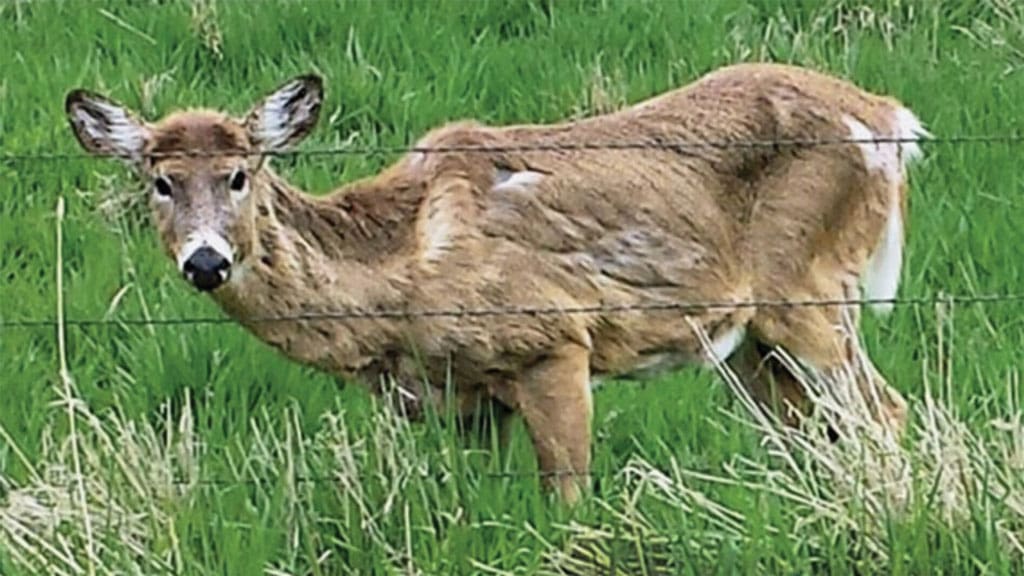
Did you know Texas Parks & Wildlife Department (TPWD) officials have proposed a new Chronic Wasting Disease (CWD) Surveillance Zone.
You can comment on it here before the Aug. 21 Commission meeting.
Here’s what TPWD has to say about the issue.
Staff seeks adoption of a proposed amendment to rules governing chronic wasting disease (CWD) detection, response, and management. The proposed amendment would create new CWD Surveillance Zones (SZ) in portions of Real, Edwards, Zavala, Trinity, and Sutton counties in response to the detection of CWD in additional deer breeding facilities.
DISEASE DETECTION AND RESPONSE RULES
CWD SURVEILLANCE ZONES
PROPOSAL PREAMBLE
1. Introduction.
The Texas Parks and Wildlife Department proposes an amendment to 31 TAC §65.82, concerning Disease Detection and Response. The proposed amendment would establish five new Surveillance Zones (SZs) in response to the continued detection of chronic wasting disease (CWD) in deer breeding facilities.
The proposed amendment would implement heightened surveillance efforts in the affected areas as part of the agency’s effort to manage chronic wasting disease (CWD).
CWD is a fatal neurodegenerative disorder that affects some cervid species, including white-tailed deer, mule deer, elk, red deer, sika, and their hybrids (referred to collectively as susceptible species). It is classified as a TSE (transmissible spongiform encephalopathy), a family of diseases that includes scrapie (found in sheep), bovine spongiform encephalopathy (BSE, found in cattle and commonly known as “Mad Cow Disease”), and variant Creutzfeldt-Jakob Disease (vCJD) in humans.
Much remains unknown about CWD, although robust efforts to increase knowledge are underway in many states and countries. The peculiarities of its transmission (how it is passed from animal to animal), infection rate (the frequency of occurrence through time or other comparative standard), incubation period (the time from exposure to clinical manifestation), and potential for transmission to other species are still being investigated. Currently, scientific evidence suggests that CWD has zoonotic potential; however, no confirmed cases of CWD have been found in humans. Consequently, both the Centers for Disease Control and Prevention and the World Health Organization strongly recommend testing animals taken in areas where CWD exists, and if positive, recommend not consuming the meat. What is known is that CWD is invariably fatal to certain species of cervids (including white-tailed and mule deer) and is transmitted both directly (through animal-to-animal contact) and indirectly (through environmental contamination). If CWD is not contained and controlled, the implications of the disease for Texas and its multi-billion-dollar ranching, hunting, wildlife management, and real estate economies could be significant.
The department has engaged in several rulemakings over the years to address the threat posed by CWD, including rules to designate a system of zones in areas where CWD has been confirmed. The purpose of those CWD zones is to determine the geographic extent and prevalence of the disease while containing it by limiting the unnatural movement of live CWD-susceptible species as well as the movement of carcass parts.
The department’s response to the emergence of CWD in captive and free-ranging populations is guided by the department’s CWD Management Plan (Plan) https://tpwd.texas.gov/huntwild/wild/diseases/cwd/plan.phtml. Developed in 2012 in consultation with the Texas Animal Health Commission (TAHC), other governmental entities and conservation organizations, and various advisory groups consisting of landowners, hunters, deer managers, veterinarians, and epidemiologists, the Plan sets forth the department’s CWD management strategies and informs regulatory responses to the detection of the disease in captive and free-ranging cervid populations in the State of Texas. The Plan is intended to be dynamic; in fact, it must be so in order to accommodate the growing understanding of the etiology, pathology, and epidemiology of the disease and the potential management pathways that emerge as it becomes better understood through time. The Plan proceeds from the premise that disease surveillance and active management of CWD once it is detected are critical to containing it on the landscape.
When CWD is detected in a deer breeding facility, a SZ is created, consisting of the area within a two-mile radius around the deer breeding facility (the physical facility, not the boundaries of the property where the facility is located), within which the department implements heightened sampling efforts in an effort to quickly determine the prevalence and spread of CWD, if it exists, surrounding the facility where it has been discovered.
On March 11, 2024, the department received confirmation of CWD in a 10.5-year-old female deer in a deer breeding facility in Real County. On April 5, 2024, the department received confirmation of CWD in two 2.6-year-old female deer in a deer breeding facility in Edwards County (the department notes that both deer had tested negative via ante-mortem test one year earlier, which illustrates why ante-mortem testing, at this point in time, cannot be used as a definitive test for individual animals). On April 11, 2024, the department received confirmation of CWD in a 2.6-year-old male deer in a deer breeding facility in Zavala County. On June 7, 2024, the department received confirmation of CWD in a 2.9-year-old female deer in a deer breeding facility in Trinity County. On June 26, 2024, the department received confirmation of CWD in a 1.9-year-old female deer in a deer breeding facility in Sutton County. In response to these detections, per department policy, the proposed amendment would create new SZs in Real, Edwards, Zavala, Trinity, and Sutton counties, to consist of a two-mile radius around each positive facility.
NOTE: Regulation of CWD response and surveillance efforts within deer breeding facilities is not the subject of this rulemaking; the rules governing CWD response and surveillance within deer breeding facilities are located in Division 2 of this subchapter and are not affected or implicated by this rulemaking.