
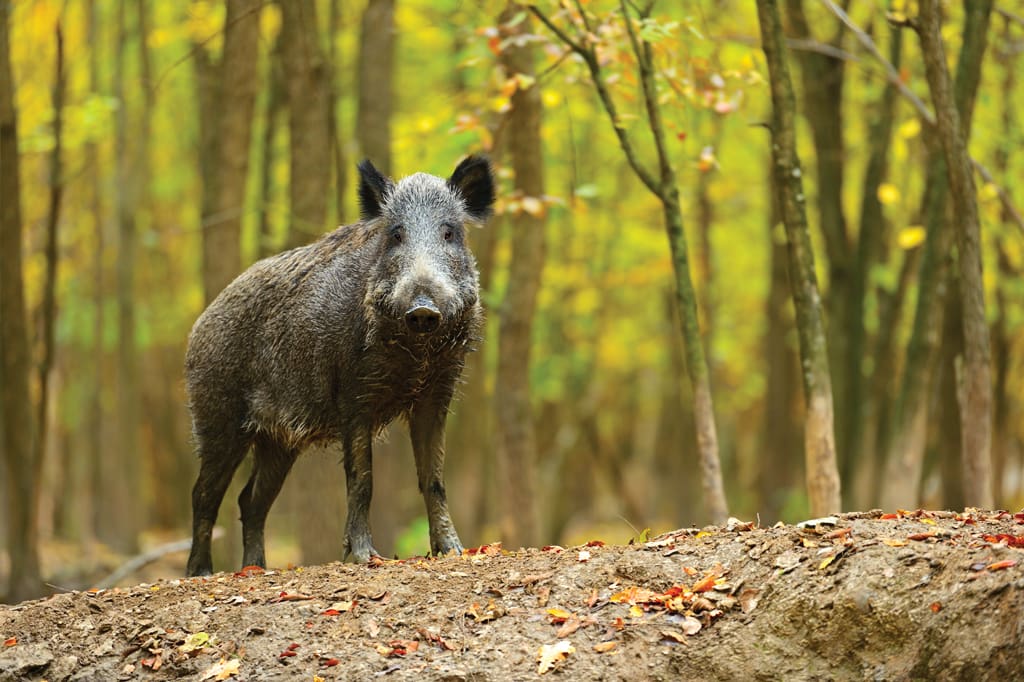
Hunting hogs is a year-round pursuit in Texas and other Southern States. These prolific, invasive exotics require serious pressure from hunters to reduce their numbers and aid native wildlife and habitat.
Most hunters can’t afford helicopter hunts or invest time in long-term trapping, so how can they make an impact on hogs on their land, leases, and local wildlife areas?
The secret is profiling.
Hunters can make a real difference in public safety and wildlife management by putting the crosshairs on specific hogs in a population.
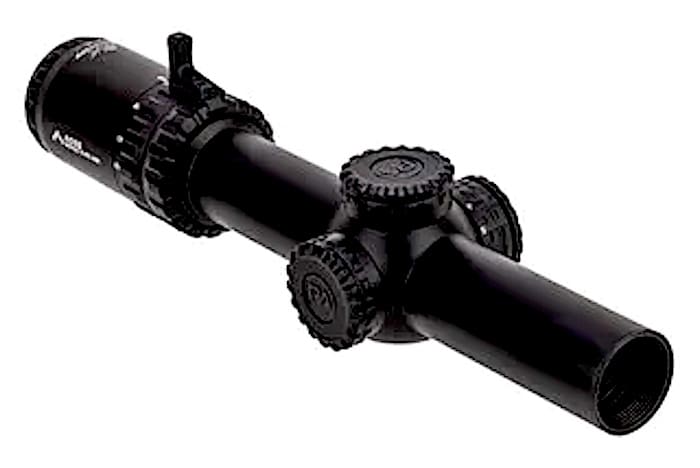
We will get into those particulars shortly, but first, we must discuss the tools needed. Most hunters have adequate calibers to down swine, but rifle scopes need to be improved.
I recently got my hands on the Primary Arms SLx® 1-6x24mm SFP Gen IV Rifle Scope.
It is an excellent choice rifle scope for hog hunting, offering several features that make it particularly effective for one of my favorite pursuits: focused hog hunting.
Its design includes superior glass clarity, allowing hunters to spot hogs in low-light conditions (when they are most active). The scope’s 1-6x magnification range offers versatility, enabling quick target acquisition at close quarters while allowing you to take out pigs at longer distances.
One of the standout features for hog hunters is the ACSS NOVA 5.56/.308 Reticle.
This reticle is designed with a high-efficiency fiber optic wire for bright illumination, making it easier to track fast-moving hogs, especially in dense brush or low-light environments. You’re missing out if you’ve only used standard scopes without a reticle for hogs. They make a difference.
The reticle also includes bullet drop compensations specifically calibrated for 5.56 and .308 ammunition, allowing you to adjust for long-range shots.
Additionally, the integrated dovetail throw lever allows for swift magnification adjustments, crucial for adapting to rapidly changing situations in the field.
Overall, this rifle scope offers a combination of precision and ease of use, making it a valuable optic for any hog hunter looking to improve their success rate. I haven’t taken a hog with it yet but I have taken it into the field and am impressed.
And if you want to profile hogs, you need tools like this to make accurate shots and quick kills, especially when targeting big lone boars.
Large, solitary boars pose a significant threat to human safety and livestock. These boars, often characterized by their aggressive behavior, are responsible for disproportionate attacks on humans. Studies have shown that lone boars are more likely to become territorial and aggressive.
These animals, weighing several hundred pounds and equipped with sharp tusks, can and occasionally do literally kill people. Targeting these dangerous individuals for removal is a critical strategy in reducing the overall risk posed by feral hog populations.
Plus, they make cool trophies, so you might get a bonus boar-tusk necklace or European mount out of the hunt. That’s never a bad thing.
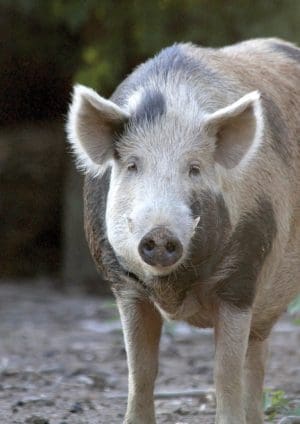
In the broader feral hog population control context, targeting large, productive sows is crucial.
These sows, often the matriarchs of their sounders, are capable of producing a couple of large litters each year, with each litter containing up to a dozen piglets.
This high reproductive rate is one of the primary reasons why feral hog populations can explode so rapidly. By removing these specific sows, wildlife managers can significantly reduce the reproductive potential of hog populations. This approach not only directly decreases the number of new piglets born each year but also disrupts the social structure of hog groups, which can lead to decreased survival rates for piglets.
That might sound harsh, but we have to kill as many pigs as possible to make a difference.
And let’s face it. You only get one shot often and they’re out of there, so targeting the right pigs can make a difference.
Plus, it adds a fun challenge to hunts.
Profiling pigs isn’t easy, but if you do it right, you can score meat for the freezer and skulls for the wall, take out the hogs that most deserve to be lined up in your crosshairs, and get what comes after you squeeze the trigger.
Chester Moore