
A hunter recently contacted Texas Fish & Game after seeing an advertisement promoting a hunt for “mountain goats” in Texas. Intrigued by the prospect, he wanted to verify the information because he had never head of mountain goats in Texas.
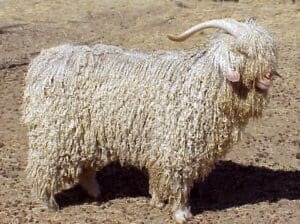
Upon investigation, I told him he “mountain goats” being referred to were not the true Rocky Mountain goats that one might expect. Instead, the advertisement was promoting a hunt for Angora goats, which are sometimes referred to as “New Zealand mountain goats”. This particular ad was on a social platform and was not a well-known guide or anything.
Angora goats are well-known for their mohair fleece and when put on open range can become fairly wild and are taken in game ranches.
Texas does, however, have a significant population of Spanish goats, also known as “Catalinas.” These goats are often hunted for sport, and their hunts are popular throughout the state. Despite their popularity, Spanish goats are domestic breeds that have feral populations in Texas and do not possess the characteristics of true mountain mountain goats.
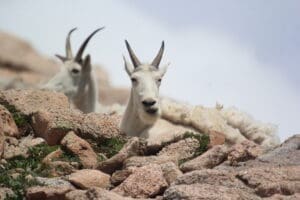
The true Rocky Mountain goat is a distinct species, recognizable by its thick white coat and robust build, adapted to cold, mountainous environments. These goats are typically found in the northern Rockies, ranging through parts of Canada and the United States, including Colorado, Montana, and Idaho. However, there are no populations of Rocky Mountain goats in Texas.
The hunter’s email highlighted a common misconception stemming from ambiguous terminology used in hunting promotions, especially in a time when artificial intelligence is used to create ads.
Chester Moore