
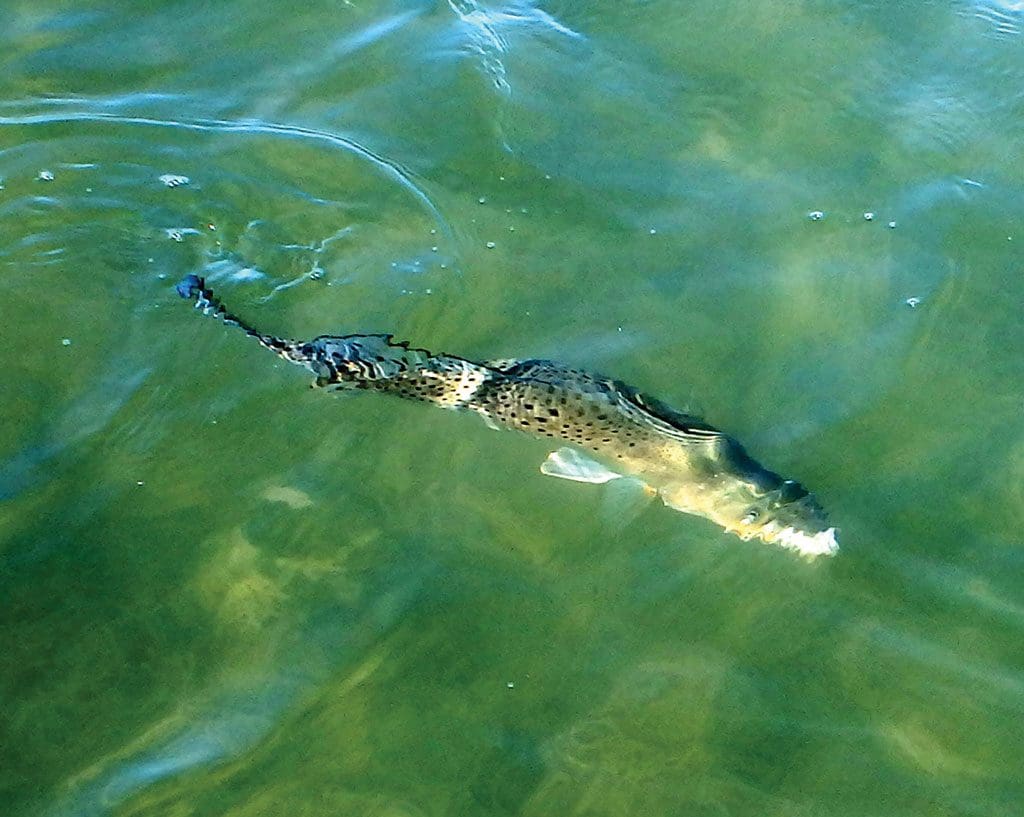
The regional management plan of the Gulf States Marine Fisheries Commission (GSMFC) sheds light on an often-misunderstood aspect of speckled trout behavior: feeding. It shows that one researcher examined stomach volumes and concluded that spotted seatrout fed more heavily in the early to mid-morning.
According to GSMFC: “He also noted that while feeding, spotted seatrout appeared to regurgitate portions of food, which floated to the surface and created an oil slick. This phenomenon would explain why fishermen often look for ‘slicks’ when attempting to locate feeding and schooling spotted seatrout.”
(Photo: Terry Upton)
Fishing these slicks can be highly effective if you approach it correctly. Here are a few tips for targeting speckled trout around slicks:
Locate Emerging Slicks: The fresher the slick, the better your chances of finding actively feeding trout. A slick that is emerging from a location will have a strong, oily sheen on the surface and sometimes carries a smell that many anglers describe as a mix of watermelon. Older slicks tend to disperse and lose their distinct sheen, indicating the trout may have moved on.
Cast Down-Current: When you find a slick, cast slightly down-current from it. Trout often swim just below the slick, feeding on the remnants of baitfish. The current will carry the scent and particles from the slick down-current, drawing more trout toward that direction.
Vary Your Depth: Since speckled trout can be suspended at different depths under the slick, try different lure retrieval techniques. Start with a surface lure or a popping cork to mimic injured baitfish near the top, then switch to soft plastics or jig heads for deeper presentations if you don’t get bites right away.
Use Mullet Imitations For Big Specks: GSMFC also noted that another researcher, “observed that record shrimp harvests were occurring during their food habits study; however, spotted seatrout were not utilizing them to any great extent. Although shrimp were present, Miles (1951) found that mullet were the preferred food for spotted seatrout.” Therefore, using lures that imitate mullet—like swimbaits or topwater plugs that resemble fleeing mullet—can improve your catch rate around slicks.
Observe the Size of the Slick: The size of the slick can also give you clues. Small, isolated slicks often indicate just a few fish feeding, while larger slicks can mean a school of trout is actively feeding in the area. If the slick is large and seems to keep expanding, you’re likely in the right spot for consistent action.
Stay Mobile: If a slick starts to dissipate or you’re not getting bites after a few casts, don’t hesitate to move on. Trout schools are mobile, and staying on the move increases your chances of finding active feeders.