
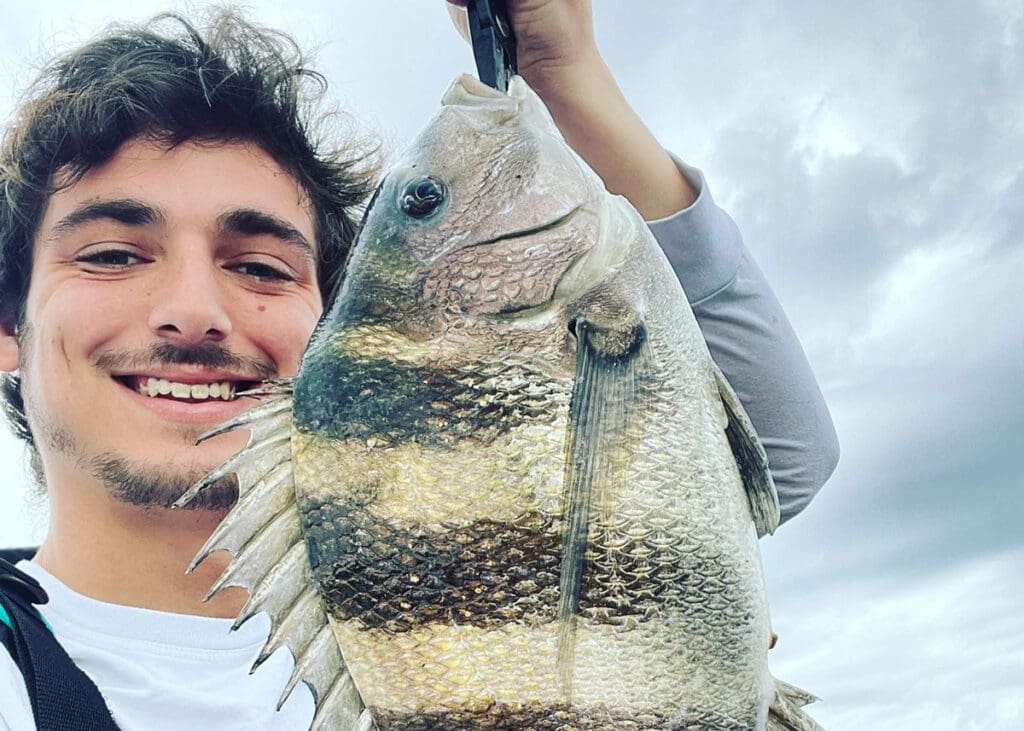
You’ll find sheepshead in the shallows more often than most anglers think, especially in the spring and fall when temperatures are moderate. It’s a phenomenal backup plan when targeting other inshore species because more often than not they’re close by, easy to find, and you likely already have the gear required. All you need is some shrimp, jigs with some stout hooks, and you’re ready to roll. And if you don’t have any bait, they’ll eat just about any crustacean you can find on the bank.
Fish for other species while the tide is low and keep an eye out for areas of exposed barnacles and oysters that look like they’ve been gnawed away. This is a telltale sign of sheepshead, and returning to these areas when the water is high is a great way to locate new spots. Keep an eye out for old wooden and concrete structures. They promote lots of growth as compared to metal structure.
Just what are we calling “shallow?” Don’t be afraid to push into the skinny stuff. You can have great days of fishing in just two to three feet of water. Unless you’re going to try to sight-fish for them (which may be doable but by no means easy), dirty water is better as you won’t spook the fish on your approach, and this is one species that doesn’t seem to care about clarity. Approach quietly, get your boat positioned, and drop your baits about halfway down as close to the structure as possible. Make sure your drag is tight; the areas you should be fishing will have lots of things to break off on, and the fish has no place to swim but around since you’re in the shallows. Ideally, your gear should heavy enough that you can horse a fish out of the structure without it taking drag. Most redfish rods are heavy enough to do the job. If you don’t get a bite within a minute or two, move a few feet, or to the next piece of structure. If there are enough sheepshead around for the area to be worth fishing, it shouldn’t take long for them to find your bait.