

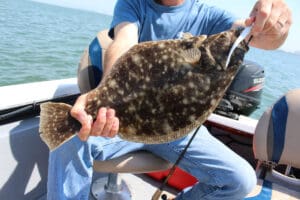
Tossing jigs for flounder is extremely effective and a ton of fun. Let’s take a look at three tips that will have you flinging in flatties left and right.
Go Heavy
When targeting flounder, use heavier jigheads than you would for other species. For example, when I cast for reds in the shallows, I use an eighth-ounce head. While with flounder, I use a quarter of an ounce. Keeping your bait close to the bottom is imperative with flounder, and a heavier head will help you stick close to those steep ledges they love to hang out on.
Presentation Matters
Whether you’re fishing drains from the marsh in the shallows or deepwater ledges, bait presentation is probably the most important thing if you’re looking to catch quality flounder. If you’re getting lots of short strikes, try slowing it down, speeding it up, or making your retrieve more or less erratic. You could upsize or downsize. Switch from a paddle tail to a curly tail, or to a fluke. Change something. If you get slammed, try to remember exactly what you were doing and replicate that. For whatever reason, flounder often will only eat if you present your bait exactly how they want it. Figuring out what they want can turn a day from zero to hero in a moment’s notice.
Try Trolling
Trolling the shoreline can be an extremely effective way to locate fish, if you can be quiet about it. This technique is best done out of a kayak, but can also be employed on small skiffs with trolling motors. Try trolling around at just one to two mph, with two to four rods. Tie on a jig that will barely bounce bottom, one that will run just above it, and a spinner bait or small jerkbait and cruise along the banks. Look for areas with current seams, spots where water drains from the marsh, and the edges of grass flats. If you have multiple bites, circle back and start casting in the same area. If the spinnerbait bite is hot but there are lots of grasses, a jig with and underspin attached is a great alternative.