
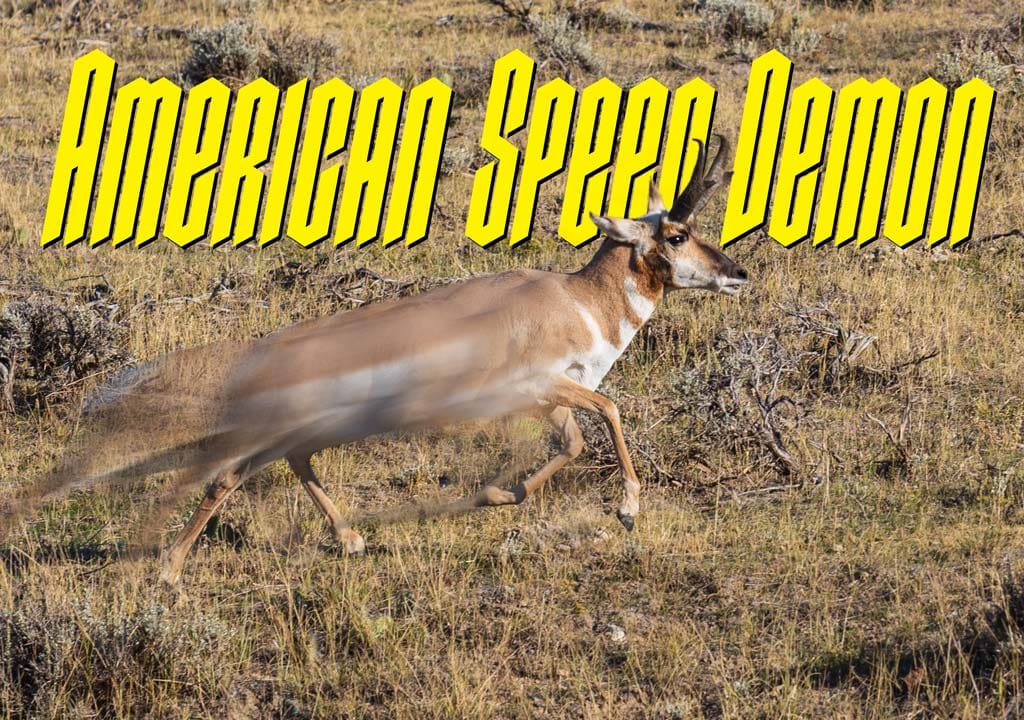
The Forgotten Pronghorn, North America’s Fastest Land Animal
Feature Story by CHESTER MOORE
LISTEN: (5 min, 15 sec)
AS A KID, I remember hearing the late great comedian Richard Pryor do a skit about watching cheetahs hunt gazelles in Africa.
It was hilarious because he had the gazelles getting the advantage and poking fun at the cheetahs.
I experienced the same thing with pronghorns in Yellowstone.
At about ⅓ mile away, I saw two pronghorn bucks feeding on the edge of the Lamar River. Slowly creeping up along the river were two gray wolves-one standard grayish-brown color and one black.
I watched for 10 minutes as they tried to get in range.
And it was like the pronghorns had a talk about it because they looked right at the wolves several times.
“Hey Earl, what do you think? You wanna let them get 20 yards?”
“Yeah, Bubba, that’ll at least give them a semi-sporting chance.”
When the wolves got about 20 yards away, these two pronghorns took off at a pace I had never seen in wildlife. I thought blackbucks on Texas ranches were fast.
They’re chumps compared to pronghorns!
These two animals quickly put an unbelievable amount of space between them and the wolves. The wolves gave chase, but I’m pretty sure I heard one of them say,
“Let’s go back to chasing mule deer.”
The pronghorn is a fantastic Texas native that gets overlooked, and that’s a shame.
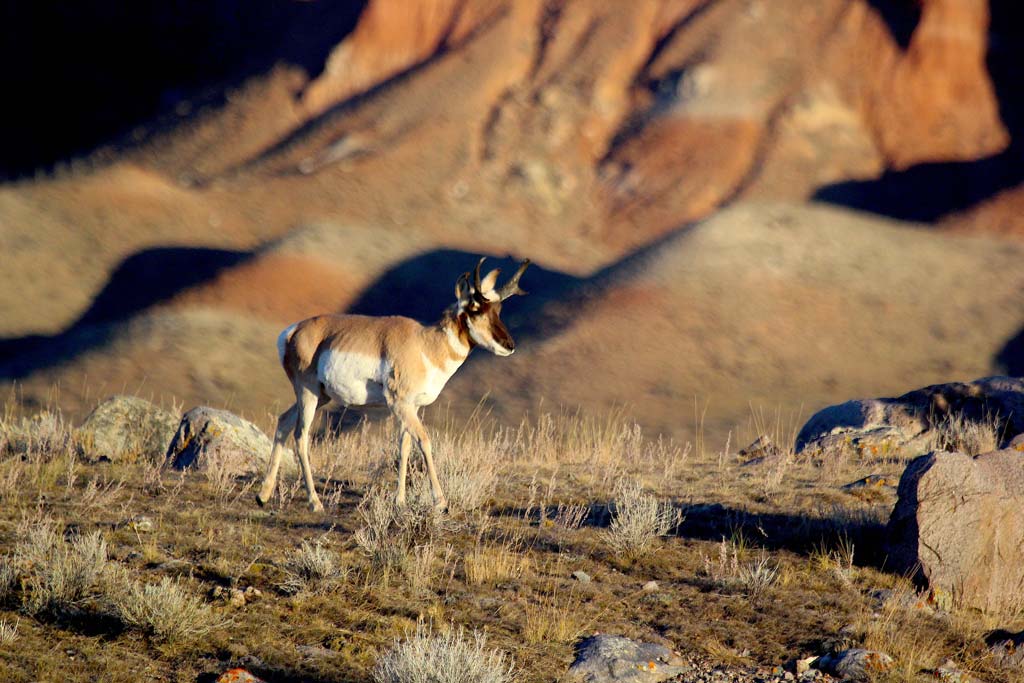 Pronghorns are the fastest land animal in North America and they live in some of the most beautiful places.
(Photo: Chester Moore)
They are, after all, the fastest land animals in North America and the second fastest on planet Earth. Only the cheetah is faster.
These incredible creatures have been clocked at 61 miles per hour!
According to officials with the Texas Parks & Wildlife Department (TPWD), pronghorns are prairie animals that once roamed the plains along with the American bison.
“Now found in Texas only in the deserts of the Trans-Pecos and the high plains of the Panhandle, the pronghorn is a unique animal in many ways.”
“The pronghorn is considered the fastest land mammal in North America, clocked at speeds of up to 60 miles per hour and can maintain a relatively high speed for hours. They have excellent vision, which helps them see vast distances in the wide-open prairie. Though they run very fast and can jump small obstacles, they tend to resist jumping even low fences, preferring to climb between or under them.”
This habit has contributed to reductions in their numbers, although drought is by far their biggest challenge.
Pronghorn were once widely distributed in Texas, but various factors, including the development of their habitat and drought, have greatly harmed their numbers. In 2011, the population had dipped down to about 3,000 but has since increased.
Part of the increase comes from TPWD restocking efforts.
Pronghorns captured from public and private lands around Dalhart have been transplanted to a restoration site south of Valentine, TX. Since 2011, about 780 pronghorns have been translocated from the Texas Panhandle to supplement populations around Marfa and Marathon, Texas.
Permits are issued for landowners after careful surveys are conducted to best manage the available herd.
The general public can draw for a pronghorn tag as part of the Big Time Texas Hunts drawing.
Hunting pronghorn antelope presents several challenges, primarily due to their exceptional vision. Their large, wide-set eyes give them a nearly 360-degree field of vision, allowing them to detect hunters from afar.
In Texas, hunters often use long-range shooting techniques due to the open areas that pronghorns inhabit. Because pronghorn are constantly moving and rarely remain in one location for long, hunters must be adept at stalking and long-range accuracy, often taking shots from distances exceeding 200, usually 300 yards. Wind conditions in Texas’ plains further complicate the situation, as gusts can affect the bullet’s trajectory.
Texas offers pronghorn hunting opportunities in the Panhandle and Trans-Pecos regions. Hunting seasons are short, lasting only a few weeks in the fall. This year, it was Sept. 28-Oct. 13. Permits can be challenging to obtain due to the limited number of tags, but hunting on private ranches is an option for those looking to increase their chances.
Even then, getting on a hunt can take a lot of work due to a high demand for limited tags.
Getting a permit in another state like Wyoming, Montana, or New Mexico is easier, especially if you go through an outfitter. And in comparison to guided elk or mule deer hunts, pronghorn hunts remain fairly affordable.
I have become really intrigued by them as I have had a lot of experience photographing them on our expeditions to Colorado, Montana, and Wyoming.
They’re now near the top of my list of animals I would like to hunt, and although the budget is tight, I’m planning on raising some funds for a pronghorn hunt in the near future.
After all, there’s something to be said for an animal that can only be outrun by a cheetah.
—story by Chester Moore
Digital Bonus:
Racing Pronghorns
