
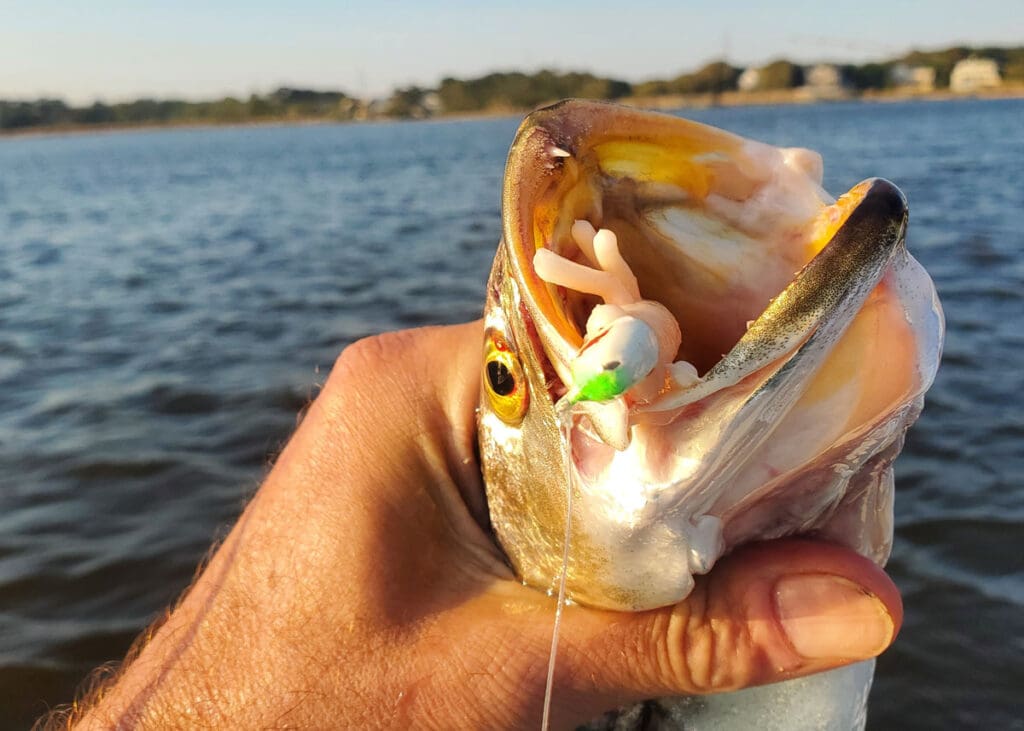
Many of us began our journey chasing trout using live or dead shrimp as bait, before jumping over to artificials. But how exactly do you use an artificial shrimp, and when?
Think about shrimp you’ve seen in the wild, or in videos. They swim slowly forward with the occasional small jump when they’re foraging or traveling. When they’re in danger, they flick their tail and give a sharp jump backwards. So, baits with tie points on the front of the shrimp are generally meant to be worked slow and steady, with the occasional soft pop. On the flip side, tail-tied baits should be given quick jerks and pauses. Baits that tie at the back should also have a tail that can articulate when it’s worked so it looks natural.
When the fish are fired up in the shallows and shrimp are hopping out of the water, I’m grabbing the bait that ties at the tail everytime. If I’m fishing a bit deeper, pitching at docks, or in a slow-paced situation, I’ll pick up the bait that ties in the front. Either will work under a popping cork, but whichever I pick up, if it’s not scented it’s getting a healthy dose of the smelliest stuff I have on board.
If you’re fishing large grass flats, a point with a few feet of water, or any situation where you want to cover water and there’s shrimp around, bust out the popping cork. An artificial shrimp alone doesn’t have a whole lot of draw as a search bait, but bringing a cork into play and it’s a whole different ball game. Don’t be afraid to let the cork sit for a few seconds, often the fish will crush it on the pause. Save tying directly to the lure for when you’re fishing in more precise situations, or in very shallow water. Hopping a shrimp along an oyster bed or cruising it under a dock is more than most trout can resist. And if you see trout chasing shrimp along a shoreline, the popping cork should be staying in the box. In water less than a few feet, the splash from a cork can spook a school of specks.