
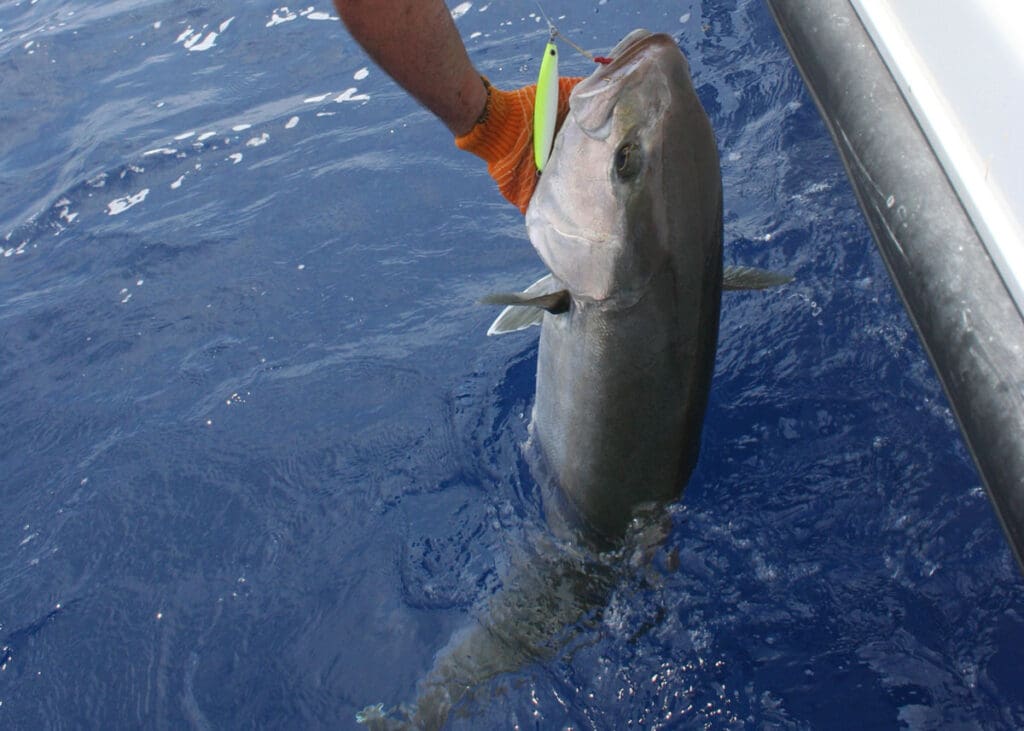
Remember a few years back when speed jigging was all the rage? It’s been a while since people stopped talking about the tactic, but if you want to enjoy the shoulder-jarring strike of a mad amberjack this remains a top method of making it happen.
Speed jigging for jacks is best done over a wreck or reef where the amberjacks are generally cruising around from the structure up to mid-depth. One of the reasons it’s so effective is that you’ll be ripping the spoon right through their prime territory, whether they’re just a few feet above the structure or 50 feet up from it. Here’s the drill:
- Drop the spoon in freefall until it touches down on the structure.
- Start cranking at an exceptionally fast pace. With each revolution of the reel handle, lift and drop the rod in tandem as your hand rises and falls. But keep the rod parallel to the water’s surface as you do so – you’re not trying to swing the tip up, your goal is to get the rod tip to load and unload. This is what gets that jig darting.
- Establish a rhythm and keep it up right until the jig reaches the surface. Often the jacks will follow it from 50 or more feet down, striking at the very last moment.
- If you reach the surface without a hookup, go into freespool and allow the jig to fall right back down to the bottom.
Note: the moment the jig taps down it’s always a good idea to lock the reel up and swing the rod tip up one time. It’s not uncommon for a bottom fish to grab the lure as it flutters down close to the structure.
If jacks are present it’s rare they won’t come charging after a speed jig darting up through the water column – so be ready for that arm-ripping strike at every moment.