
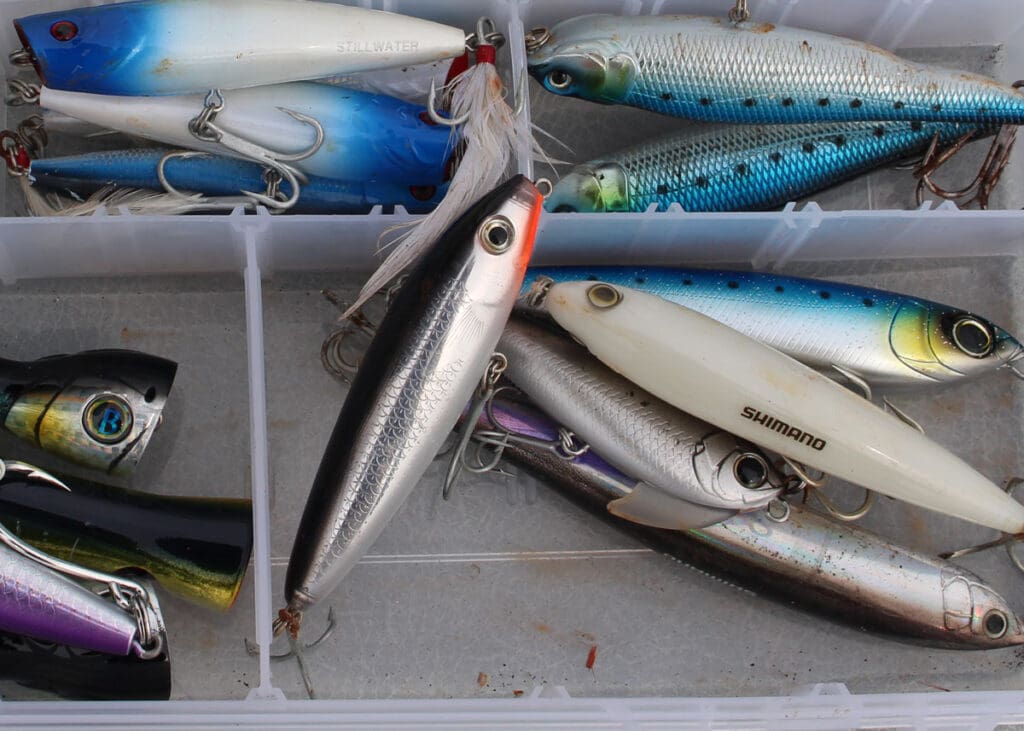
There’s nothing more exciting than watching a wake form behind a topwater bait, and nothing more frustrating than watching the fish miss again, and again… and again. Topwater is arguably the most exciting way to fish, but can lead to less fish in the boat if you aren’t smart when and how you use it. Luckily, I’ve spent countless hours figuring out when NOT to use topwater and picked up a thing or two along the way. Let’s take a look at the Do’s and Don’ts of topwater fishing.
DO: Vary your retrieve -When’s the last time you saw an injured baitfish swimming back and forth at such a consistent rate that it would match a metronome? Sometimes a perfect walk-the-dog retrieve is what the fish want, but more often than not adding a short pause every few seconds is key to drawing a strike and getting the fish pinned. If you’re getting follows but they aren’t committing, change something. A few quick twitches then a pause. Burn it back for a few feet, Let it sit for a few seconds. I like to imagine what that injured baitfish acts like at the surface, and attempt to replicate that.
DO: Fish the shallows -Unless there’s fish breaking on the surface, topwater generally stays in my box once I’m deeper than five feet, and certainly does if I’m fishing deeper than ten. You want to target areas where fish will be feeding at or within a few feet of the surface and will have their attention there. Shallow water grass flats, oyster beds, rockpiles, and ledges are all good choices to swing a topwater past when searching the shallows.
DON’T: Set the hook too early-Simply put, setting the hook too early is just about the worst thing you can do when fishing topwater. I don’t care what species it is, fish miss topwater ALL THE TIME. If you set the hook at any sign of a fish trying to hit it, all you’re going to do is pull your lure out of the strike zone. Wait a second after the hit, and if you can’t see your lure then send her home. If it pops up, or they got the side and it never went under the surface, give it a few small twitches like it got stunned on the hit. You’d be surprised by how many times they come back and clobber it.
DON’T: Force it-Fishing topwater is a blast, but if you try to do it all the time you’ll spend a majority of your angling hours casting and not catching. Generally speaking, cloudy days with low wind are best for throwing topwater. Redfish don’t seem to mind sunny days, but most other species do and will avoid feeding on the surface.