
The Hidden Crisis
Feature Story by CHESTER MOORE
LISTEN: (7 min, 44 sec)
FROM “FLIPPER” THRILLING FAMILIES on television in the 1960s to modern-day dolphin encounters at aquariums and resorts, the love affair families have with dolphins is a strong one.
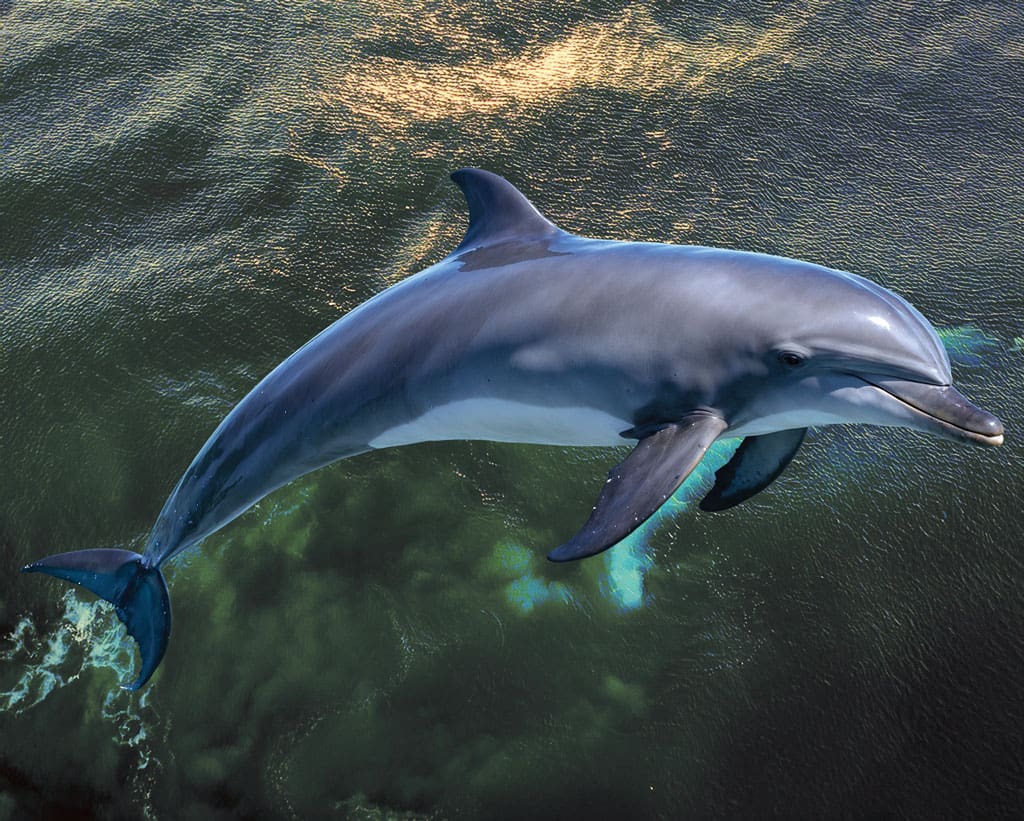
So, when game wardens in Orange County, Texas, found a dead dolphin impaled by a fishing arrow, it sent shockwaves across national media outlets.
A couple of days after the incident, I spoke with the warden on the case. He revealed the type of fishing broadhead used in the incident was only sold at one location in the region, a popular archery shop.
 Teen poaching is becoming a problem in Texas, even threatening protected species such as dolphins and eagles.
(Photo: Adobe)
“That has narrowed down our search. We’ll find out who did this,” he said.
Officials did not expect that the perpetrators were two teenage brothers who, while bowfishing, came across a young dolphin that had wandered into freshwater.
So instead of enjoying seeing the beautiful, protected marine mammal and reporting it was in an unusual area, they killed it.
This happened a few miles from my home in 2015 and opened my eyes to a problem few in our industry have discussed other than Texas Fish & Game. We have covered this issue but are taking it to a new level in this feature.
In my opinion, Texas has a teen poaching issue, and we need to address it now.
Killing Cranes and Eagles
Federal officials charged a teen from Jefferson County just 30 miles away for killing two whooping cranes less than a year after the dolphin incident.
A judge ordered the 19-year-old to pay $26,000 in restitution, barred him from owning or possessing firearms or ammunition, and prohibited him from hunting or fishing in the U.S.
He also got 200 hours of community service.
Shortly after this made headlines, I asked a Galveston County game warden if she had noticed any trends in game and fish violations among teenagers.
The answer blew me away.
“Yes, they need to stop killing our eagles.”
Take, for example, a 17-year-old Harris County, Texas boy who shot a bald eagle near White Oak Bayou. It was one of a pair that actively nested in the area for several years.
What Is Going On?
This is not an indictment of teens.
It is not one of those rants we often hear in our culture like, “The kids these days are rotten.”
I dedicate much of my life to working with teens. I believe in them and think there are things about the current crop of teens that shows incredible promise for our future.
But this teen poaching thing must be addressed.
And it must start with an admission.
Most, if not all, of these teens, came from hunting families. While we as hunters rightfully denote that poaching and hunting are radically different practices, these kids are familiar with game firearms and in several instances, were engaged in legal hunting activities when an opportunity to poach came along.
That means somewhere down the line, we must as a hunting community talk about this issue and find ways to engage it with them directly.
But we need to ask some questions first.
How much does parental influence play into this? There is no question some of these cases involve a long family line of game law violators.
In a 2015 Leon County poaching spree, Four adults and two juveniles were charged with over 175 state jail felony and Class A misdemeanor wildlife violations. Over a three-month period, they illegally killed at least 68 white-tailed deer and numerous other wildlife species across Leon County. The group used various firearms, including a rifle fitted with a silencer, to shoot animals from a motor vehicle on public roadways and private property without landowner consent according to the Associated Press.
In 2023,Texas Parks and Wildlife Game Wardens, along with Arkansas Game and Fish Wardens, executed a search warrant in Texarkana connected to a poaching investigation. The case involved a small group of adults and juveniles suspected of wildlife violations in both states.
The following are other factors that need to be examined.
Social Media Notoriety: In our culture, some of the most famous people are now not those who have accomplished anything but those who have broken laws or done other immoral things and published them on social media.
Is there a link here between social media celebrity and teen poaching?
Texas officials solved a 2020 Texas case because the teen that poached a deer that was well-known in an off-limits-to-hunting community pasture, bragged about it on Facebook.
The Power of Suggestion: Unfortunately, social media and traditional outdoor media outlets have been a place for dark sentiment regarding wildlife. While we can agree that much of the “green” movement has little to do with protecting the environment, some of the rhetoric railing against it is quite dark and is hauntingly similar to things we see play out in some of these teen cases.
A few years back, I encountered several people who used social media and at least one traditional outdoors media program to suggest shooting dolphins to cure ailing flounder populations.
“They are always out there in the passes flipping those flounder out of the water and eating them, so we should start killing some of the dolphins,” one of them told me in an email.
This idea gained a large enough following to cause me to receive multiple messages advocating for it after I published an article on flounder conservation issues.
Games: A few years ago, I received a hunting video game to review in the mail. I’m not a gamer, and since it was unsolicited, I did not review it but put it away in a box in our storage unit.
When the dolphin shooting case occurred, I took it out for study.
The game had multiple opportunities to kill nongame and even endangered animals like Bengal tigers.
Some hunting games are ethical with bag limits, seasons, and other aspects of how true hunters conduct themselves. I would even say most hunting games I have looked at are now on the up and up and promote resource stewardship.
But there’s another side to gaming and wildlife. There are games based on survival and apocalyptic scenarios that have nothing to do with hunting, and killing animals is a key component. This includes many nongame, protected, and endangered species.
This makes me come back to the quote from the warden in charge of a Pennsylvania teen poaching case.
“It was almost like a video game for them. They did it because they were bored, he said.
Solutions? There is a gap somewhere in wildlife education and awareness of the penalties for these wildlife atrocities. Teens have had their lives uprooted by the consequences of these senseless actions.
The great news is that there are far more teens engaged in conservation than poaching. And it’s time we highlight them even more in our media outlets.
The Houston Safari Club Foundation’s educational work with Houston area school districts is a shining example.
Teens get to see conservation-centric hunting information and are inspired to give back to our natural resources. And at the next stage, the scholarship program helps connect forward-thinking young people with careers in the world of wildlife management.
Programs like Texas Brigades and others do a great job of instilling conservation awareness as well.
As an industry, we must confront this for the sake of the future of wildlife and our youth.
—story by CHESTER MOORE
Texas Teens Arrested on Poaching Charges
