

PART 1: Mastering Topwater Fishing for Speckled Trout
Feature Story by TF&G STAFF
LISTEN: (5 min, 53 sec)
THE TEXAS COAST offers prime opportunities for topwater fishing for speckled trout, especially given the unique geography and diverse estuary systems found along its shores.
From the deep marshes of Sabine Lake to the flats of the Lower Laguna Madre, each region along the Texas coast presents distinct challenges and opportunities for targeting trout with topwater lures.
Here are some Texas-specific insights to elevate your topwater fishing game.
Timing
Early Morning & Late Evening: Morning and evening hours are particularly productive for trout along the Texas coast. The combination of warm Gulf waters and cooler land temperatures often results in a light onshore breeze at dawn and dusk, which helps keep surface waters cooler—ideal conditions for trout to feed aggressively on top.
Spring through Early Fall: While speckled trout can be caught all year in Texas, the warmer months from late spring to early fall are peak seasons, as baitfish
like mullet and shrimp are more abundant. The active spawning season from May through September also means more aggressive fish, making it a prime time for targeting trout on the surface.
What About Winter: As we said, trout can bite year-round on topwaters so don’t give up during winter. Warm afternoons are best for winter trout fishing, especially on incoming tides when warmer Gulf waters enter bay systems.
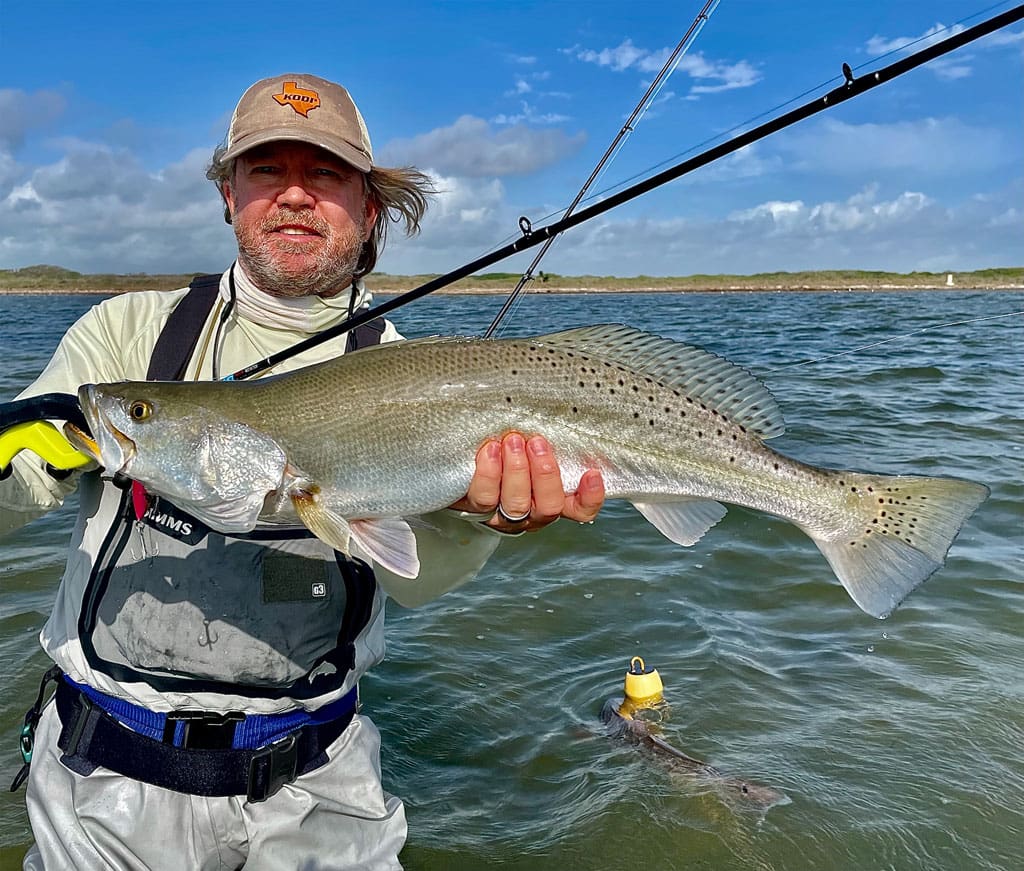 Warmer months may be more productive, but trout can bite year-round on topwaters.
(Photo: Edward Costly)
Tides & Water Movement: Texas coastal trout tend to favor locations with moderate tidal movements, especially in bays like Galveston and Matagorda. During these tidal shifts, look for areas where freshwater inflows meet saltwater, creating nutrient-rich zones that attract baitfish and, in turn, speckled trout.
 ADVERTISEMENT
Top Topwater Tactics for Texas Waters
Walk the Dog in Shallow Flats: The Texas coast is home to vast grassy flats, particularly in regions like Rockport and Port Aransas. Walkers excel here, where the trout are often visible prowling the shallow water. Mimicking a wounded mullet or pinfish with a side-to-side “walk” usually triggers explosive strikes.
Popping Action for Rougher Conditions: Opt for a popper when fishing in choppier waters, such as around the jetties in Port O’Connor or the surf near Corpus Christi. The popping sound can attract trout even in low-visibility waters stirred up by coastal breezes or boat traffic, making it easier for trout to home in on the commotion.
Adjust for Texas Variability: Texas coastal waters can fluctuate in clarity and temperature, affecting trout behavior. Adjust retrieval speeds and pause lengths according to water clarity: slower retrieves for murkier water and faster, more erratic movements for clearer conditions.
Prime Locations for Topwater Fishing
Grassy Flats in South Texas: The Lower Laguna Madre, with its extensive seagrass beds and sandy potholes, is ideal for targeting trout in shallow water. Look for areas with a mix of grass and sand pockets where trout lie in ambush.
East TX Channels & Dropoffs: Areas around Sabine Lake and the Intracoastal Waterway are rich with channels and drop-offs that attract trout seeking baitfish. Fish these depth transitions during a moving tide for the best results.
Marsh Cuts and Back Lakes near the Coastal Bend: Texas’s back lakes and marsh cuts, such as those found in the Aransas National Wildlife Refuge, provide protected zones teeming with baitfish. Target narrow passes and feeder creeks during tidal changes, as these areas act as natural funnels for trout to ambush prey.
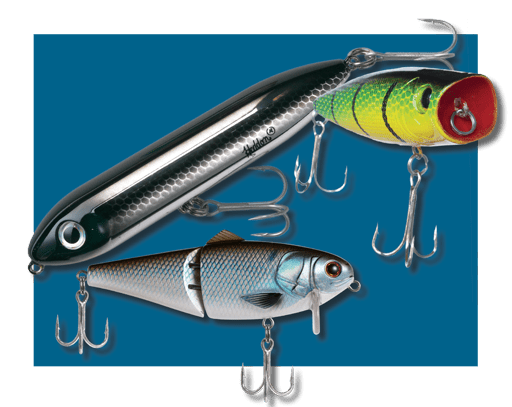 Clockwise from top: Walker, Popper, and Wake Bait.
Walkers vs. Poppers
Walkers: Best suited to calm days on Texas’s expansive flats or shallow back bays. The sort of zigzag motion of walkers closely resembles Texas baitfish like mullet or pinfish, making it especially effective when trout are near the surface in calm water.
Poppers: Poppers are ideal for working areas with surface commotion or rougher water. Use poppers around jetties, the beachfront, or during windy conditions when creating additional noise can be advantageous. Poppers are also highly effective near marshy areas with muddy bottoms, as the sound can lure trout in low-visibility conditions.
Topwater fishing for speckled trout along the Texas coast combines the thrill of the hunt with the reward of explosive strikes, making it one of the most exciting ways to enjoy Texas’s opportunity-rich coastal waters.
Wake Baits For Specks?
Wake baits, often used for bass fishing, can be surprisingly effective for targeting speckled trout in coastal waters. These lures are designed to create a steady wake just below or on the surface, imitating a slow-moving baitfish.
The unique advantage of wake baits lies in their ability to maintain a steady track, unlike walkers or poppers, which require specific rod movements.
This steady motion makes them ideal for attracting wary or inactive trout, especially during warmer days or in calm, shallow waters along grass flats and marsh edges. The lure’s subtle, continuous action can often draw strikes from trout that might ignore more aggressive topwater presentations.
For best results, cast long grassy edges, sandbars, or channel drop-offs where trout often hunt.
Wake baits with a rattling component can be even more enticing, as the added sound helps alert trout to its presence, enhancing your chances of a strike in murky or low-visibility conditions.
—reported by TF&G STAFF
Topwater Trout Blow-Ups
