
In the annals of cryptozoology, the name Louis François Fernand Hector de Loys is nearly forgotten. A Swiss oil geologist, de Loys embarked on an oil survey expedition between 1917 and 1920 in the remote, densely forested region of the Sierra de Perijaa, situated along the Venezuela-Colombia border. This pristine wilderness was inhabited by the formidable Motilone Indians, adding an element of mystique to their exploration. One fateful day, while resting by the Tarra River deep within the jungle, de Loys and his team were confronted by two enigmatic primates -apes of some kind according to his report. These creatures, unlike any they had ever encountered, exhibited peculiar behavior.
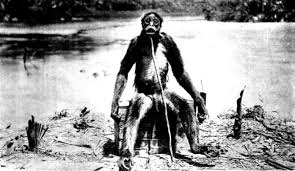
According to Deloy, they walked upright, wielding branches like weapons, and even resorting to throwing their own excrement in a display of aggression, these primates both fascinated and alarmed the explorers. In response to the perceived threat, de Loys and his crew resorted to their firearms killing one of the creatures.
Years later, French anthropologist George Montandon stumbled upon de Loys’ travel journal, within which lay a photograph that would ignite a heated debate within the scientific and cryptozoological communities. Montandon posited that the large monkey in the photograph was not a known species but rather a previously undocumented anthropoid ape.
This revelation set off a series of events culminating in a presentation at the prestigious French Academy of Sciences. Montandon sought to build a compelling case for the existence of an American ape.
Most modern researchers believe the creature is a spider monkey with its tail hidden.
But this tale serves as a window into the fascination, controversy, and unyielding human curiosity that have long defined the field of cryptozoology. It reminds us of our enduring quest for answers in the face of enigmatic encounters and the mysteries that continue to captivate the naturalist’s spirit.