
A TF&G Special Report
LISTEN: (6 min, 48 sec)
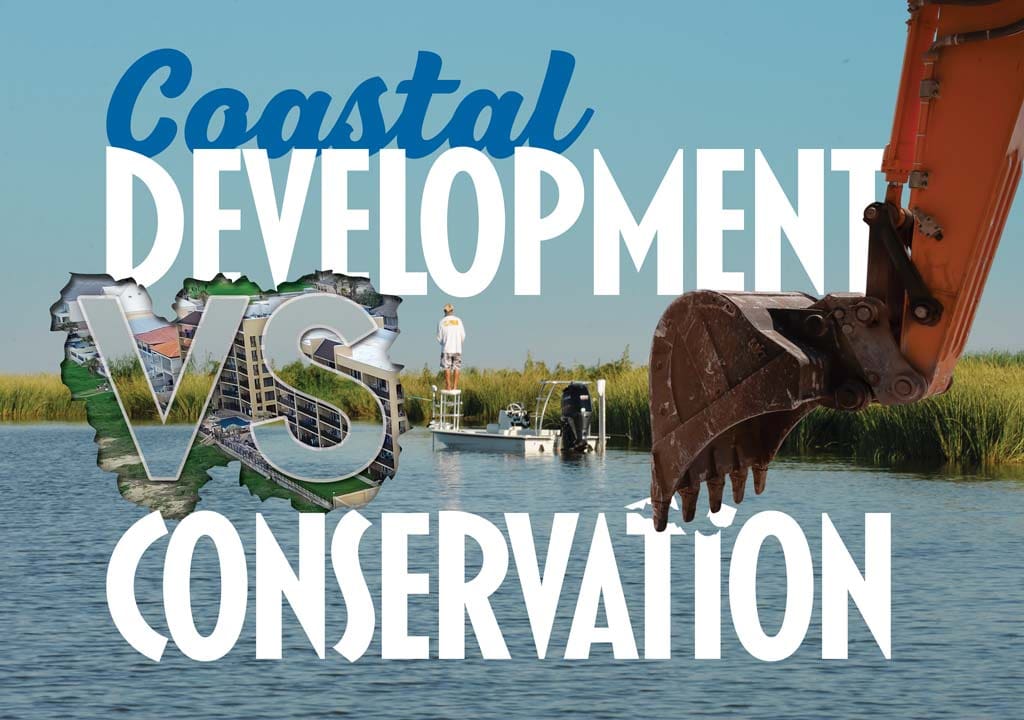
THE TEXAS COAST is caught between development and conservation.
With sprawling industrial expansions, aggressive land development, and relentless dredging, the delicate ecosystems that support fishing and hunting traditions are under immense pressure. Maintaining the balance between progress and preservation is not just an ecological necessity—it’s vital for the heritage of Texas sportsmen and women.
For Gulf Coast anglers, healthy oyster reefs are more than a shellfish concern. They’re critical to the marine food web. Oyster reefs serve as natural water filters, improve water clarity, and provide essential habitat for fish species like speckled trout, redfish, and flounder. Unfortunately, years of overharvesting and habitat loss have pushed these reefs to the brink.
The Texas Parks and Wildlife Department’s (TPWD) recent oyster harvest restrictions in bays like Galveston and Matagorda have been met with mixed reactions. While necessary to protect dwindling stocks, these closures directly impact fishing guides and the anglers who rely on productive waters. TPWD and conservation groups are working on reef restoration projects, but progress is slow, and the pressures of dredging continue to take a toll. We will talk more about this shortly.
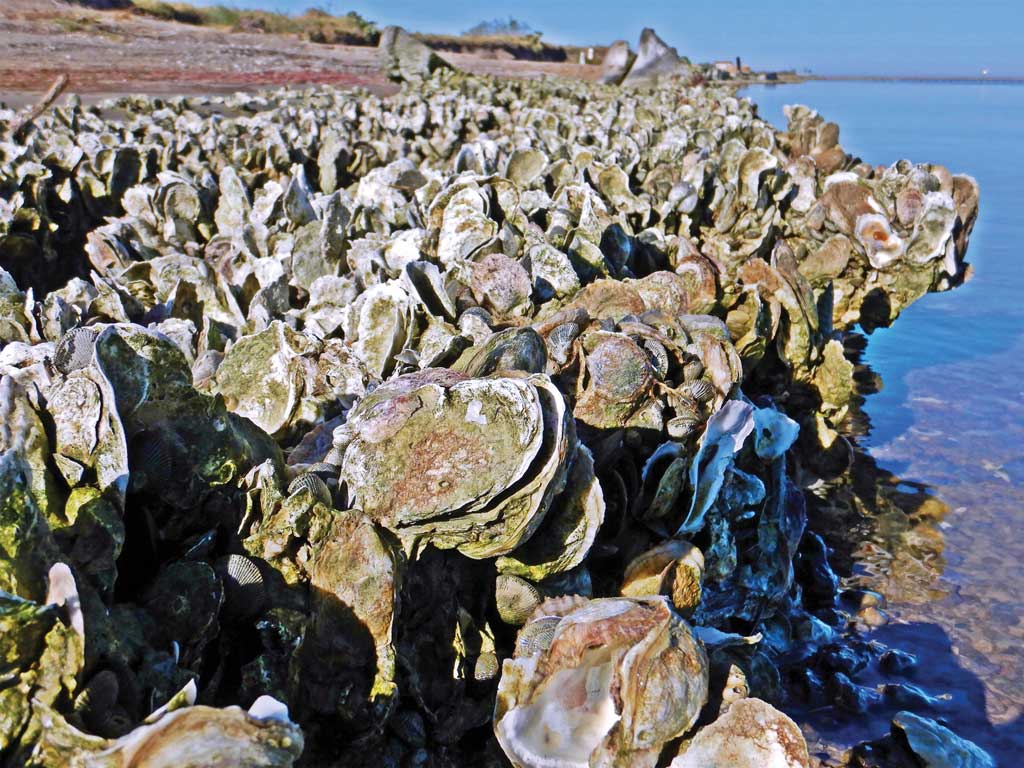 For Gulf Coast anglers, healthy oyster reefs are more than a shellfish
concern.
(Photo: CCA-Texas)
Dredging, particularly in major shipping channels, stirs up sediments that suffocate oyster beds and disrupt spawning cycles. Anglers frequently observe the effects firsthand, noting murky waters and declining catches. Balancing port maintenance with habitat conservation is critical to ensuring fish populations thrive, benefiting not only the environment but also the anglers who sustain a deep connection to these waters.
For waterfowl hunters, the Texas coast has long been a paradise. The vast network of wetlands and marshes draws millions of ducks, geese, and other migratory birds each year. Yet, these vital habitats are shrinking at an alarming rate due to development and land-use changes.
 ADVERTISEMENT
The Houston-Galveston region alone has lost nearly 30% of its wetlands over the last three decades, much of it to residential and industrial growth. These marshes are not just critical for waterfowl—they also act as nurseries for shrimp and crabs and serve as natural storm barriers. As wetlands vanish, so too do the opportunities for hunters to experience the rich tradition of waterfowling along the Gulf Coast.
Conservation programs, like Ducks Unlimited’s Texas initiatives, are working to restore critical habitats, but the scale of loss far outpaces restoration efforts. Hunters have historically been some of the most passionate conservationists, funding wetland protection through license fees, stamps, and voluntary contributions. Their advocacy will be key in ensuring that marshes and wetlands remain part of the Texas landscape.
Despite the challenges, the Texas coast offers a glimmer of hope for sportsmen and women. Anglers and hunters have been at the forefront of advocating for sustainable practices and habitat restoration. Oyster reef rebuilding projects, such as those led by the Galveston Bay Foundation, are not just ecological wins—they are investments in the future of Gulf Coast fishing.
Similarly, waterfowl hunters’ contributions through the North American Wetlands Conservation Act have funded millions of dollars in habitat restoration, helping secure key wintering grounds for ducks and geese. However, these efforts need to be scaled up to counterbalance the relentless march of development.
 ADVERTISEMENT
Sportsmen and women can also play a direct role in shaping the future. By joining conservation organizations, participating in habitat restoration projects, and advocating for balanced land-use policies, they can ensure that Texas remains a haven for fishing and hunting. The voices of those who know the coast best—its anglers and hunters—are critical in guiding sustainable development policies.
Hunters and anglers are the original conservationists. They have a unique connection to the land and water that drives them to protect these resources. But the challenges along the Texas coast demand action from everyone who cherishes the outdoors.
A highlight of how we should move forward with coastal conservation has been exhibited by the Coastal Conservation Association (CCA).
They have played a pivotal force in oyster conservation along the Texas coast. As one of the nation’s leading advocacy groups for saltwater anglers, CCA has long recognized the importance of healthy oyster reefs to both the environment and the fishing community.
CCA’s efforts include spearheading reef restoration projects and advocating for sustainable management practices. Through partnerships with state agencies like the Texas Parks and Wildlife Department (TPWD) and organizations such as the Galveston Bay Foundation, CCA has helped rebuild critical oyster habitats in areas devastated by hurricanes, dredging, and overharvesting. These projects involve placing recycled oyster shells and limestone in strategic locations to create new reef structures, providing habitat for oysters and shelter for fish, shrimp, and crabs.
 ADVERTISEMENT
Additionally, CCA has championed the creation of oyster sanctuaries, areas where harvesting is prohibited to allow oyster populations to recover and thrive. Sanctuaries not only enhance biodiversity but also improve water quality by leveraging oysters’ natural filtration abilities.
Flatsworthy, a Texas-based nonprofit focused on promoting responsible stewardship of coastal resources, has been instrumental in fostering sustainable oyster conservation efforts. With a mission rooted in fostering harmony among diverse user groups, Flatsworthy has worked to unite anglers, commercial fishers, and conservationists to address declining oyster populations.
The organization has actively supported initiatives to establish oyster sanctuaries along the Texas coast, emphasizing the importance of no-harvest zones to allow depleted reefs to regenerate.
Flatsworthy’s outreach includes community engagement, encouraging respectful resource use and promoting the critical role oysters play in the Gulf Coast ecosystem. Through education and collaboration, Flatsworthy is making an impact.
By uniting as stewards of the coast—whether through oyster restoration, wetland protection, or advocating for sustainable practices—we can all help ensure the Gulf Coast remains a thriving haven for wildlife and fisheries.
—reported by CHESTER MOORE and TF&G STAFF
DIGITAL BONUS: The Texas Coast, Above and Below
