

TPWD Concerned About Screwworm Outbreaks; Bird Flu Hits Texas
LISTEN: (4 min, 19 sec)
TEXAS PARKS AND WILDLIFE DEPARTMENT (TPWD) asks hunters and other outdoor enthusiasts in South Texas to monitor for animals affected by New World Screwworm (NWS) after a recent detection in Mexico.
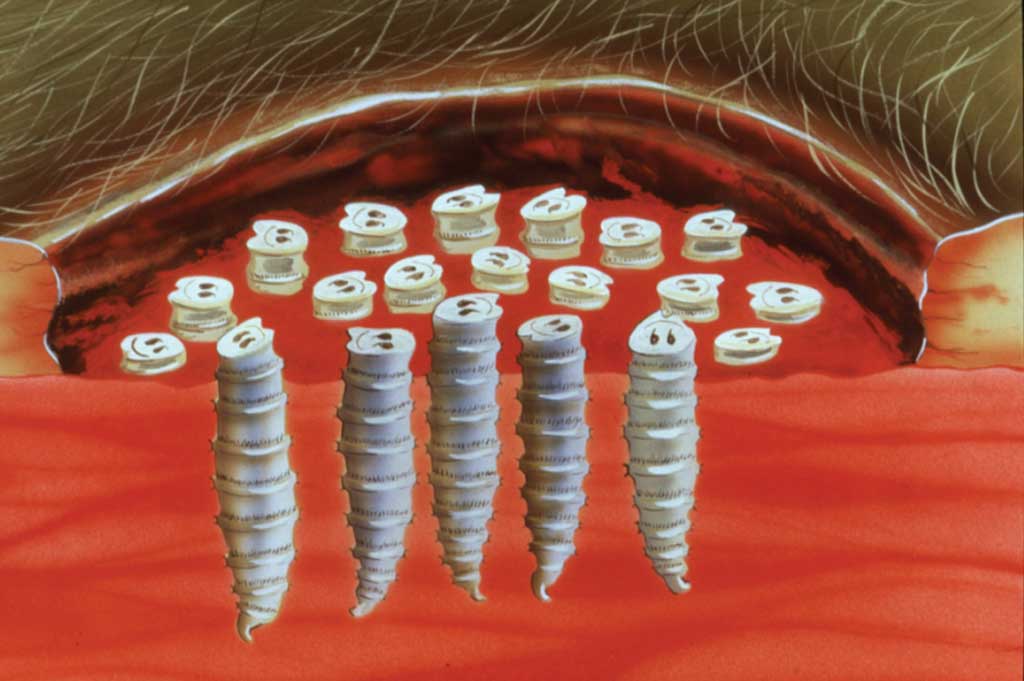 USDA Slide of screwworm larvae living in a wound.
(Illustration: USDA)
This detection, found in a cow at an inspection checkpoint in the southern Mexico State of Chiapas, close to the border with Guatemala, follows the progressively northward movement of NWS through both South and Central Americas.
As a protective measure, animal health officials ask those along the southern Texas border to monitor wildlife, livestock and pets for clinical signs of NWS and immediately report potential cases.
New World screwworms are larvae or maggots of the NWS fly (Cochliomyia hominivorax), that cause a painful condition known as NWS myiasis. NWS flies lay eggs in open wounds or orifices of live tissue such as nostrils, eyes or mouth. These eggs hatch into dangerous parasitic larvae, and the maggots burrow or screw into flesh with sharp mouth hooks. Wounds can become larger, and an infestation can often cause serious, deadly damage or death to the infected animal.
 ADVERTISEMENT
NWS primarily infests livestock but can also affect humans and wildlife including deer and birds.
The parasite was last eradicated from the U.S. in 1966, with costly efforts by federal and state animal health officials, livestock producers and veterinary practitioners. Eradication efforts have continued in Central America, but the pest is considered widespread in Cuba, Haiti, Dominican Republic and South American countries.
Clinical signs of NWS myiasis may include:
• Irritated or depressed behavior
• Loss of appetite
• Head shaking
• Smell of decaying flesh
• Presence of maggots in wounds
• Isolation from other animals or people
NWS infestations begin when a female NWS fly is drawn to the odor of a wound or natural opening on a live, warm-blooded animal, where she lays her eggs. These openings can include wounds as small as a tick bite, nasal or eye openings, navel of a newborn or genitalia.
One NWS female fly can lay up to 300 eggs at a time and may lay up to 3,000 eggs during her lifespan. Eggs hatch into larvae (maggots) that burrow into an opening to feed. After feeding, larvae drop to the ground, burrow into the soil and emerge as adult NWS flies. Adult NWS flies can fly long distances, and the movement of infested livestock or wildlife can increase the rate of spread.
• • •
Bird Flu in Texas
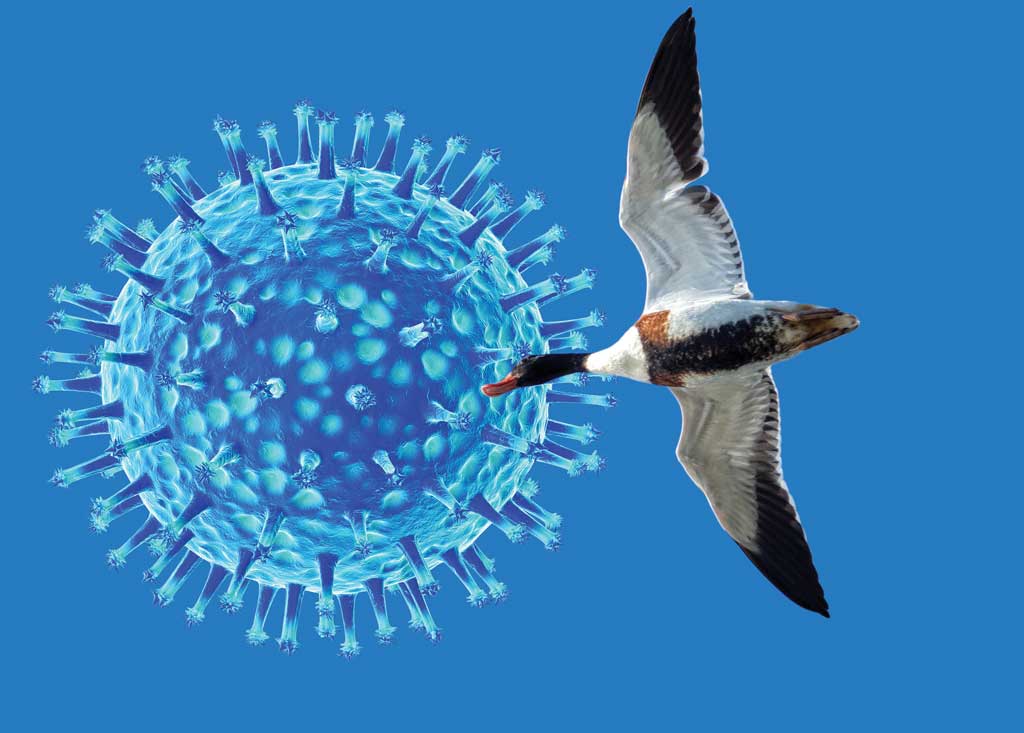 HPAI, the bird flu virus, has been found in waterfowl and other wild birds in Texas.
(Photo Illustration: TF&G)
THE NATIONAL VETERINARY SERVICES LABORATORIES (NVSL) confirmed the presence of Highly Pathogenic Avian Influenza (HPAI) in multiple locations throughout the state. Disease experts indicate that HPAI is circulating among wild birds in Texas as waterbirds and waterfowl are on their wintering grounds.
Detections have been found in Wharton, Galveston, and Harris counties.
Detected in all states across the U.S., HPAI is a highly contagious virus that transmits easily among wild and domestic birds. The virus can spread directly between animals and indirectly through environmental contamination.
Because of the ease of transmission, Texas Parks and Wildlife Department (TPWD) recommends wildlife rehabilitators remain cautious when intaking wild animals with clinical signs consistent with HPAI and consider quarantining animals to limit the potential for HPAI exposure to other animals within the facility.
Game bird hunters should consider precautions such as:
• Dispose of carcasses properly
• Wear gloves when processing
• Avoid consumption or processing of any sick bird
• Clean and disinfect tools between carcasses
• Cook meat to proper temperatures
Currently, the transmission risk of avian influenza from infected birds to people remains low, but the public should take basic protective measures if contact with wild animals cannot be avoided.
If you encounter a wild animal with signs consistent with HPAI, contact your local TPWD wildlife biologist.
—from TF&G Staff Reports
DIGITAL BONUS: Report on Screwworm Outbreaks
News report video from KHOU News in Houston.
