
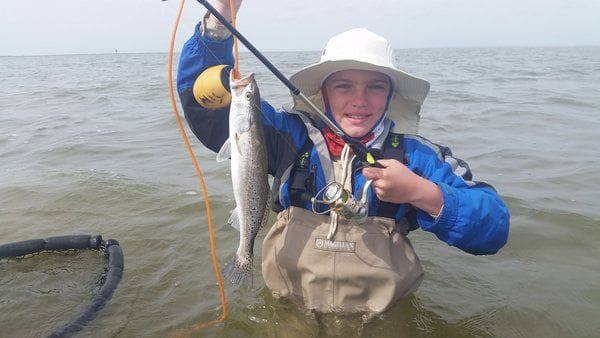
Wade fishing along the Texas Gulf Coast is one of the most rewarding ways to target speckled trout and redfish. By stepping into the water and becoming part of the environment, anglers can access shallow flats and productive shorelines that are often unreachable by boat. Here are some key tips to improve your success while wade fishing for these prized inshore species.
Speckled trout and redfish frequent different habitats, but they often overlap. Look for areas with a mix of sand, grass, and shell bottoms, as these provide excellent feeding grounds. During warmer months, fish tend to move into deeper pockets early in the day and onto shallower flats as temperatures rise. In colder months, they often hold in deeper, muddy areas that retain warmth.
Tide movement plays a crucial role in fish activity. A moving tide—whether incoming or outgoing—creates natural bait movement, attracting predator fish. Target areas where baitfish, such as mullet or shrimp, are visibly active. Shorelines with current flow, points, and drop-offs are prime locations to find feeding fish.
When wade fishing, it’s best to travel light. A medium-action spinning or baitcasting rod paired with a high-quality reel and braided line provides strength and sensitivity while casting long distances. A small wading belt or tackle pack allows easy access to lures and tools without the need for a bulky tackle box.
For artificial lures, soft plastics rigged on jigheads are excellent choices for both trout and redfish. Colors like white, chartreuse, and natural baitfish patterns work well in various conditions. Topwater lures such as walk-the-dog-style plugs are especially effective in the morning and evening, creating explosive surface strikes.
Live bait, such as shrimp or mullet under a popping cork, is a surefire way to attract fish, especially when the bite is slow. Gold spoons and paddle-tail swimbaits also work well for enticing redfish cruising the flats.
When wading, move slowly and quietly to avoid spooking fish. Start by casting ahead of your position and fan-casting in different directions to cover more water. Vary your retrieve speed and lure action to determine what the fish prefer on a given day.
For redfish, sight-fishing in clear water can be highly effective. Watch for tailing fish or wakes in the shallows and make accurate casts ahead of their movement. For speckled trout, targeting deeper potholes in grass flats or working a slow retrieve near structure can yield great results.
Always wear protective wading gear, including sturdy boots to guard against sharp shells and stingrays. A wading staff can help maintain balance in soft or uneven terrain. Be mindful of changing weather conditions and strong currents, especially in unfamiliar areas.