
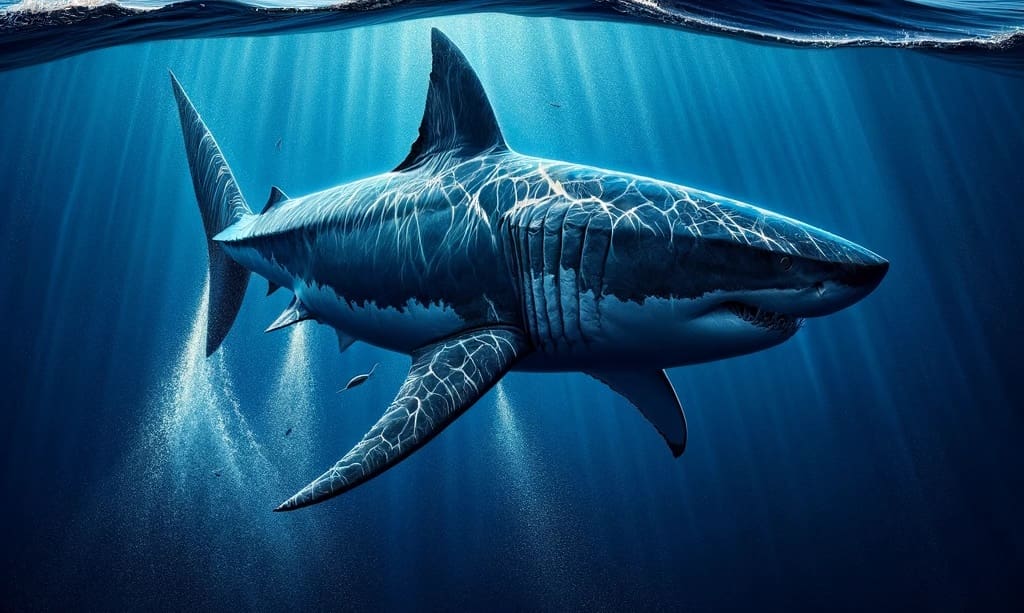
A recent story has stated there are no great white sharks in the Gulf. I respectfully disagree and have been writing about great whites in the Gulf for 20 years.
The story in question has three key points:
- The Gulf is too warm.
- It doesn’t have the right type of prey .
- They are simply not present in the Gulf.
While the article suggests that the Gulf of Mexico is not an ideal habitat for great white sharks due to temperature, prey availability, and water conditions, scientific evidence and documented sightings indicate that these apex predators do, in fact, frequent the region.
Great White Sharks Are Present in the Gulf
Contrary to the claim that great white sharks avoid the Gulf due to prey scarcity, research and tracking data from organizations like OCEARCH and the Atlantic White Shark Conservancy have consistently shown that these sharks travel through and even overwinter in the Gulf. Tagging data has recorded multiple individuals, including well-known sharks such as AWSC’s “LeeBeth” and Ocearch’s “Unama’ki,” making extensive use of Gulf waters.
Prey Availability and Adaptability For Great White Sharks
The notion that the Gulf lacks sufficient prey is not entirely accurate. While it may not have the large seal populations found in the North Atlantic or Pacific, the Gulf is home to a rich marine ecosystem, including species such as tuna, amberjack, and other large fish, as well as marine mammals like dolphins. Great white sharks are opportunistic feeders capable of adapting their diet based on available resources, and studies have documented them preying on species within the Gulf.
To read the rest of the story about great whites in the Gulf click here.
To take a look at what scientists think great whites might be eating in the Gulf check this out.
Chester Moore