
Targeting Grass Flats for Redfish
Feature Article by TF&G Staff
LISTEN: (6 min, 22 sec)
THERE ARE FEW saltwater fishing experiences more exciting than pursuing redfish across the vast, shallow seagrass flats on the Texas Coast.
These shallow-water battlegrounds, from the Lower Laguna Madre to Christmas Bay, are where anglers test their patience, skill, and perseverance against one of the most formidable inshore game fish.
For those willing to embrace the challenges like blazing sun, shifting tides, and the ever-present Gulf breeze, success in the seagrass flats awaits anglers.
Seagrass flats are the lifeblood of the Texas coastal fishery, offering shelter and sustenance for redfish, speckled trout, flounder, and countless other marine species. These underwater prairies composed of species like shoal grass and turtle grass, create a unique and essential ecosystem. Shrimp, crabs, mullet, and baitfish congregate in the seagrass, drawing in the ever-hungry redfish that prowl these shallows.
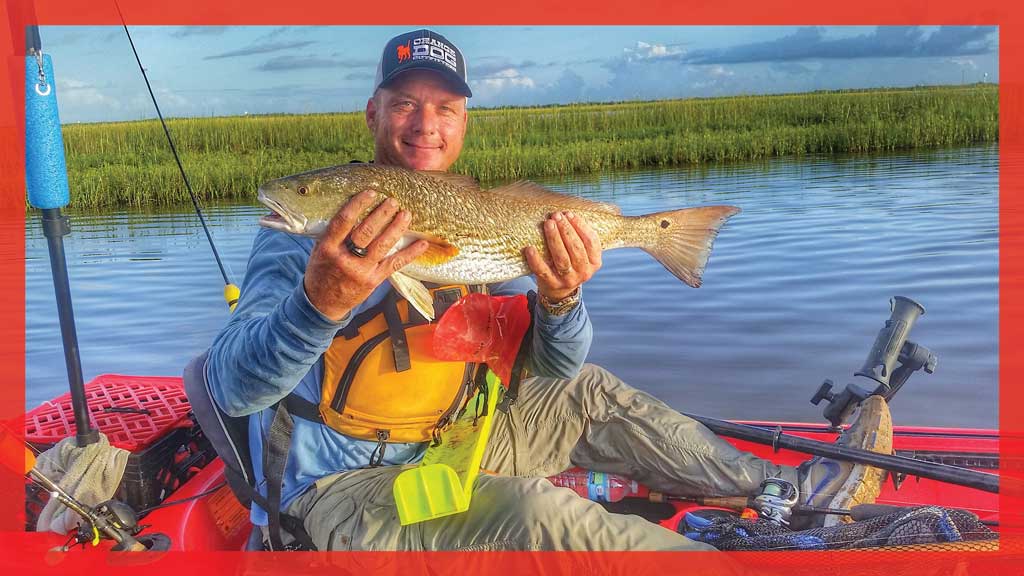 Kayaks give anglers mobility and stealth in shallow flats with minimal disturbance.
(Photo: Tony Keill)
The challenge of targeting reds in the flats lies in their wariness. Unlike deeper waters where they have a greater margin for escape, flats fishing requires an angler to be stealthy, observant, and well-versed in how these fish behave under different conditions.
One of the most thrilling sights in inshore fishing is the sight of a redfish tail waving above the surface as it roots through the grass for crabs and shrimp. Tailing redfish are a fly angler’s dream, but they also offer conventional tackle enthusiasts an opportunity to put their casting accuracy to the test.
The key to capitalizing on tailing reds is approach. If you’re wading, keep your steps slow and deliberate to avoid sending pressure waves through the water. If you’re in a kayak, use the wind to drift silently into position. Make sure to present your bait or lure gently—casting too aggressively can send your target fleeing before you even have a chance.
For many Texas anglers, wade fishing is the method of choice when hunting redfish in the shallows. It allows for direct engagement with the environment, offering anglers an up-close perspective of the fish’s movements.
To make the most of wade fishing, opt for lightweight gear and polarized sunglasses to cut through the glare and spot fish more easily. Small topwater lures, soft plastics rigged weedless, and live shrimp under a popping cork are all effective choices. The trick is to read the water—look for nervous baitfish, subtle wakes, and the telltale flick of a redfish tail.
Kayaks provide mobility for anglers looking to access areas too shallow for boats. A well-positioned kayak can glide over the flats with minimal disturbance, allowing anglers to sight-cast to reds before they spook.
When kayak fishing, pay close attention to wind direction and tidal flow. These factors can dictate where redfish are staging and feeding. Use a push pole or a stake-out anchor to hold position once you’ve found a school and keep your casts precise. Too many careless casts can scatter a school in seconds.
For anglers looking to take their skills to the next level, fly fishing for redfish in the seagrass flats is a pinnacle experience. A well-placed shrimp or crab imitation fly can be deadly when presented properly, but accuracy and patience are key.
Redfish in the flats can be finicky. They often won’t chase a fly like they might in deeper water. The best approach is to lead the fish by a few feet, letting the fly settle naturally before giving it the slightest twitch. If done correctly, this method can result in one of the most explosive strikes in inshore fishing.
While redfish inhabit the flats year-round, certain seasons offer better opportunities for sight-fishing.
Spring and Summer: Warmer water temperatures make redfish more active, often causing them to push into ultra-shallow waters. This is prime time for topwater action, with reds hitting walk-the-dog style baits aggressively.
Fall: Cooling temperatures bring massive schools of redfish together, particularly in October and November. This is a great time for kayak anglers to find large groups of reds blitzing bait on the flats.
Winter: Cold fronts can push redfish into deeper pockets adjacent to the flats, but sunny afternoons often bring them back into the shallows. Slow-moving soft plastics and shrimp imitations excel in these conditions.
Matching the hatch is crucial when targeting redfish in the seagrass. Here are some of the most effective baits and lures:
Live Bait: Live shrimp, finger mullet, and mud minnows under a popping cork are irresistible to reds.
Soft Plastics: Paddle tails, shrimp imitations, and jerkbaits rigged weedless work wonders.
TF&G Boating Editor Lenny Rudow is an ace redfish angler and offers the following tips for using plastics for reds.
• Use the lightest jighead which still has enough weight for you to detect the bottom. Light heads give the jig a seductive sink that the reds just can’t resist.
The above notwithstanding, make darn sure you can detect bottom at all times (except when you’re fishing weeds). Quite often redfish will be feeding right at bottom and bouncing your jig along, allowing it to tap down for a fraction of a second, is what will generate strikes.
• Try paddle-tails. Yes, you’ll catch redfish on curly tails and straight tails. But the paddles seem to evoke more strikes much of the time. Some claim it’s the vibrations created by the tail wobbling back and forth; we don’t have any evidence to back the assertion up, but maybe that’s one of the reasons why they work so well.
Topwater Lures: Early mornings and late evenings are prime times for walk-the-dog style topwaters.
Flies: Shrimp patterns, crab imitations, and small baitfish flies in natural colors excel in clear water.
Fishing for redfish in the Texas seagrass flats isn’t just about catching fish. It’s about the entire experience. Whether wading, kayaking, or casting a fly, the pursuit of redfish in these shallow Texas waters is a truly incredible experience that blesses thousands of anglers every year.
—story by TF&G Staff
DIGITAL BONUS: Casting to Tailing Reds
