

Chasing Gag Grouper
LISTEN: (4 min, 9 sec)
WHEN SPEAKING OF GAG GROUPER, most people’s minds are painted with images of offshore boats and deep dropping near oil rigs, but along the Texas coast, gag grouper can be found inshore amongst the jetty rocks, pilings, and other sunken structures. Known for their aggressive strike and fight, gag grouper are a challenging catch, but are one of the best eating with its crablike texture.
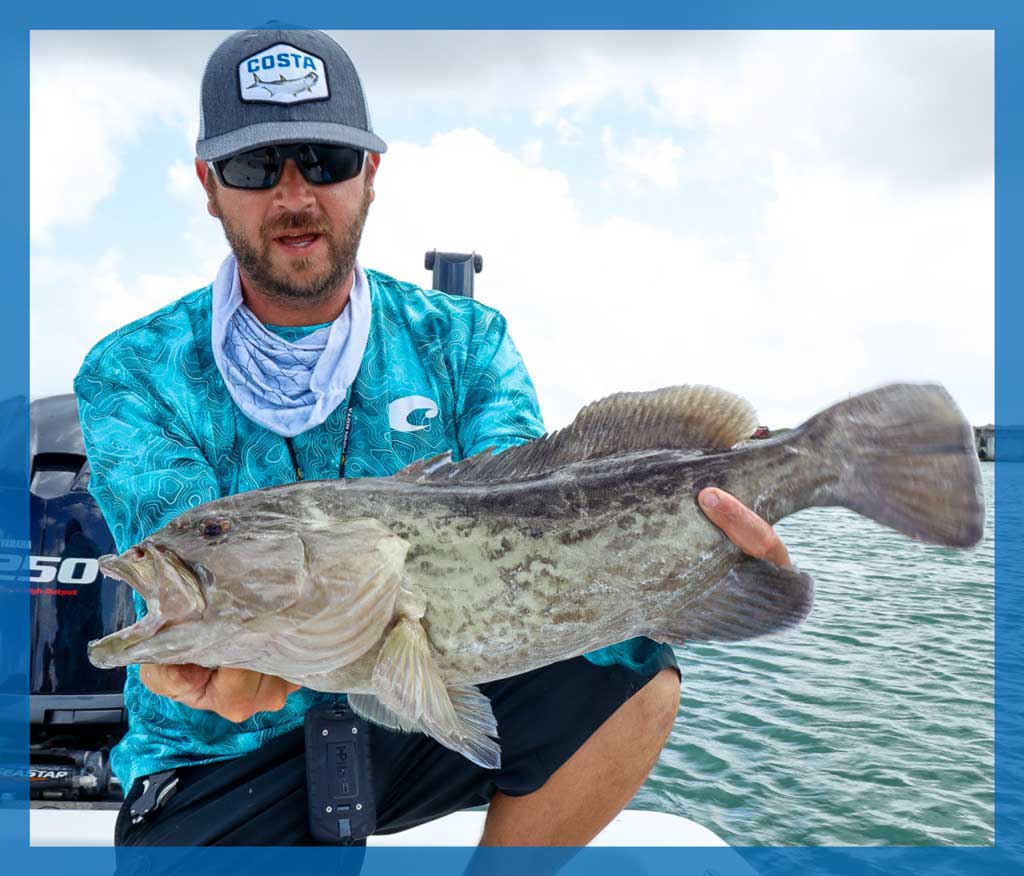 Gag grouper are challenging to catch, but are some of the best eating.
(Photo: Kelly Groce)
Gag grouper are without a doubt an interesting species. Their scientific name, microlepis, derives from the Greek words “micro” for small and “lepis” meaning scale, referring to their small scales. Once gags mature, there’s nothing small about them. They can reach up to 60 lbs. and 48inches in length, with the typical fish being caught in the 10-20 lb. range. Their growth rate is very slow, with a slot or keeper sized gag grouper taking 5 or 6 years to reach the minimum length of 24” here in Texas. Another unique thing about gag groupers is that they are all protogynous hermaphrodites, meaning they start their lives as females, but after a few years of spawning, some of them change into males. This switch usually happens once they are several years matured and much larger. The size groupers being caught nearshore in Texas are most likely females.
Lurking amongst the structure, gag grouper camouflage themselves into their surrounds and wait motionless for their next opportunity at a meal. Besides their stunning appearance, their violent strike once they commit to eating prey is what got me hooked. The vicious thump when they eat is intense and make sure your drag is set tight because they will 100% try to swim back down to the structure they were on and break your line. Both live and artificial baits work when targeting gags. Artificial lures that we use for snook fishing work great like a 3-inch D.O.A. shad tail on a 3/8 oz jighead. A lively finger mullet on a 6/0 or 10/0 hook will definitely do the trick. One thing I’ve noticed on good gag grouper fishing days, is clear water. In one of the most memorable fishing trips I have ever had, both mangrove snapper and grouper were coming up to the top and ferociously eating our topwaters and freelined mullet on the surface. Yes, you heard me right, gag grouper on the surface.
Whichever tactic you choose, make sure to beef up on your leader line. You’ll be fishing pilings, jagged rocks or oyster beds with a hole they are bedded down in. Once you hook up, 9 times out of 10 you’ll notice your fishing line moving back towards where you hooked them. Using the proper fishing gear is key to keeping them away from potential hazards and out in open water for you or your best net man to land.
Down here on the Lower Laguna Madre, we have several zones where we can fish for gag grouper. The SPI and Boca Chica jetties hold all types of aquatic wildlife as well as the deepwater structures of the ship channel. The RGV Reef is only 13 miles northeast of the South Padre Island jetties and is a popular nearshore option for anglers to catch state water snapper, grouper and more. At 1,650 acres, the RGV Reef is Texas’ largest reef and one of the largest artificial reefs in the world. Professional crews continue to add to the reef by deploying concrete railroad ties and most recently a retired tugboat. The organization, Friends of RGV Reef, helps restore and enhance underwater environments, creates new homes for fish populations and supports biodiversity in the Gulf.
As Texas anglers, we are blessed to have a fishery that offers fisherman plenty of species to chase after. Enjoy your pursuit of checking this intriguing, unique and beautiful species off your fishing bucket list this summer. And please remember friends, to keep only what you need, not everything you catch.
Email Kelly Groce at ContactUs@fishgame.com
