
Fishing Texas’ Rivers and Streams is a Real Challenge in a State with 97% Private Land Ownership
Feature Article Compiled by TF&G Staff
LISTEN: (7 min, 38 sec)
ONE OF THE BIGGEST CHALLENGES inland anglers face in Texas, especially in the western 2/3 of the state where large, navigable rivers are scarce, is access.
Texas is 97 percent private land and that means most of the land around streams and rivers is private.
Texas Parks & Wildlife has a Q&A on these issues we thought would give an important look at an issue we will be diving more into in our three-times weekly e-newsletter. This is directly from TPWD and is a great place to begin looking at the issue.
What is considered a public stream?
In Texas a stream is public if it is “navigable in fact, ‘or’ navigable by statute.” There is no precise test for whether a stream is navigable in fact. The term is based on the idea of public utility. One court has observed that “[w]aters, which in their natural state are useful to the public for a considerable portion of the year, are navigable.”
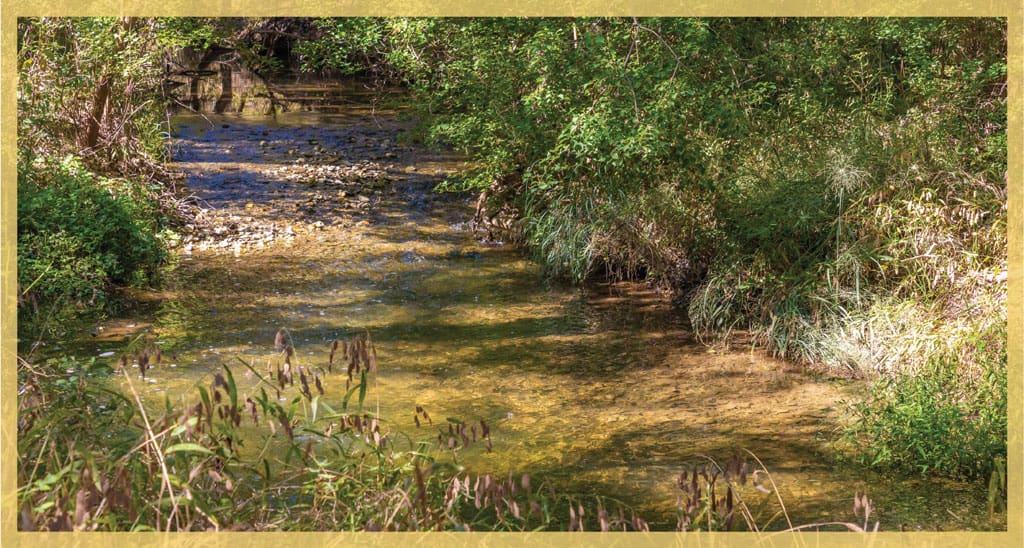 In Texas, a stream is navigable if it retains an average width of 30 feet from the mouth up, including the entire stream bed, not just the area covered by water on a given day.
(Photo: Adobe)
A stream is navigable by statute if it retains an average width of 30 feet from the mouth up.
It is important to understand that the entire stream bed is to be included in the width, not just the area covered by water on a given day. A navigable stream may be dry part of the year but does not lose its character as a navigable stream.
 ADVERTISEMENT
To complicate matters, some Texas land titles originated with Spanish or Mexican land grants, and the law of Spain and Mexico did not distinguish public and private streams on the basis of navigability. Streams were valued primarily as a source of water for household use and for irrigation, rather than a way to move people and goods. So when the sovereign granted land, perennial streams were retained for public use, regardless of navigability, so as to make as much land as possible capable of settlement. A stream is perennial if it flows most or all of the year. In determining the rights of holders of title under Mexican grants, the laws of Mexico were in effect when the grants were made control. So in counties that contain Spanish or Mexican land grants, there are an unknown number of perennial streams which are public streams, even though they may not be navigable.
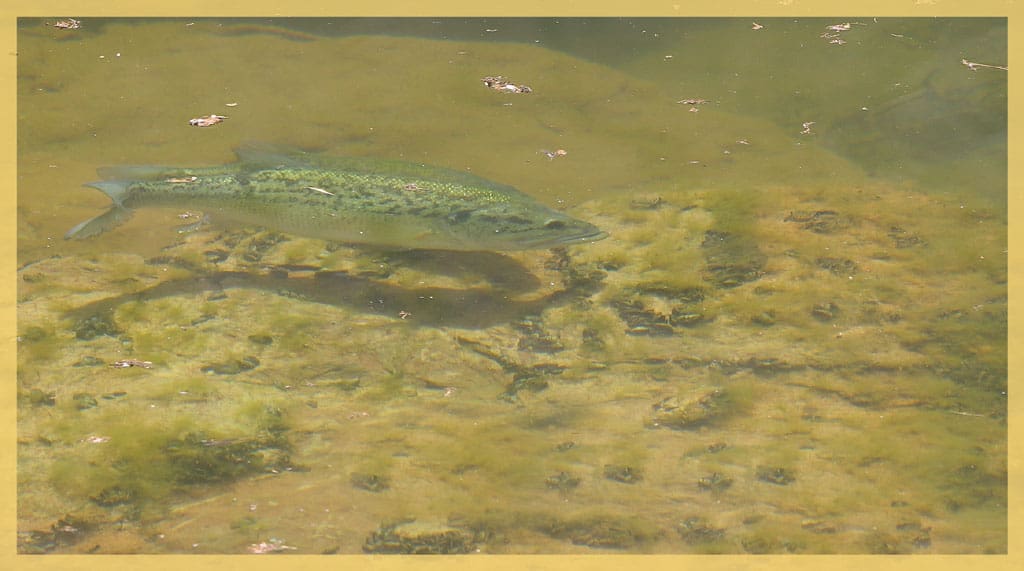 Stream bank fishing can be very productive… if you can get access.
(Photo: Adobe)
Q: How do I determine the boundary of a streambed?
The Texas Supreme Court has stated that the bed of a stream is “that portion of its soil which is alternately covered and left bare as there may be an increase or diminution in the supply of water, and which is adequate to contain it at its average and mean stage during an entire year, without reference to the extra freshets of the winter or spring or the extreme droughts of the summer or autumn.
Not clear? Again, the Texas Supreme Court: The streambed is that land between the “gradient boundary” on each bank. The gradient boundary is defined as “a gradient of the flowing water in the stream and is located midway between the lower level of the flowing water that just reaches the cut bank and the higher level of it that just does not overtop the cut bank.” Clear as mud? Blame it on those civil judges.
Q: What if the stream is dry?
A navigable stream does not lose its public character during periods of low water. A stream is navigable if the bed of the stream averages 30 feet wide from the mouth up, regardless of the actual water level on a given day.
Q: What is a public lake?
The typical public lake in Texas was created by building a dam on a navigable stream. When a navigable stream is dammed, the resulting lake is a public lake, and the public may boat and fish on all of the lake’s waters, not just that part directly above the streambed. Therefore, a property owner may not fence off any portion of such a lake. For other lakes, the test is whether the lake is navigable. Typically, the small natural lakes in Texas are held to be non-navigable, and therefore subject to private ownership and control. Manmade stock tanks and flood control ponds are usually non-navigable as well. The public has no right to boat, fish, or hunt in or on the waters of private lakes, and hunting or fishing without landowner consent is a crime. In order to encourage outdoor recreation, the legislature has limited the liability of landowners who allow the public to use their property for recreational purposes.
Q: But doesn’t the state own the waters of ALL lakes and flowing streams, plus the fish that live there?
Yes, the state does own the water of every lake and natural stream, and the fish that live there. But that does not give the public the right to fish or boat in private lakes or streams.
Q: Some landowners in my county have deeds to the riverbed. Can they exclude the public from their part of the river?
Not if the river is navigable. The policy of the government of Texas, expressed in statute since the days of the Republic, has been to retain the beds of navigable streams as public property. However, the state surveyors did not always adhere to this law, and some land grants purported to include the beds of navigable streams. To remedy this situation, in a 1929 law known as the Small Bill, the state relinquished to the adjoining landowners certain property rights in the beds of some navigable streams. However, this statute declared that it did not impair the rights of the general public and the state in the waters of the streams.
So even if a landowner’s deed includes the bed of a navigable stream, and taxes are being paid on the bed, the public retains its right to use it as a navigable stream.
It is a fairly common myth that a person boating along a “Small Bill” stream may not set foot on the streambed if the landowner forbids it. This is based on the notion that a person who steps into the streambed has entered onto private property within the meaning of the criminal trespass law. This may have some applicability when the waters of a stream leave its banks and a boater navigates out of the streambed and steps onto the adjacent private lands, or on coastal land when tide waters cover private property. But the general public has the right to walk within the boundaries of any navigable streambed, even if there are private ownership rights under the Small Bill.
Q: What is it legal to do in a public lake/stream?
Texas courts have recognized that a member of the public may engage in a variety of activities in, on, and along a public lake or stream. Besides boating, persons may swim, float, walk, wade, picnic, camp, and (with a license) fish. These activities must be confined to the waters of the lake or stream and the streambed. The public does not have the right to cross private property to get to or from public water. In fact, that can constitute criminal trespass, if the other elements of the offense are present. With some exceptions, driving a motor vehicle in the bed of a navigable stream is prohibited, other than the Canadian River and the Prairie Dog Town Fork of the Red River.
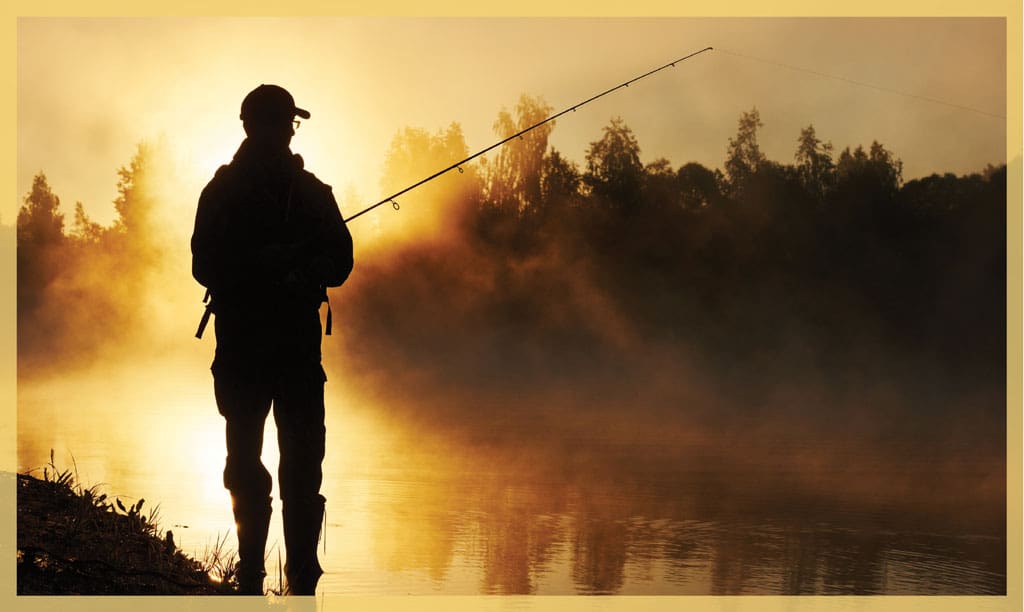 Texans may enjoy many activities on public waters, but they may not cross private property to gain access, which poses a challenge in a state where 97% of the land is privately owned.
(Photo: Adobe)
Do you have concerns about stream access? What are they? Shoot us an email at cmoore@fishgame.com and we will do our best to address them in forthcoming articles to raise awareness of stream access dos and don’ts in Texas.
—story compiled by TF&G Staff
DIGITAL BONUS: Accessing Our Rivers… The RACA Team
