

Wardens Bust Illegal Texas Deer Operations
LISTEN: (5 min, 8 sec)
A RECENT INVESTIGATION by Texas Game Wardens resulted in approximately 1,200 pending charges and 22 suspects from across the state involved in the deer breeding industry and black-market wildlife trade.
The suspects and charges are associated with three deer breeding facilities, ten release sites, one deer management pen and three illegal facilities not registered in the Texas Wildlife Information Management Services (TWIMS) database, meaning they were operating or receiving deer in violation of registration requirements and disease monitoring protocols.
 ADVERTISEMENT
“The hard work and commitment of our Texas Game Wardens to uncover these violations cannot be overstated,” said Texas Parks and Wildlife Department (TPWD) Executive Director David Yoskowitz.
TPWD has referred the cases to prosecutors’ offices in 11 Texas counties.
The cases stem from a prior investigation involving the illegal smuggling of captive white-tailed deer, ultimately leading wardens to uncover this much larger network of alleged offenders after the arrest and conviction of two individuals that occurred in Montgomery County.
The investigation uncovered approximately 500 Class C charges, 700 Class B charges, 22 Class A charges and multiple state jail felony charges. Due to the ongoing nature of this case, the final number of charges filed may vary.
 ADVERTISEMENT
“I am incredibly proud of the dedication and diligence Texas Game Wardens devoted to this case,” said Col. Ronald VanderRoest, TPWD law enforcement director.
TPWD has established science-based regulations and procedures to both manage deer breeding in Texas and prevent major disease outbreak, all with the goal of ensuring the long-term sustainability of native and captive deer in Texas.
Chronic Wasting Disease (CWD) is a fatal neurological disease and can devastate deer populations by silently spreading through direct animal contact and contaminated environments. Without close monitoring, illegal movement of captive deer increases the risk of introducing CWD to areas it is not known to exist, potentially leading to widespread outbreaks which will impact more than just the health of Texas deer.
Yoskowitz also noted that with many rural Texans depending on hunting as their full or supplemental income, a large-scale outbreak of CWD could pose a significant threat to white-tailed deer hunting, which has a $9.6 billion annual economic contribution and could irreversibly alter Texas’ rich outdoor heritage.
By circumventing requirements, disregarding regulations and falsifying official records, the suspects in this case intentionally placed the state’s entire deer population at risk, explained VanderRoest.
“These individuals and ranches operated with impunity, repeatedly violating established laws designed to protect Texas’ natural resources and safeguard the state’s wildlife against disease transmission,” VanderRoest said.
TPWD remains committed to enforcing these laws and will hold violators accountable. Texas Game Wardens will continue to pursue those who disregard regulations and illegally exploit Texas’ natural resources, putting both captive and native populations at risk.
• • •
Lake Tawakoni Delivers First-Ever ShareLunker
ANGLER CLAYTON BRADDOCK of Argyle reeled in Lake Tawakoni’s grand entry into the Toyota ShareLunker program in March, catching the waterbody’s first Legacy Class fish.
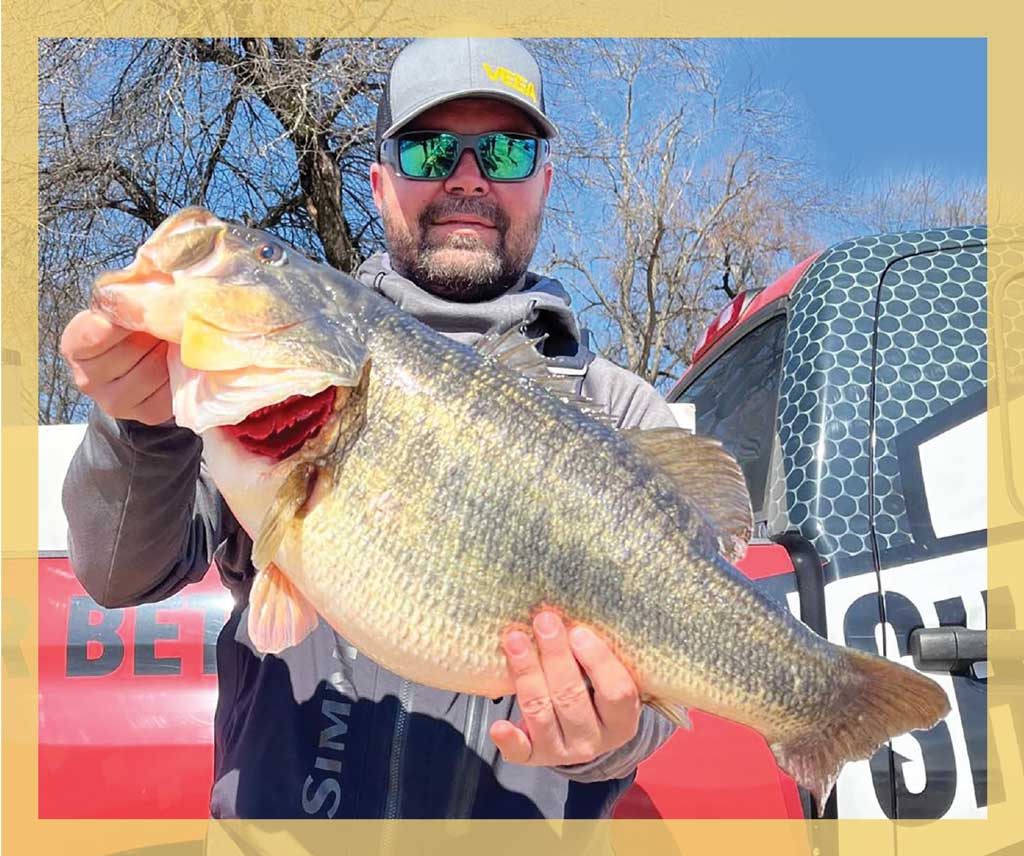 Clayton Braddock with his 13.3-pound ShareLunker, the first Legacy Class fish from Lake Tawakoni.
(Photo: TPWD)
The lake became the 79th Texas public fishery to produce one of these massive largemouth bass, and Braddock’s 13.30-pound ShareLunker 676 bumped the overall total to seven during the 2025 Toyota ShareLunker collection season
Braddock competes in Team Trail Outdoors fishing tournaments and has one scheduled at Lake Tawakoni in a couple of weeks. He headed out that Sunday morning to practice and due to some rain, didn’t get on the water until roughly 8:30 a.m. They fished a couple of spots and came up empty, so they decided to go fish on some rocky areas.
“I was throwing a medium diver crankbait, and she bit in about six feet of water,” said Braddock. “All she did was headshake and it almost felt like I had a five-pound channel catfish on the line. I finally got her up closer to the surface and saw her side and knew she was different. I told my friend who I was fishing with to grab the net because I knew it was a giant. We got her in the net, celebrated, put her in the live well, gave her some time and decided to weigh her. When we saw the weight, we knew at that point our plans had changed.”
The catch was a personal best for Braddock and broke his previous personal best of nine and a quarter pounds, which he set last year.
—from TPWD
DIGITAL BONUS: A Tour of the Texas Freshwater Fisheries Center
Dive into the world of Texas freshwater fishing with insights from Tom Lang, Inland Fisheries Division Outreach Director, and Natalie Goldstrohm, Toyota ShareLunker Program Coordinator.
