
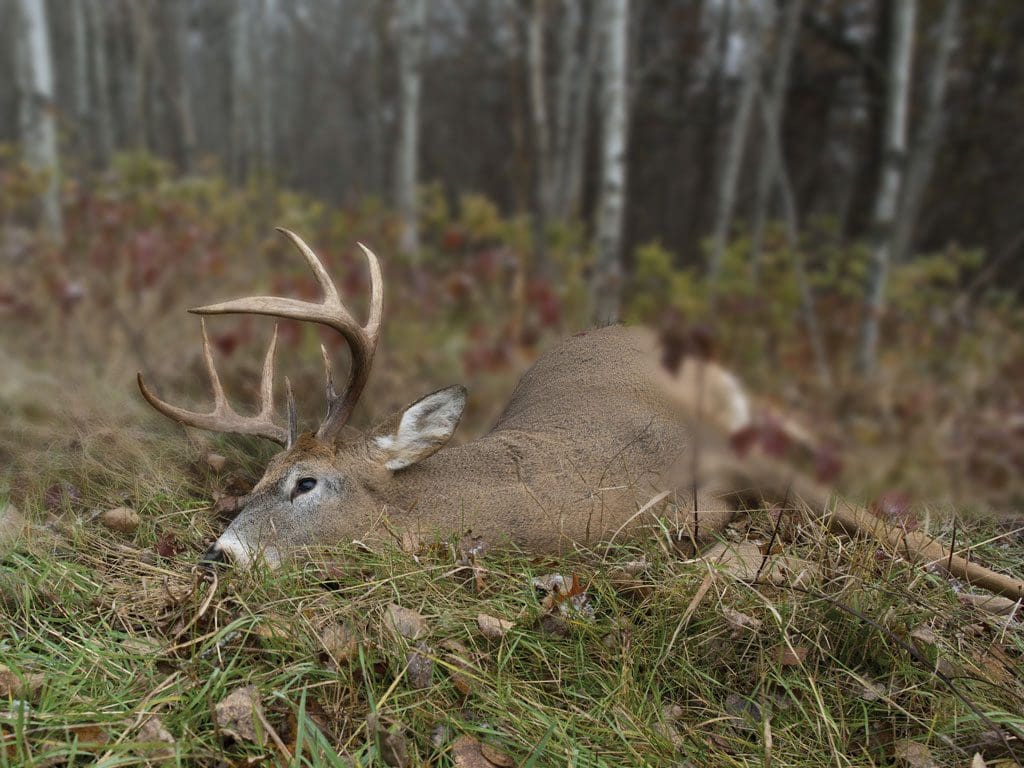
In a case that reads like a crime thriller, two individuals orchestrated an elaborate deer poaching scheme by exploiting social media and the trust of wildlife photographers. They created a fictitious online persona, posing as a female nature photographer passionate about deer. Through this guise, they engaged with genuine photographers, gathering detailed information about the locations of large bucks in suburban and urban areas.
Listen to a deep dive and interview with law enforcement officials on Dark Outdoors to learn more.
Armed with this intel, the duo disguised themselves as hikers, concealing compact bows in their backpacks and hiding arrows inside hollow walking sticks. This allowed them to blend into public spaces without arousing suspicion. Their actions not only violated hunting laws but also highlighted the darker side of online communities and poaching.
The poaching scheme began to unravel when a local hunter heard the snap of a bowstring and saw a wounded 16-point buck flee into his yard. Trail cameras captured images of the suspects, which were later shared online, leading to their identification. Upon executing search warrants, authorities discovered a broader network of poachers using similar tactics. Digital evidence revealed that the perpetrators had conspired with others, leveraging social media to locate and illegally hunt deer in protected areas.
Both individuals pleaded guilty to misdemeanor charges for illegally taking whitetail deer. They were fined and had their hunting licenses revoked. The New York State Department of Environmental Conservation continues to investigate, with additional individuals implicated and potential charges pending.
The Cloning Conspiracy: Engineering the Ultimate Trophy
Meanwhile, in Montana, an 81-year-old rancher embarked on a nearly decade-long scheme to create giant hybrid sheep for captive hunting. He illegally imported tissue and testicles from Marco Polo sheep—native to Central Asia and protected under international law—and used them to clone a sheep he named “Montana Mountain King” (MMK). This clone was then used to breed hybrids intended for sale to hunting preserves across the United States
The operation involved smuggling prohibited sheep breeds into Montana, falsifying veterinary records, and distributing the hybrids to various states, including Texas and Minnesota. It’s the first major case of wildlife trafficking and private individuals involved in cloning a large ungulates.
Dive Deeper: Dark Outdoors Podcast Tackles Poaching
For an in-depth exploration of these stories, tune into the latest episode of the Dark Outdoors podcast. The episode delves into the intricacies of these schemes, the investigations that brought them to light, and the broader implications for wildlife conservation.
Dark Outdoors won “Best Podcast” in the Excellence In Craft awards from the Texas Outdoor Writer’s Association last weekend in Rockport.
Listen and subscribe here via Apple Podcast, Spotify, IHeartradio & more.
Dark Outdoors partners with Texas Fish & Game to bring listeners info on missing people in the wild in hope of helping these heartbreaking cases get solved.