
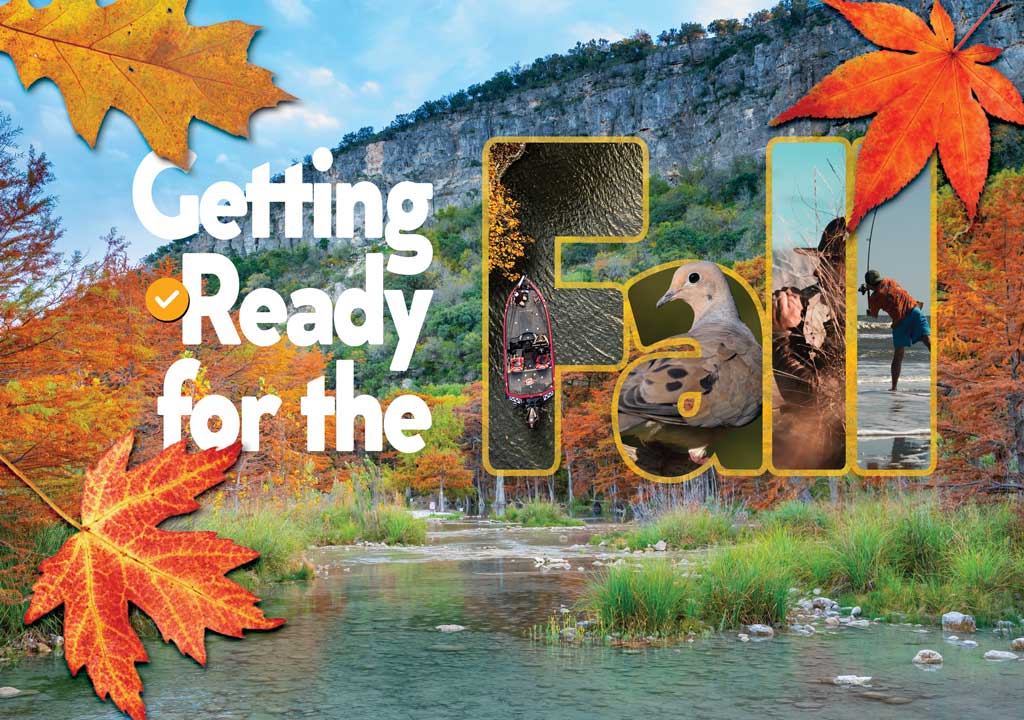
A Checklist for Autumn Hunters and Anglers
Feature Article by TF&G Staff
LISTEN: (6 min, 2 sec)
THE SUMMER HEAT is brutal across the Lone Star State. But make no mistake, fall is on the way. And for Texas outdoorsmen, that means it’s go time.
Whether you’re gearing up for the thrill of opening day dove hunts, scanning the woods for a trophy buck, or setting the boat up for fall fishing for speckled trout under the birds, now is the time to prepare. Success in the field or on the water doesn’t start when the season opens. It starts weeks or even months ahead of time, with smart planning, gear prep, and a mindset tuned to the rhythm of the wild.
Here’s how to hit the ground running this fall.
Dove Prep
Ask a Texas hunter what fall means, and chances are the word “dove” will be one of the first things out of their mouth.
Dove hunting is a cherished tradition here. It’s social, fast-paced, and ideal for sharpening shooting skills before the rest of the seasons hit. Opening day (typically September 1 in the North and Central Zones) is practically a state holiday. But don’t mistake tradition for guaranteed success. Dove hunting rewards those who plan ahead.
 ADVERTISEMENT
Scouting Fields: The best hunts happen where the doves are feeding, roosting, and watering. Identify grain fields (sunflower, milo, wheat), tree lines, and nearby water sources. Drive rural roads, glass open fields, and talk with local landowners about activity patterns. Dove can shift quickly based on weather and pressure, so check regularly in the days before the opener.
Decoy Strategy: Motion decoys like spinning-wing types can draw birds in, especially on slow mornings. Combine these with static decoys on fence lines or tree limbs to add realism.
Shotgun Prep: Don’t wait until the morning of the hunt to dust off your scattergun. Pattern your shotgun with the loads you’ll be using preferably #7½ or #8 shot—and make sure your choke matches your expected range (improved cylinder is a good choice). Clean the bore, check the action, and pack extra shells—dove hunting can burn through ammo fast.
 ADVERTISEMENT
Camo & Concealment: Doves see movement well. Blend into your surroundings, wear lightweight camo, and stay still until it’s time to shoot. A simple stool and some brush cover can make all the difference in the world.
Regulations Reminder: Dove are migratory game birds, so HIP certification is required. Double-check bag limits (usually 15 per day, with no more than two white-tipped doves), and know your zone’s dates and shooting times.
Maintenance: Whether you’re in the dove field, deer stand, or fishing boat, working gear can make or break your fall.
Inspect rifles, bows, reels, and optics. Lubricate moving parts, replace corroded batteries, and test trail cameras. For bowhunters, check limbs, strings, and broadheads. Anglers should respool reels, sort tackle, and examine boat motors, trolling systems, and sonar units.
Make your checklist now so you’re not scrambling the night before a trip. It’s not just about convenience.
Fitness Prep
Texas terrain is tough.
TF&G Hunting Editor Lou Marullo once said that everything in Texas tries to hurt you.
“If it doesn’t bite or sting-it cuts you.”
Dragging a deer, carrying decoy bags, or even just hiking through thick brush in the heat, can wear you down fast.
 ADVERTISEMENT
Start conditioning early. A 30-minute brisk walk with a weighted backpack several times a week can do wonders. For bowhunters, regular practice at full draw builds stamina and improves shot execution.
Anglers should work on lower back and grip strength. Fishing isn’t passive, especially when targeting bull reds or sharks in the surf or even making hundreds of casts with deep-diving crankbaits during the day.
Field Prep
Fall’s game movements and fish activity are driven by food, water, and pressure.
Start placing trail cameras now to pattern bucks while their summer routines are still predictable. Look for rub lines, bedding areas, and fresh scat. Even if you don’t plan to hunt a spot right away, knowing what’s there can inform future decisions.
 ADVERTISEMENT
Waterfowlers can begin identifying potential potholes and flyways. Early teal hunters especially benefit from pre-scouting, as these birds are fast flyers and even faster movers.
For anglers, this is transition time. Bass move from deep summer haunts toward shallow structure as temperatures cool. Crappie school tighter and move to deeper water. Learn your lake’s contours and current flow while it’s still quiet.
Gear Prep
The offseason rust is real.
Rifle shooters should get to the range and practice from realistic hunting positions such as kneeling, leaning on a tree, even offhand. Bowhunters should start daily or weekly shooting routines to build muscle memory.
Shotgunners, especially dove hunters and waterfowlers, benefit from time on the skeet or sporting clays range. The instinctive shooting you’ll need in the field doesn’t come from sitting on the couch.
Legal Prep
Renew your hunting and fishing licenses now to avoid opening day hangups. And make sure you get all of your endorsements.
Safety Prep
Safety-wise, inspect tree stands and replace worn straps or cables. Life jackets on boats should be U.S. Coast Guard approved and in good condition. First aid kits, fire extinguishers, and GPS beacons can be lifesavers in a very literal way.
Fall is the time to reconnect with the outdoors, to pass traditions down to the next generation, to fill the freezer, or just recharge the spirit. Whatever your reasons, write them down. Make a plan. Think about where you want to be on opening morning and make all of the preparations to get there.
Enjoy your time in the field in the presence of beautiful habitats, incredible wildlife and hopefully the people you love.
—story by TF&G STAFF
