
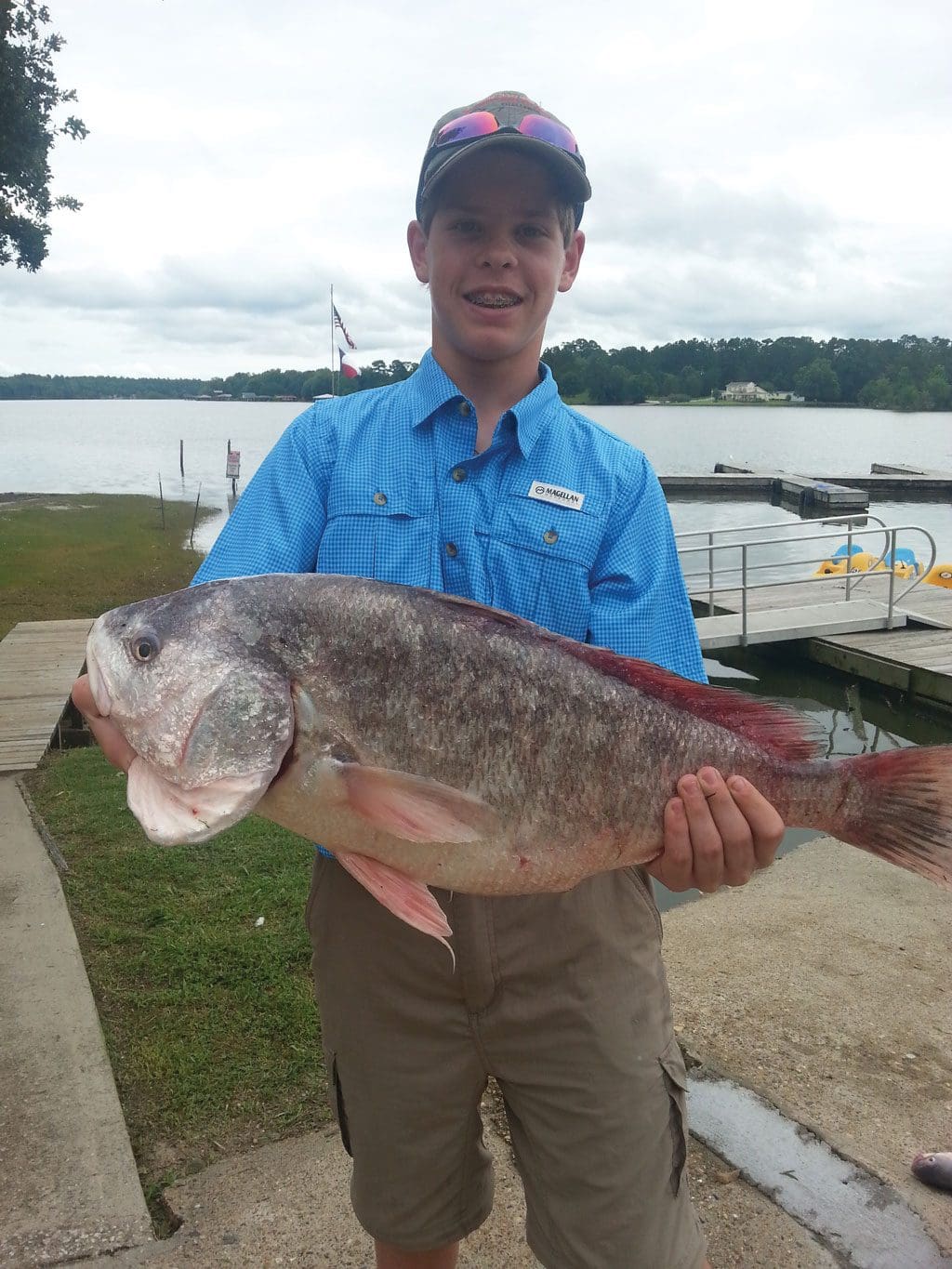
Gaspergou, also known as freshwater drum, are a widespread and often overlooked fish found throughout Texas rivers, lakes, and even brackish coastal bays. Recognizable by their silver-gray bodies, rounded humps, and downturned mouths, gaspergou feed primarily on the bottom and are known for their distinctive “drumming” sound, which gives them their name. Though not as glamorous as redfish or bass, they are strong fighters and can be surprisingly fun—and consistent—to catch, especially when targeted with the right approach.
To catch gaspergou, focus on areas with deeper water, gradual drop-offs, riprap banks, or current seams near channels. These fish often feed near the bottom, rooting through mud and rocks for mussels, insects, and small baitfish. A simple bottom rig is all that’s needed: a 1/0 or 2/0 circle hook tied to a 15–20 lb fluorocarbon leader, connected to a swivel with a sliding egg sinker above it. This setup keeps the bait in place and allows gaspergou to pick it up naturally without feeling resistance.
Fresh dead shrimp is one of the most effective baits, though pieces of cut bait, nightcrawlers, or even small crayfish can work well too. Cast the bait just beyond structure or into slow-moving current, let it settle on the bottom, and wait patiently. Gaspergou bites are often subtle at first—a steady tap or gentle pull rather than a hard strike. Allow the fish to load the rod before reeling down and letting the circle hook set itself.
Patience and persistence pay off. Once one gaspergou is caught, more are often nearby. They tend to roam in small groups and feed in short bursts. Early morning or late afternoon are generally the best times, especially when water temperatures are moderate. While often ignored by sport anglers, gaspergou offer steady action, a solid fight, and even decent table fare when prepared fresh. For those willing to keep things simple and stay attentive to the bottom, targeting gaspergou can be a rewarding addition to any fishing trip.