
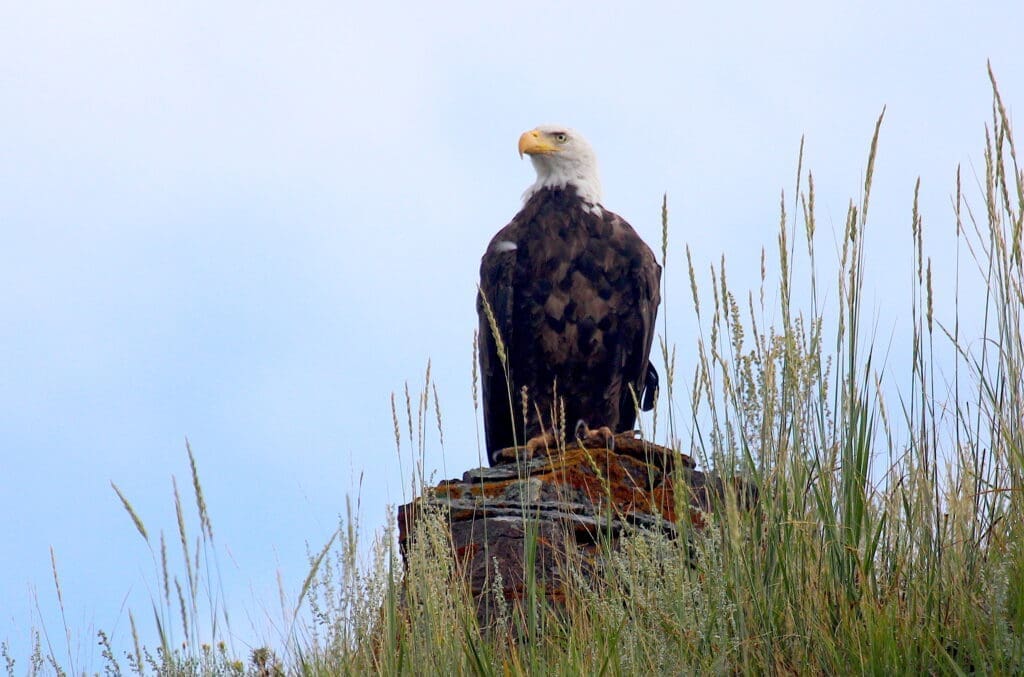
There’s a certain peace you can only find in the wild places — those corners of America where the noise of the world falls away, and you’re left alone with the land, the sky, and your Creator.
I remember sitting on a lonely rock in South Dakota, watching the northern lights ripple across the heavens while coyotes sang from a distant ridge. The day had been long, full of pheasant hunting and laughter with friends, but as the night settled in, it was just me and the land. Untouched. Undisturbed. Whole.
In Montana, I once stood at sunrise and saw a distant mountain bathed in a soft purple hue. Two pronghorn bucks battled fiercely in the foreground, their ancient ritual playing out against a backdrop that seemed frozen in time. The wild doesn’t need an audience to be magnificent — it simply is.
I’ve been fortunate to witness so much of America’s wild beauty — from pink dolphins gliding along the Louisiana coast to the great migrations of ducks and geese filling southern skies. I’ve stood eye-to-eye with bighorn sheep at 12,000 feet in Colorado and heard the gobble of an eastern turkey echo through New York’s rolling hills. Texas, my home, offers its own treasures: the wary bucks of the Pineywoods, the secretive ocelots of the valley, the cool, spring-fed streams of the Hill Country, and the rugged mule deer of the west.
These wild places aren’t just scenic backdrops. They are the beating heart of what makes this country special. Long before cities rose and highways were built, this was a land of abundance — timber, water, wildlife — sustaining those who called it home. America’s greatness has always been tied to its wildness.
Henry David Thoreau once wrote, “In wildness is the preservation of the world.” While debates continue over exactly what he meant, I believe this: without wild places, America ceases to be the country it was meant to be.
But these wild places are under constant pressure. Every year, another piece is sold off, developed, or polluted. Public lands that belong to all of us — hunters, anglers, hikers, campers, and anyone who loves the outdoors — are threatened by short-sighted agendas that see only dollar signs where there should be stewardship.
We need to remember that once a wild place is lost, it rarely returns.
Recently, I found myself standing alone in a remote Texas river. Crystal-clear water swirled around my legs, limestone cliffs towered above, and not another soul was in sight. My fishing partners were a half-mile away. For that moment, it was just me, the land, and God. No arguments, no demands, no noise — only peace. The kind of peace you can’t buy, only preserve.
This is why we must fight for our public lands. This isn’t about politics or party lines. It’s about honoring the gift we’ve been given and protecting it for those who come after us. The work of releasing wild turkeys, relocating bighorn sheep, restoring streams, and cleaning coastal bays serves one purpose: to ensure America’s wild places remain wild.
Don’t let anyone tell you America is no longer beautiful.
Don’t believe those who say it’s not worth protecting. I’ve seen it from the Gulf Coast marshes to the tundra of Alaska. I’ve walked its mountains, fished its rivers, and watched its wildlife with reverence.
The wild places of America are still here — but only if we choose to keep them.
Step off the pavement. Leave the noise behind. Go into the wild and see what remains. And then, commit to preserving it. Not just for us, but for every generation yet to stand where we have stood and feel the awe that only wild places can bring.