
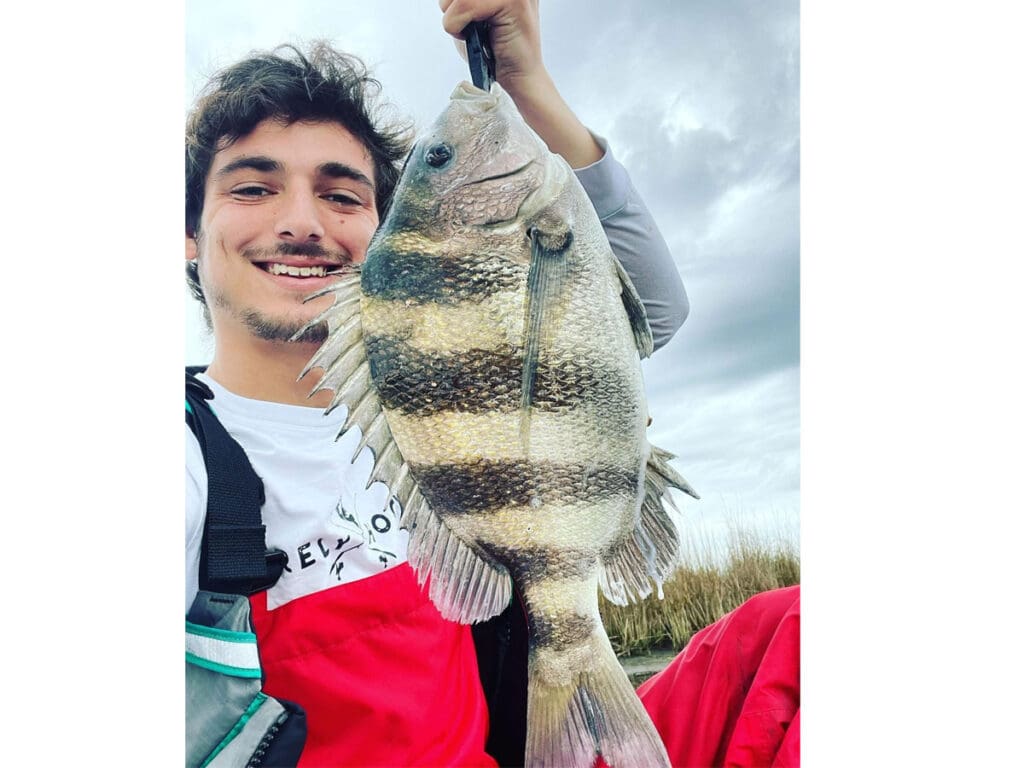
Sheepshead in the shallows? You’ve got that right! When most people imagine catching convicts, it’s fishing in relatively deep water around structure like a bridge or jetty. But believe it or not, these pseudo-black-drum with teeth are likely hanging out near some of your favorite redfish spots in just a few feet of water. Let’s dive into when they’ll be there, and the easiest way to catch them.
Successful fishing for sheepshead in shallow water marshes mainly takes place in the spring and early summer, and there are a couple different ways to effectively fish for them. Sight casting is by far the most rewarding, and is also the easiest way to end up getting skunked. They need to be in clean water to be sight-casted, which means they are also going to be incredibly spooky. To find sheepshead in clean, shallow water, focus on exposed oyster beds and any other kind of solid structure inside the marsh. You’ll likely have to do a good bit of searching, unless you already know somewhere they frequent. Try to sight-cast them with a bare J hook baited with a small crab and tied on with 20-pound fluorocarbon leader. If you get looked at and turned on a few times but don’t get bit, downsize your leader. You have a good chance of breaking off, but sheepshead have great eyesight and are annoyingly leader shy for fish that like to hangout near sharp objects. Sheepshead can also be caught on artificial crabs using this tactic.
Large old docks and duck blinds also tend to hold fish, especially the ones that look like they might fall over on you if you look at them wrong. If you want to put up numbers, stick to structures like this that are in slightly dirty water. The sheepshead don’t mind hanging out in relatively dirty water, and they won’t see you coming through the muck. Tie up to whatever structure you plan on fishing as quietly as possible, and drop a bottom sweeper halfway down. If you don’t get bit within a minute or two, move on. You may have to hop around for a while to locate fish, but once you do, don’t leave until you’re positive you’ve exhausted the area. Sheepshead don’t generally travel alone so where there’s one, there’s likely more. You’ll catch plenty of redfish and flounder doing this as well, especially when using shrimp as bait. Use the lightest jig you possibly can, and at least 20-pound braid with a 30-pound leader. Dirty water will disguise heavier line and give you the strength you need to horse the fish away from structure.