

East Texas Gets New 6,900 Acre WMA
LISTEN: (5 min, 33 sec)
FOR THE FIRST TIME IN almost two decades, the Texas Parks and Wildlife Department (TPWD) has added a new Wildlife Management Area (WMA) to its East Texas inventory.
The property, comprising approximately 6,900 acres in Anderson County, will become the Trinity River Wildlife Management Area.
Trinity River WMA is the newest addition to the Middle Trinity River Ecosystem Project, which includes Gus Engeling, Richland Creek, Big Lake Bottom and Keechi Creek WMAs. Together, these properties protect more than 38,000 acres in East Texas. The newly acquired property also adds 11.3 miles of Trinity River frontage, giving TPWD more than 25 miles of riverbank conservation along this important corridor for migratory birds.
The management and restoration of both the Trinity River and Richland Creek WMAs gives TPWD the opportunity for “wall-to-wall” bottomland conservation across the entire east-west width of the Trinity River basin on more than 21,000 contiguous acres. These efforts will aim to slow waters during flooding events, allowing for natural river sediment to settle across the floodplain rather than downstream in areas where concentrated deposits cause environmental problems.
 ADVERTISEMENT
“The establishment of the Trinity River WMA presents an opportunity for the conservation and management of an ecologically unique and important habitat,” said TPWD Executive Director David Yoskowitz. “Partnerships with organizations like the Texas Parks and Wildlife Foundation, the U.S. Fish and Wildlife Service and Knobloch Family Foundation make historic land purchases like this possible.”
The late Jackie Gragg, whose family owned the property, enjoyed seeing the blooming dogwood trees at the nearby Gus Engeling WMA and had a vision of her land being managed and protected in a similar fashion. The Gragg family worked closely with TPWD staff over the course of a year and a half to make this new WMA a reality.
During the 88th legislative session, $10 million in Migratory Game Bird Stamp Funds were appropriated to TPWD for the acquisition of new wildlife management areas. A portion of these funds, along with a grant awarded to the Texas Parks and Wildlife Foundation from the Knobloch Family Foundation, provided the primary match for a Federal Aid in Wildlife Restoration grant from the U.S. Fish and Wildlife Service.
“The 88th Legislature’s appropriation of Migratory Game Bird Stamp Funds has allowed TPWD to conserve more lands and bring greater access to even more Texans,” said TPWD Wildlife Division Director Alan Cain.
TPWD will be working cooperatively with many partners to fund and prioritize habitat restoration on the new WMA. Wetland restoration and creation will be a primary effort, along with work focused on rebuilding bottomland hardwood on the Trinity River. Prairie restoration efforts will occur on the upland acres on the northern end of the property. These efforts will benefit numerous species, including waterfowl, shorebirds, neotropical migratory birds, butterflies and many other wildlife. When appropriate, outdoor recreational opportunities, including hunting, birdwatching, camping and fishing will be available to the public.
• • •
Avian Flu Found in Panhandle Mammals
RECENT TESTING HAS DETECTED Highly Pathogenic Avian Influenza (HPAI) in mammal species including foxes, raccoons, striped skunks and domestic cats collected in Deaf Smith, Hansford, Lubbock, Ochiltree, Parmer and Randall Counties.
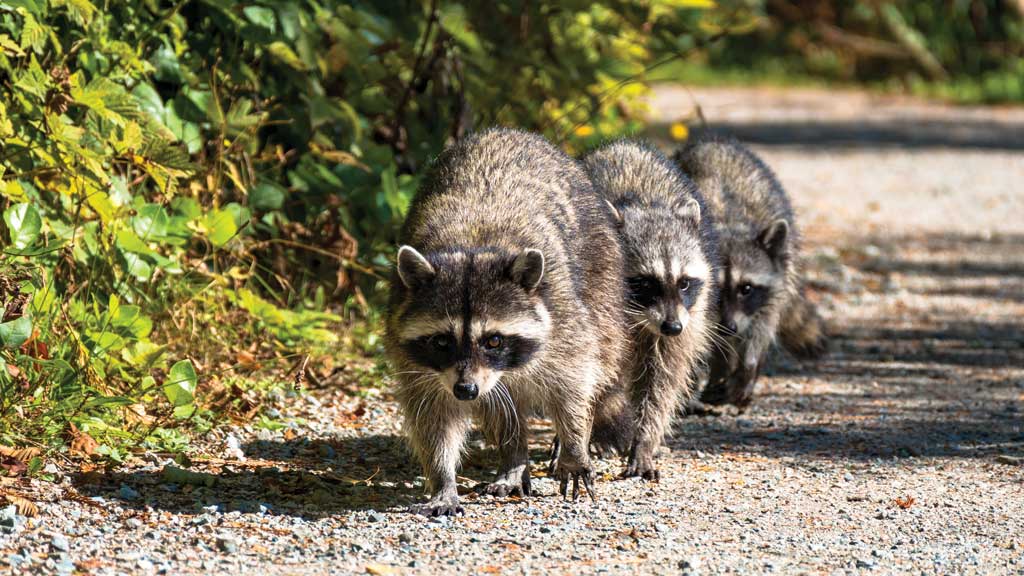 Avian influenza has been detected in raccoons and other mammals in the including domesti cats, Panhandle.
(Photo: Adobe)
These detections resulted from a collaboration between Texas Parks and Wildlife Department (TPWD), the Department of State Health Services Zoonosis Control branch and the Texas Veterinary Medical Diagnostic Lab following widespread detections in wild birds across Texas, with recent detections in Amarillo, El Paso, Galveston, Harris, Lubbock, Potter, Travis and Wharton counties.
Detected in all 50 states across the U.S. and Puerto Rico, HPAI is a highly contagious zoonotic virus that transmits easily among wild and domestic birds. It can spread directly between animals and indirectly through environmental contamination.
For mammals, current data shows transmission occurs primarily through consumption of infected animal carcasses, though mammal-to-mammal transmission is possible. Clinical Signs of HPAI in mammals may vary based on species and can include ataxia (incoordination, stumbling), tremors, seizures, lack of fear of people, lethargy, runny or crusty eyes and nose, coughing and sneezing, or sudden death.
TPWD recommends wildlife rehabilitators remain cautious when intaking wild animals with clinical signs consistent with HPAI to limit the potential for exposures to other animals within the facility.
The transmission risk of avian influenza from infected birds to people remains low, but people should take basic protective measures (i.e., wearing gloves, face masks and handwashing) if they must make contact with wild animals.
Those who locate wild animals with signs consistent with HPAI should immediately contact their local TPWD biologist.
—reported by TF&G Staff
DIGITAL BONUS VIDEO: What is Bird Flu?
Avian influenza, or bird flu, is a disease that primarily affects birds. It is caused by a virus related to those that cause seasonal flu. Certain types of bird flu can cause serious illness in people and other animals. Bird flu is a type of virus known as influenza A. Most flu infections in people are also caused by an influenza A virus. H5N1 is a specific strain of avian influenza. You may also see this strain referred to as A(H5N1) or highly pathogenic avian influenza: HPAI or HPAI H5N1.
