
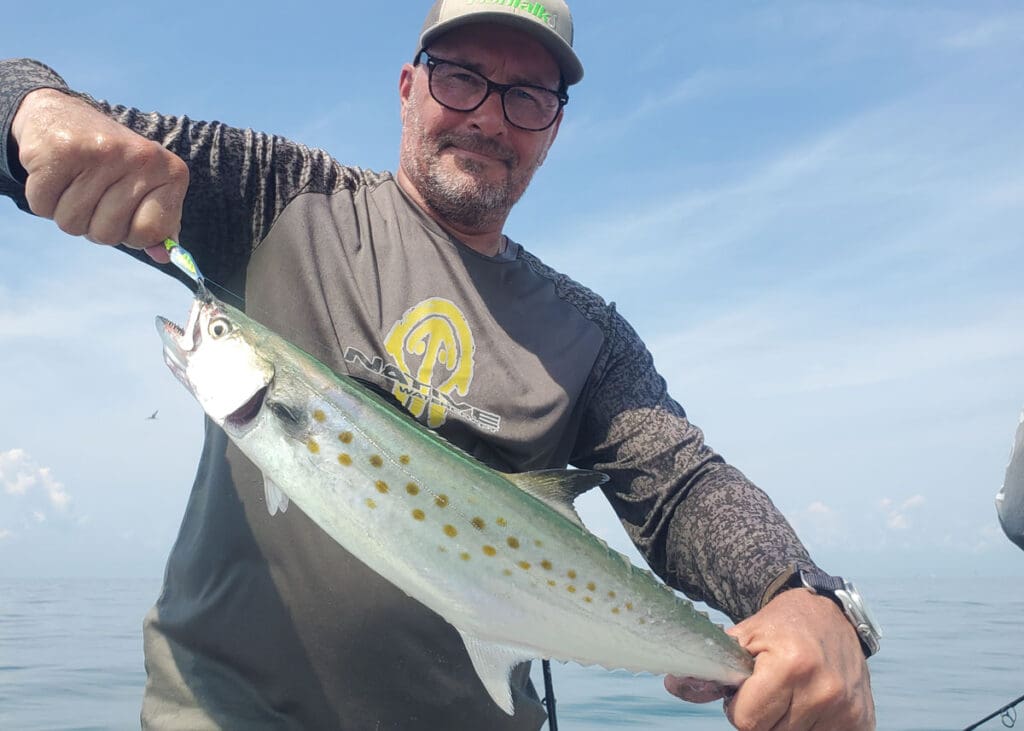
When it comes to catching Spanish mackerel, few types of lures are as effective as spoons. These fish love the flash, and love the high speeds most spoons can be worked at. Plus, when their sharp teeth chomp down on metal they can’t bite you off.
Of course, all spoons are not created equal. Whether you’re a troller or a light tackle caster, be sure to consider the following as you reach into that tacklebox.
Trollers
- When you’re using planers to get those spoons down deep, choose the lightest spoon possible. Heavier spoons make it easier for those planers to trip, especially on missed strikes. The classic Clark is a good one, as is the Tony Pet or Crippled Alewife.
- Try using gold and colored spoons on planer lines. They tend to work best when running deep.
- Spoons pulled behind cigar weights run shallower than planers, so try putting more silver on these lines.
- Always use wobbling spoons when trolling. Spoons designed for casting or jigging don’t have nearly enough action when pulled along at a steady rate of speed.
Casters
- Choose a heavier spoon, one designed for jigging, when you’ll be casting it. You’ll be able to heave it much farther, and it will sink down a lot faster.
- Since they’re usually allowed to sink then ripped back to the boat, spoons used while casting will run through multiple depths in the water column. That means matte finishes in white or chartreuse are often top producers. Solid gold spoons can be a good choice, too.
- Spoons with teasers tied to the hook are great for casting. We all try to crank back at top speed for mackerel, but through a day of fishing this does get tiring and we do slack off here and there. Having some extra wiggle and appeal helps a lot late in the day when we might not be getting the most action out of every retrieve.
And don’t forget people, when the mackerel are up top you aren’t limited to using spoons – catching mackerel on popping cork rigs is incredibly effective, too.