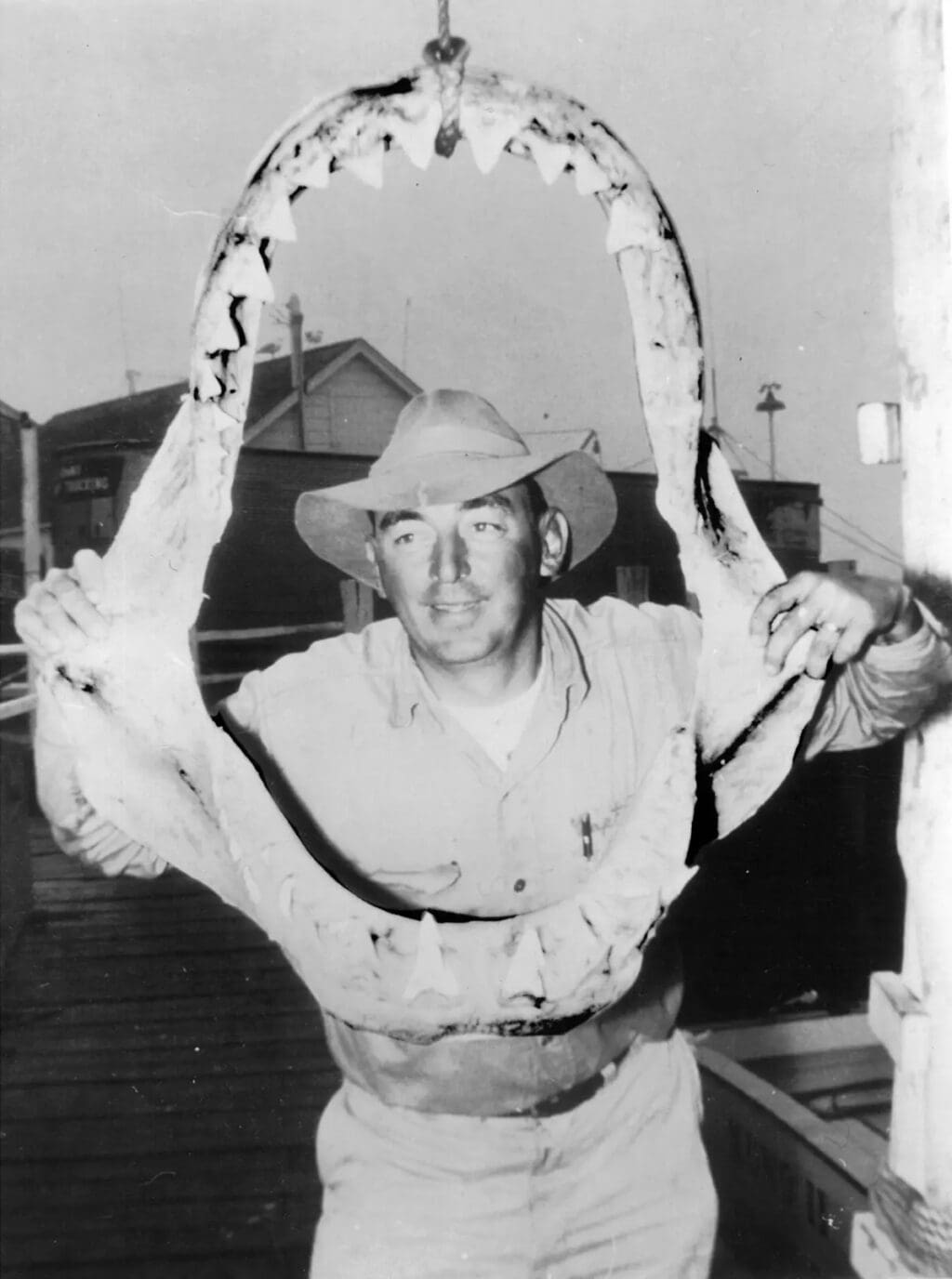
When audiences think of Jaws, one character looms as large as the shark itself: Quint-the grizzled fisherman with a vendetta. His raspy sea songs, harpoon in hand, and final showdown with the great white became a part of pop culture.
But many don’t know that Quint was inspired by a real man: Frank Mundus, the legendary shark hunter from New York.
And with Jaws being re-released into theaters this weekend we thought we would take a look at the angler behind the legendary character.
The Making of Quint
In the 1950s and 60s, Mundus was a showman extraordinaire. He captained sport‑fishing charters out of Montauk on his boat Cricket II, marketing himself as the man who could put thrill‑seekers face to face with the ocean’s monsters—sharks. His persona was vivid: colorful clothes, rough humor, and a flair for spectacle.
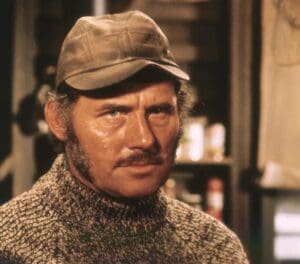
Photographs of Mundus triumphantly posing beside massive sharks, harpoon or rod in hand, cemented his reputation. He earned nicknames like “Monster Man,” and his fame extended well beyond Long Island. Author Peter Benchley shadowed him for research on his 1974 novel Jaws—and while Benchley never credited him explicitly, the connection is widely acknowledged:
“Yes, he was. He knew how to handle the people the same way I did. He also used similar shark‑fishing techniques based on my methods.”
In 1964, Mundus faced one of the ocean’s most legendary catches—a great white weighing several thousand pounds. Though some estimates reach 4,500 pounds, records show that he and Donnie Braddick landed a 3,427‑pound great white on rod and reel—marking one of the largest in that category.
Watch the new (and only) documentary on great whites returning to the Gulf.
As his fame rose, Mundus didn’t shy away from criticizing Jaws’ dramatization:
“It was the funniest and the stupidest movie I’ve ever seen because too many stupid things happened in it… I’ve never boiled shark jaws. If you do, you’ll only end up with a bunch of teeth at the bottom of your bucket because the jaw cartilage melts.”
That same attitude carried over into a deep respect for sharks:
“I respect white sharks, but I’m not afraid of them. Whenever one got away, I felt that he had won the game. This is where I respected him.”
And even amid victory, he showed a high level of respect and even a tad of empathy.
“After you get the fish… you feel sorry for the fish because he’s your opponent. I always feel good that I won, but I feel sorry for the one who lost.”
A Conservation Turn
Over decades, Mundus noticed fewer sharks in his waters. The spectacle that made him famous also spurred unsustainable practices—a shift he gradually regretted.
By the 1970s and beyond, he championed a new ethos: catch‑and‑release, safer gear, and biological tracking. He pioneered the use of circle hooks—which hook sharks in the corner of their mouths and minimize injury—and helped introduce shark tagging technology to improve scientific understanding and conservation of these apex predators.
He detailed his evolution in his article “Tag, You’re It!”, guiding anglers on how to tag—and not kill—a shark. It’s a turning point that encapsulates his transformation from monster slayer to marine mentor.
Read it on his official website here: Tag, You’re It! article by Frank Mundus