
Dodging a Bullet on Public Land Loss
Feature Article by CHESTER MOORE
LISTEN: (6 min, 58 sec)
LAST JUNE, A LITTLE-NOTICED PROVISION buried deep in a federal budget reconciliation package set off alarm bells across the outdoor community. Tucked away in the lengthy legislative text was a proposal to sell or transfer between 2 and 3 million acres of public land currently overseen by the Bureau of Land Management and the U.S. Forest Service. Had the measure passed, it would have represented one of the largest reductions in federally managed land access in decades.
The proposal arrived without warning and offered few specifics including no list of parcels, no public hearings, and no clear justification. Just a sweeping attempt to dispose of land that millions of Americans rely on for hunting, fishing, hiking, camping, and wildlife conservation. By embedding it within a budget reconciliation bill, Congress could bypass normal procedures, including public input and committee review. With a simple majority vote, it could have become law.
But by July 9, the measure was withdrawn after intense opposition from across the country. Hunters, anglers, conservation advocates, and grassroots voices came together to push back hard and fast. Though the proposal failed this time, the episode revealed just how vulnerable public lands can be and how quickly they can come under threat.
The reaction was swift. Advocacy groups mobilized their members, outdoor enthusiasts contacted their representatives, and social media lit up with calls to action. Though the exact motivations behind the land sale provision remain unclear, critics widely saw it as a test balloon—an attempt to quietly open the door for future large-scale transfers or privatization efforts. What concerned many wasn’t just the potential loss of access or habitat—it was the dangerous precedent
sidestepping public input in decisions that affect millions of acres of shared land.
For Texans, the situation struck a particular nerve. With over 97% of land in the state under private ownership, public lands are extremely limited and deeply valued. Tracts such as the Sam Houston National Forest, the LBJ National Grasslands, and various coastal wildlife refuges provide some of the only affordable and accessible options for everyday Texans to enjoy the outdoors. Losing even a portion of those places felt personal to many who rely on the land, not just for hunting, fishing, hiking and camping but for a connection to land and tradition.
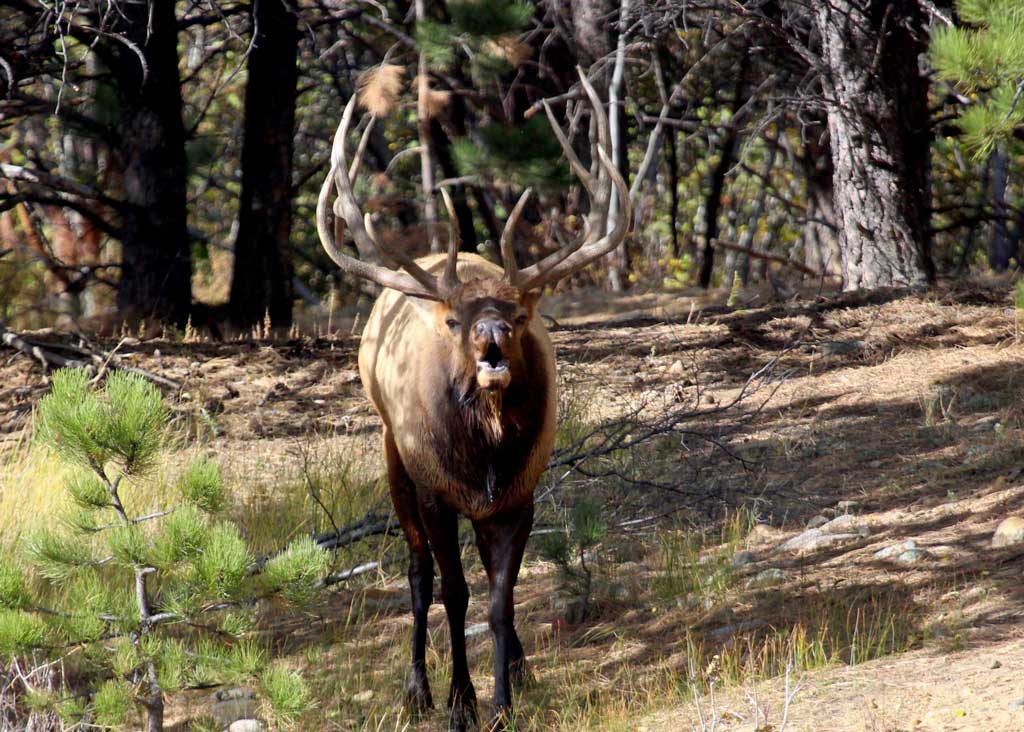 Elk are the dream of many Texas hunters and their bulk of the population is on public land.
(Photo: CHESTER MOORE)
In many Western states, hunters can access vast expanses of public terrain. In Texas, however, most outdoor opportunities come at a cost. Lease prices have risen steeply, and private land access is increasingly out of reach for younger or lower-income sportsmen and women. For that reason, every acre of federal land is a lifeline. The idea that these rare public spaces could be quietly transferred or sold without a word of public input outraged many across the Lone Star State.
Opponents of the proposal also highlighted the broader implications for wildlife. Federally managed lands serve as critical habitat for countless species, from migratory birds to game animals like elk, turkey, and deer.
These areas support not just biodiversity, but also the economic engine of outdoor recreation, which contributes billions annually to local economies. If privatized or fragmented, those landscapes become harder to manage and less resilient to threats like climate change, development, and invasive species.
The proposal also reignited longstanding concerns about how public lands are managed and how decisions about them are made. Many in the outdoor community believe that while land management policies can and should evolve, major changes must be transparent, deliberate, and rooted in science — not hidden in obscure budget language. The fast-tracked nature of reconciliation, which limits debate and amendment, made this particular proposal even more troubling.
In the weeks after the provision surfaced, citizens flooded Capitol Hill with emails, letters, and phone calls. Outdoor writers, small-town outfitters, rural hunters, and weekend campers alike joined a broad chorus of resistance. In a rare moment of unity, voices across political and geographic lines demanded the measure be removed. That groundswell of opposition ultimately led to the provision’s defeat.
Still, no one is celebrating too loudly. The fact that such a sweeping policy came so close to becoming law without any public input has left many outdoor advocates wary. The concern now is that similar language could reappear in future budget bills or be pushed through by other means through executive action, regulatory changes, or another legislative shortcut.
In the wake of the crisis, a number of recurring priorities have emerged. Outdoor advocates want clear prohibitions against using reconciliation or other non-transparent processes to authorize land sales or transfers. They’re calling for stronger safeguards around public land protections, including laws that require environmental justification, public consultation, and congressional oversight for any significant transfer of federally managed land.
There is also a growing push to modernize how public lands are managed. Many conservationists argue that outdated policies and bureaucratic delays have slowed habitat restoration, trail maintenance, wildfire mitigation, and access improvements. Updating these systems, while keeping lands in public hands, would help ensure they remain viable and resilient for generations to come.
The Land and Water Conservation Fund, long considered one of the most effective tools for improving access and protecting landscapes, continues to be a central part of this vision. With stronger investment and a clear national strategy, advocates believe that the U.S. can both protect existing public lands and expand access in underserved areas especially in places like Texas, where opportunities are scarce.
Ultimately, what stopped the proposal was public engagement. Everyday hunters, anglers, hikers, and wildlife enthusiasts raised their voices and demanded accountability. Their action made the difference. But it also showed that vigilance is the price of access.
Public lands, no matter how vast, are never immune to political maneuvering. They require defenders.
The lesson is simple: speak up early, speak up often, and don’t assume that others will do it for you. Whether it’s a small parcel in East Texas or a sprawling wilderness in Montana, these lands belong to everyone and if they’re not protected, they can be lost.
—story by CHESTER MOORE
Sidebar Title
