
The Fish & Game Saltwater Playbook
Feature Article by TF&G Staff
LISTEN: (5 min, 24 sec)
LATE SUMMER AND EARLY FALL on the Texas coast is a magical time. As the summer heat begins to retreat and the Gulf’s surf cools just slightly, it sparks a surge of life along the beachfront.
Mullet run in the troughs, shrimp skip across the surface, and the redfish and speckled trout come in close to feed. For anglers willing to beat the sunrise and keep things simple, it can be some of the best fishing of the year.
There’s a certain rhythm to fishing the surf in September and October. It’s not fast-paced in the traditional sense, but it’s electric. The early mornings start with a soft orange glow over the water, waves rolling gently into the first gut, and a whisper of wind from the north. That’s when the big reds start showing.
One of the most consistent patterns for bull reds in early fall is around the jetties and major passes. These fish are staging to spawn, and they gravitate to areas where the current moves bait around the structure. First light is the best time to be there, especially during a rising or high tide. You don’t need anything fancy—just a stout surf rod, a circle hook, and some live bait.
Mullet or blue crab does the trick. Cast right where the sand and rock meet, beyond the first breakers, and let the bait do its thing. Don’t rush it. These reds will often mouth a bait before making that big, telltale run. That’s your cue.
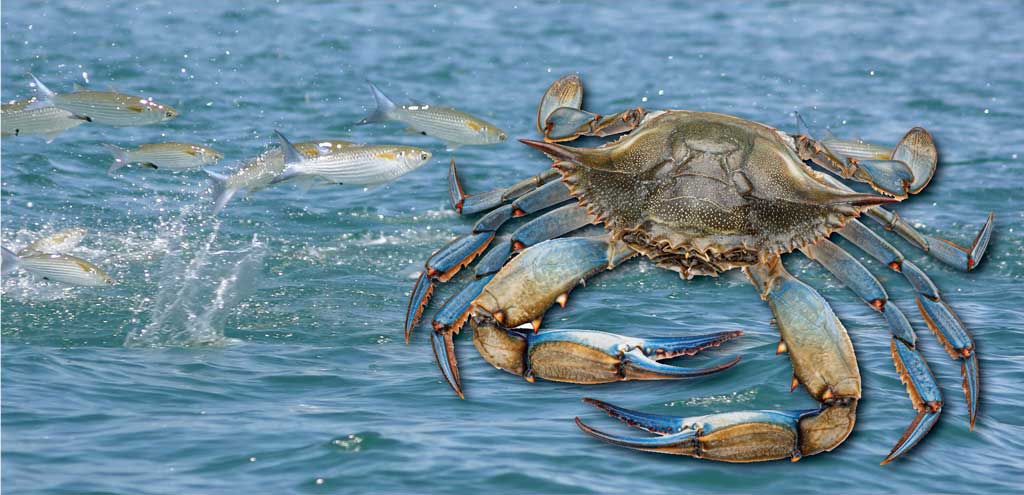 Mullet or blue crab make excellent live bait during the redfish spawn.
(Photo: ADOBE)
There’s a tendency, especially among newer anglers, to move their bait or check it constantly. But in early fall, patience pays off. Let your live bait work naturally. A croaker flipping in the surf or a crab kicking in the current puts out all the cues a redfish needs to strike. Set up with minimal weight and let the surf move things around. The fewer artificial touches you add, the better your odds of connecting with a big red.
As the sun climbs and the reds move out deeper, another surf star takes the stage — speckled trout. And the first sign that they’re feeding? Slicks. If you see glassy patches forming between breaking waves and smell that faint watermelon scent in the air, you’ve found an active trout zone. Slicks are the result of trout feeding below and releasing oils into the water.

They tend to pop up in predictable troughs early in the day, especially when small ribbonfish or glass minnows are around.
Spotting slicks isn’t enough — you’ve got to know how to fish them. A good approach is to cast metal spoons or soft eel imitations just down-current from the slick edge and retrieve with a twitching motion. Trout will often strike hard when they feel a lure darting past. Sometimes, though, they’ll tap it, so keep a sharp feel for any change in pressure or rhythm.
When the surface bite slows, that’s the time to break out soft plastics under popping corks. This setup offers a perfect combination of flash, sound, and suspended movement. In clear water, go with natural tones like shrimp and sand colors. In murkier surf, chartreuse or glow tails often get hit.

Cast well beyond the breakers, then pop and pause your cork to imitate struggling prey. Trout often hit on the pause, so be ready. The beauty of the popping cork rig is its simplicity — it keeps the lure in the strike zone longer and helps draw fish in from a distance, even in light chop.
For those looking for truly large trout. Jetties at dawn hold real promise. These bigger fish often patrol the edges where bait flushes through and where light and shadow meet. It’s a sight-fishing opportunity if the water’s clear and the sun hasn’t climbed too high. Use polarized sunglasses, stay low and quiet, and keep an eye out for movement near the rocks.
A carefully placed topwater plug can draw explosive strikes if the timing and placement are right. But one wrong step or sloppy cast can shut the bite down. Keep in mind, stealth is key.
There’s something timeless about fishing the surf this way. It’s not about complicated rigs or high-speed reels. It’s about timing. It’s about matching your bait and presentation to what the fish are naturally doing.

You’ll often see mullet leaping in panic, shrimp scattering, or birds working bait balls. Those are your signals.
The Texas surf offers both simplicity and complexity. You can spend all day chasing shadows, or you can slow down and let the rhythm of the coast lead you to the fish. Target redfish around structure at high tide with fresh bait and patience. Trust your live bait and don’t overwork it.
When trout move in, follow the slicks, present lures with precision, and adapt to their activity level with popping corks or topwaters.
And above all, be there early. The best action happens before the crowds, before the sun gets too high, and while the surf is still fishable.
Trout fishing will decline in the surf as fall wears on, with redfish staying strong.
And with Texas weather, you can’t go by calendars to gauge “summer” or “fall,” sometimes well into October.
Get out there and read the water with specks and reds in mind and keep these tips in mind to score a Texas-sized catch.
—story by TF&G Staff
