
Running for Cover
LISTEN: (5 min, 44 sec)
GIVE THEM COVER and bass will come.
I thought about the connection pretty often while watching some of the nation’s top pros pick apart the shallows during Bassmaster Live coverage of the Elite Series event held earlier this month on the Sabine River in Orange.
Nothing was off limits as the anglers plied the cover-rich river system for some of the tiniest bass anyone saw brought to the scales in a big league fishing tournament all season long.
A two-pounder was a fish to get genuinely excited about on the Sabine. A three pounder was considered a tank.
Tournament winner Pat Schlapper did a great job of exploiting bass hanging around the river’s wealth of skinny water cover, including sticks-ups, lay down logs, metal pipes, flooded reeds, bushes and cypress trees. He relied on a number of tactics to grab the $100,000 top prize with what turned out to be the lowest winning weight ever recorded in Elite Series history — 38 pounds, 12 ounces.
Though the fish were small, it was truly refreshing to watch the majority of the top finishers spend four days hoping instead of scoping.
One of the event’s most classic topwater strikes was caught on camera in the final round as Schlapper worked his way down a backwater canal flanked by reeds, hyacinth and other greenery.
About 90 seconds into the segment, a solid two pounder smacked Schlapper’s buzz bait just as it passed between a pair of stick-ups about 10 yards from shore. The fish was obviously hanging tight to the isolated wood and mistook the buzz bait for an easy meal passing overhead.
The lesson here: Bass are cover nuts. Not only does cover provide fish with shade and security, it also makes a good hideout for waging attacks on unsuspecting prey that swims dangerously close.
Here’s a synopsis of a few types of shallow cover anglers should never overlook:
Docks, Piers & Boat Slips
Boat docks, boat houses and piers will attract fish year-round. On some lakes, particularly those that lack in aquatic vegetation, boat docks may be the most attractive form of shallow cover.
Bass love to hold tight to support pilings, but they will also gang up around man-made brush piles staged around docks and piers by property owners. This is also a good place to find other predators like catfish and crappie.
Something else to consider about docks and piers is water depth. Structures built on points and shorelines in close proximity to an abrupt drop off and creek channel swing can be particularly attractive for bass.
Go Natural
Just about every lake has its share of lay down logs, stumps and/or standing timber. All three provide bass with suitable hangouts such as mangled limbs and gnarly root systems.
It’s always a good idea to fish as tight to the wood as possible. Crash the bait into it if you can. Often times, this is what triggers the strike.
When fishing around a laydown log, be sure to make numerous casts to it from different angles. Often times that is what it takes to trigger a strike from a fish that is holding super tight to the wood or one that is reluctant to chase.
Bass in the Bushes
Flooded bushes like willows or buck brush can be super attractive to bass provided water levels are sufficient. Bushes always get lots of attention during the spring months, when water levels tend to be high and there are lots of fish in the shallows. When water levels fall out of the bushes, the bush bite tends to go away with it.
Location can have an impact on which bushes will hold bass and which ones won’t. As a rule, isolated bushes on main lake points, secondary points or near channel breaks are more likely to hold fish than bushes found along a straightaway shoreline or an open flat with no definitive changes in contour nearby.
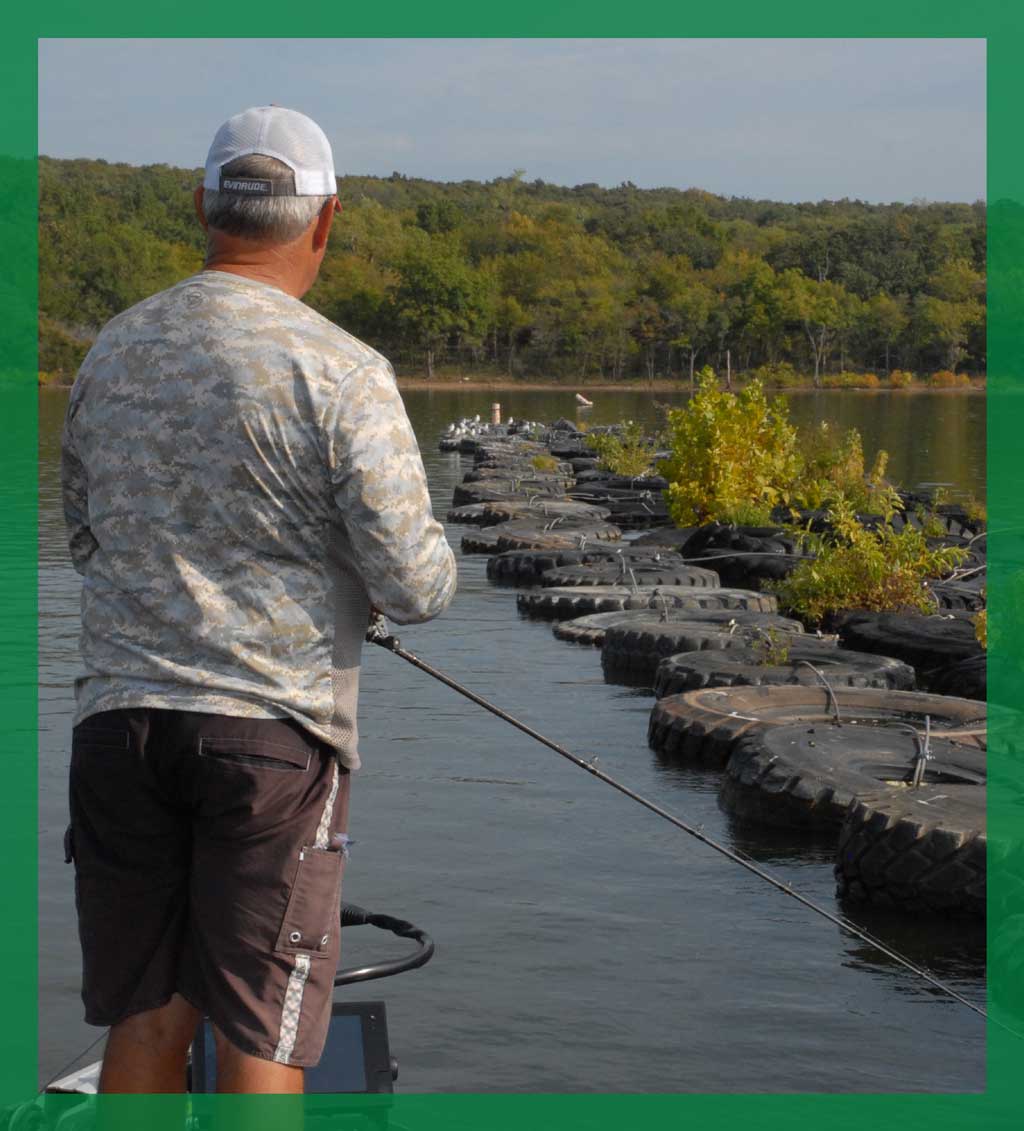 Rows of tires placed for protection against destructive wave action can also be powerful bass magnets.
(Photo: MATT WILLIAMS)
Tire Breakwaters
Large marinas sometimes place rows of big tires at strategic locations to help protect facilities from destructive wave action created by high winds and big boats. These man-made breakwaters can be magnets for bass because of the cover and shade they provide. The best plans of attack are to throw moving baits along the edges or penetrate the bowels with a drop bait like a jig or Texas rig.
Grass, Pads and Hay
Aquatic vegetation is always a good place to look for bass. Hydrilla, torpedo grass (sometimes called hay grass) and lily pads are among the most common types in East Texas reservoirs.
Hydrilla roots to the bottom and forms dense surface mats and distinctive edges where it meets with water that is too deep for it to grow. Fish often set up along the edges of the grass to ambush prey.
Lily pads resemble giant sand dollars and are rooted to bottom with individual stalks. Growth can be spotty, but it is not uncommon for thousands of pads to form shady canopies over shallow flats during warm weather months.
Hay grass roots along the shoreline. It is lush green during the warm weather months and is capable of growing out to depths of five feet or more in stable water conditions. It’s very resilient and can withstand extreme cold as well as low and high water situations.
Not every piece of cover in the lake will hold a hungry bass, but a bunch of it will. Never hesitate to pick it apart. There is no telling what might be lurking in the shadows.
Email Matt Williams at ContactUs@fishgame.com
