
The word wolf carries weight.
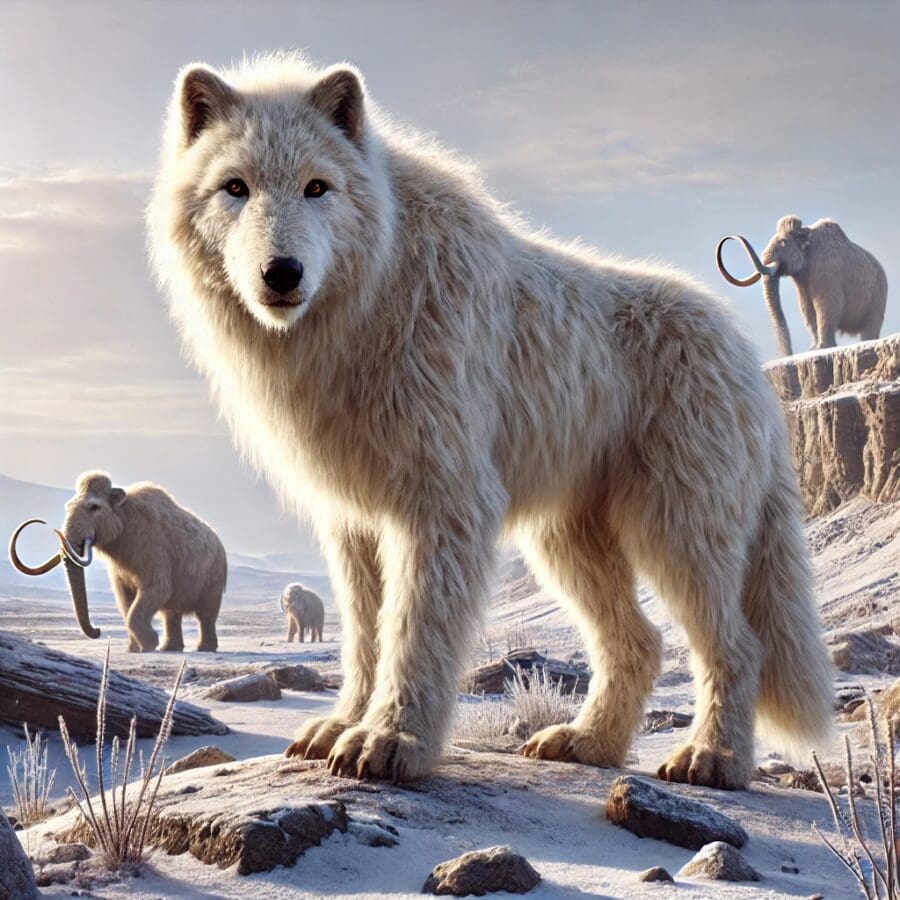
For some, it’s a symbol of wilderness. For others, it’s a predator to be feared. For many, it’s a creature that hovers between memory and myth. Few animals embody that tension more than the dire wolf, long believed to have vanished more than 12,000 years ago.
Now, through the work of Colossal Biosciences, the dire wolf has reappeared in the form of three pups named Romulus, Remus, and Khaleesi. The project has sparked fascination and debate, drawing headlines that place the ancient predator back into public imagination.
At the center of this effort is Matt James, Chief Animal Officer of Colossal Biosciences and Executive Director of the Colossal Foundation.
His comments offer a window into how scientists are approaching not just the prospect of de-extinction but how some in the science community believe it can impact wildlife conservation.
“The big vision of Colossal Biosciences is simply to make extinction a thing of the past. The dire wolf project is proof of concept, but it’s also about creating tools that can prevent other animals from following the same fate.”
The project began not with intact remains but with fragments: a 13,000-year-old tooth and a 72,000-year-old skull. From those samples, Colossal’s team sequenced far more genetic information than had ever been available before.
“We got 500 times more data than we’d ever had on the dire wolf genome, That allowed us to identify the key areas that make a dire wolf unique, and then make those edits into the gray wolf genome.”
Rather than cloning a full dire wolf from ancient tissue, which is not possible given DNA degradation over thousands of years, the team relied on gray wolves as a genetic baseline. Specific edits were introduced to recreate traits associated with the dire wolf: physical size, coat coloration, and other features tied to its identity as a distinct species.
The pups now live in a large preserve, not destined for release but for study.
It’s important to note these animals are not literal re-creations of the extinct species.
Some scientists describe them as genetically edited gray wolves — animals engineered with about 20 targeted changes to mimic key dire wolf traits. As such, the pups are considered proxies that approximate the appearance and biology of dire wolves, rather than true members of a species gone for more than 13,000 years.
According to James, the focus now has been on monitoring their development while keeping animal welfare at the forefront.
“People ask, why not make 20,000 edits? But this is about welfare, We made 20 carefully chosen edits to get the core phenotypes while ensuring the animals’ health.”
The dire wolf carries unusual resonance in the public imagination.
From the Rancho La Brea tar pits to fantasy novels and television series, the animal has long been a point of fascination.
Colossal’s announcement drew attention not only because of its scientific novelty but also because of those cultural associations.
“Everybody knows Game of Thrones. Everybody knows dire wolves. That recognition was intentional. It puts de-extinction, wolf conservation, and biodiversity loss into the zeitgeist.”
The strategy appears to have worked. Discussions of de-extinction are often cloistered within scientific circles, but the dire wolf project placed cloning and gene editing into the spotlight like nothing else in recent years.
For James and his colleagues, the dire wolf project was not an end but a beginning.
The next chapter focuses on an animal still alive, though barely: the red wolf (Canis rufus).
Chester Moore