
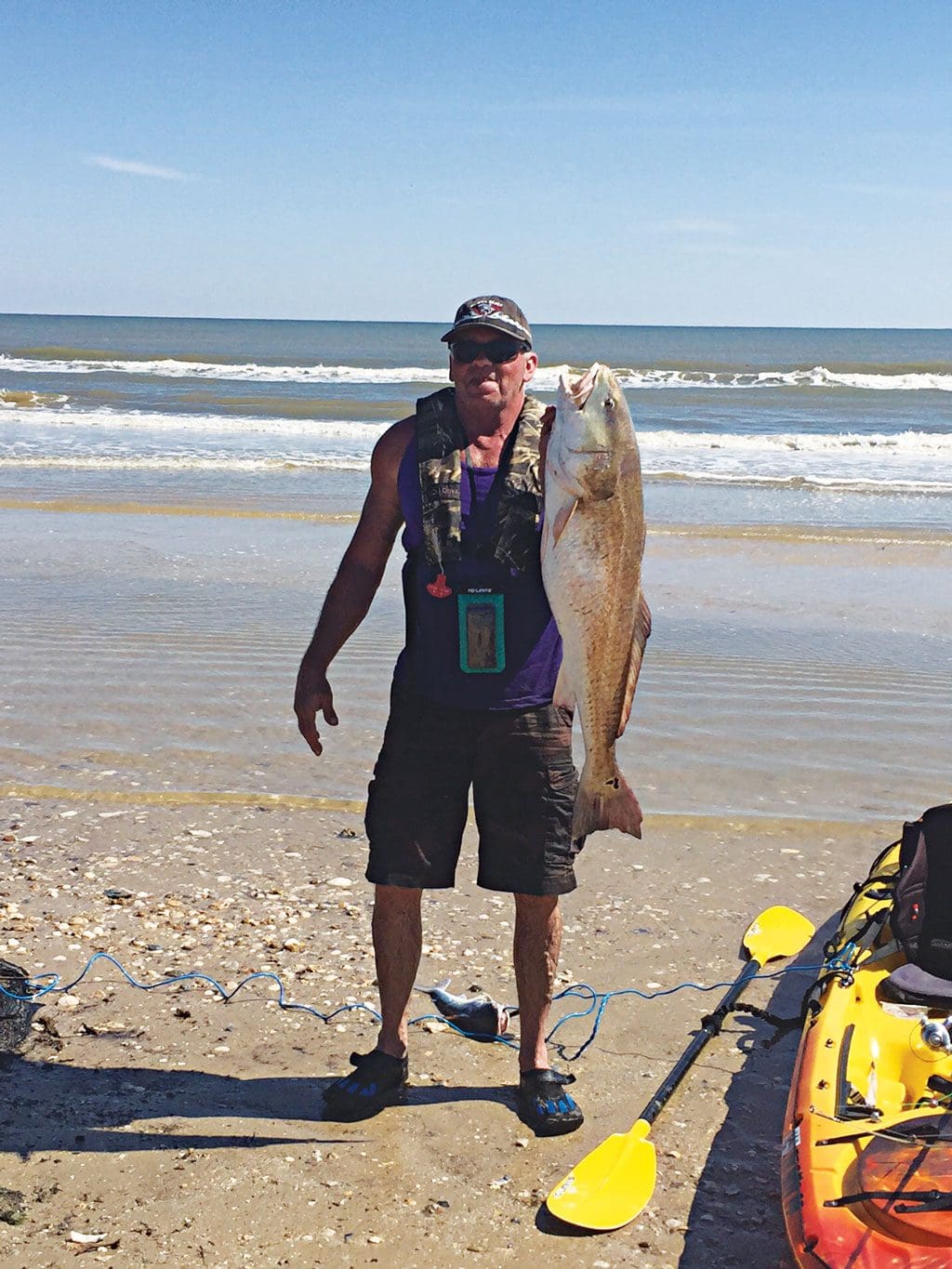
Success in Texas surf fishing starts with learning how to “read” the water. Along the Gulf coast, sandbars and troughs shape the movement of fish. Breaks in the sandbars create cuts—darker, calmer lanes where baitfish and predators travel. These are often prime places to cast.
Don’t overlook the “first gut,” the trough just beyond the shoreline. Many anglers try to cast far out, but redfish, speckled trout, and black drum will feed close on high tides. Watch the waves: where they don’t break, or where water flows differently, you’re probably looking at a deeper cut. Diving birds are another giveaway—they signal that predators are pushing bait toward the beach.
Surf anglers aren’t just sharing the water with redfish and sharks you can see—some of the Gulf’s largest predators cruise just beyond the breakers. From bull sharks in the shallows to massive hammerheads and other offshore giants, the variety may surprise you. Learn more in this guide to the largest sharks in the Gulf of Mexico.
Tides and Moon Phases
Tides drive feeding activity. On the Texas coast, moving water is almost always better than slack tides. Incoming tides, which bring bait into the surf, are especially productive, but outgoing tides can also spark action where water funnels through cuts and channels.
Moon phases matter too. New and full moons bring stronger tidal swings, which often means more active feeding. Around a full moon, night fishing can be outstanding, particularly for trout, sharks, and other predators that use the extra light to hunt.
Rip Currents and Safety
Rip currents are not fishing spots—they’re dangerous hazards. A rip current is a fast-moving stream of water rushing straight back out to sea, and it can pull a person offshore quickly. They don’t concentrate fish, so there’s no reason to fish near one.
To identify a rip current, look for an area where waves break unevenly, the water looks darker, or sand and foam seem to be flowing steadily offshore. Avoid these areas when wading.
If caught in one, don’t fight against it. Swim parallel to shore until you’re out of the current’s pull, then return to the beach at an angle. Wearing a life vest and wading only within your limits adds extra protection.
Gear and Bait Choices
Surf fishing in Texas calls for sturdy gear. Long rods (10–12 feet) help with casting past breakers, paired with reels that hold plenty of line. For bait, fresh is best: live or cut mullet, shrimp, or sand crabs usually outfish frozen options. When conditions are calm, artificial lures like spoons, topwaters, and soft plastics can be deadly.
A strong leader is important, especially since sharks, Spanish mackerel, and other toothy fish cruise the surf. Carry both lighter rigs for trout and black drum, and heavier setups for reds and larger predators.
Seasonal Tips
Each season brings its own opportunities:
-
Spring: Early speckled trout runs. Sharks will start late in the spring.
-
Summer: Sharks, jack crevalle, and large trout closer to shore.
-
Fall: Bull redfish runs and excellent action in cooler weather.
-
Winter: Black drum and whiting, often with less fishing pressure from crowds.
Putting It All Together
The secret to surf fishing in Texas is timing and awareness. Find the guts and cuts, fish moving tides (especially around new or full moons), match your bait to the season, and always respect the ocean’s power.
With practice, you’ll discover why surf fishing is one of the Lone Star State’s favorite outdoor traditions—and one that can fill both your cooler and your memory bank.