
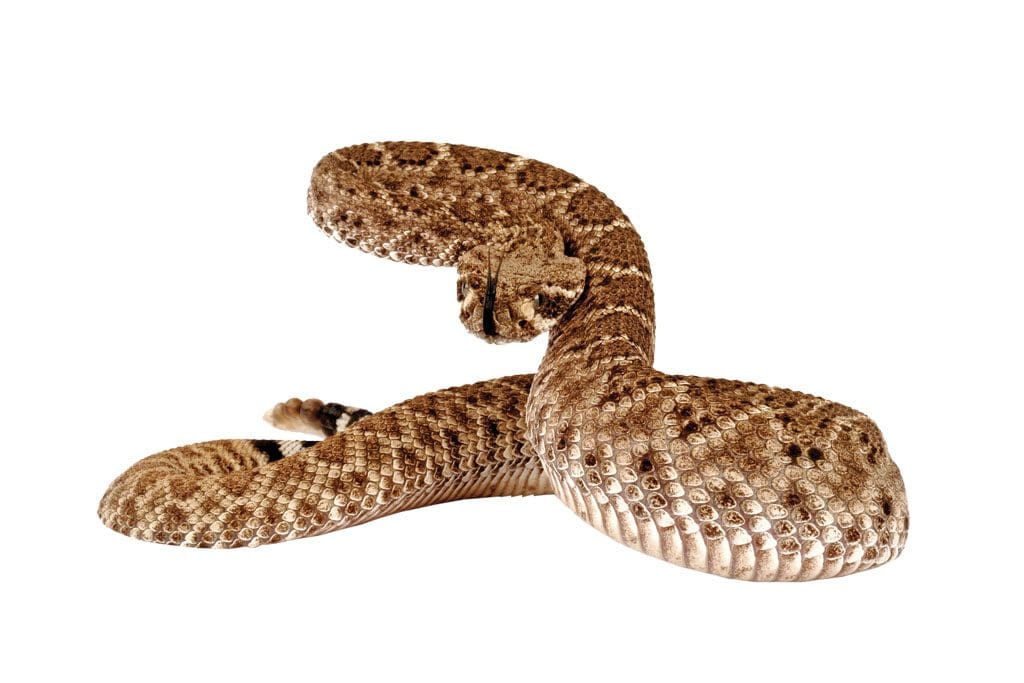
If you spend enough time wade fishing or island-hopping along the Texas Coast, you’ll eventually encounter one of our most misunderstood yet dangerous neighbors—the rattlesnake. From Galveston southward, these snakes are part of the coastal landscape, and their numbers seem to grow the farther down the coast you go. The thickest concentrations occur from the Aransas area all the way into the Lower Laguna Madre, where expansive grass flats, spoil islands, and remote bay systems create prime habitat.
Watch this video about an 11-foot rattlesnake!
Rattlesnakes aren’t confined to brush country or rocky hills. Along the coast, they are surprisingly mobile. Many anglers have been startled to see a rattler swimming across channels or between islands. These snakes are strong swimmers, heads lifted just above the surface, moving with a steady determination that can carry them across surprising stretches of water.
On the hottest days, rattlesnakes will often look for relief. Sometimes that means sliding under boats beached on shore or even swimming toward anchored boats simply to find shade. While this behavior is more about survival than aggression, it can make for a tense moment when a snake seeks cover in the same spot you’re fishing.
When wading or stepping onto a small island, especially on the northern ends of bays where spoil banks and grass thickets dominate, it pays to move carefully. Rattlesnakes use camouflage to their advantage, blending into driftwood piles, shell banks, and grassy hummocks. Many close encounters happen when anglers simply step too close without realizing it. A walking stick or push pole can be an excellent tool to probe cover before stepping, and sturdy footwear adds peace of mind. Move slowly and deliberately. By scanning your surroundings, you give yourself the chance to spot a snake before you’re in striking distance.
Most rattlesnakes want nothing to do with people. If you see one, give it space and let it move off. In the water, steer clear and let the snake swim on its way. On land, back away and circle wide. And never try to handle or kill one—accidents usually happen when someone tries to push their luck.
The Texas Coast is rich with wildlife, and rattlesnakes are simply part of the ecosystem. From Galveston south and especially from Aransas to the Lower Laguna Madre anglers should expect to encounter them. With awareness and respect, you can stay safe and keep your focus where it belongs: on the fish.
If you have any videos or photos of rattlesnakes you’ve encountered while fishing (or hunting) email to cmoore@fishgame.com. We would love to share them.
Chester Moore