
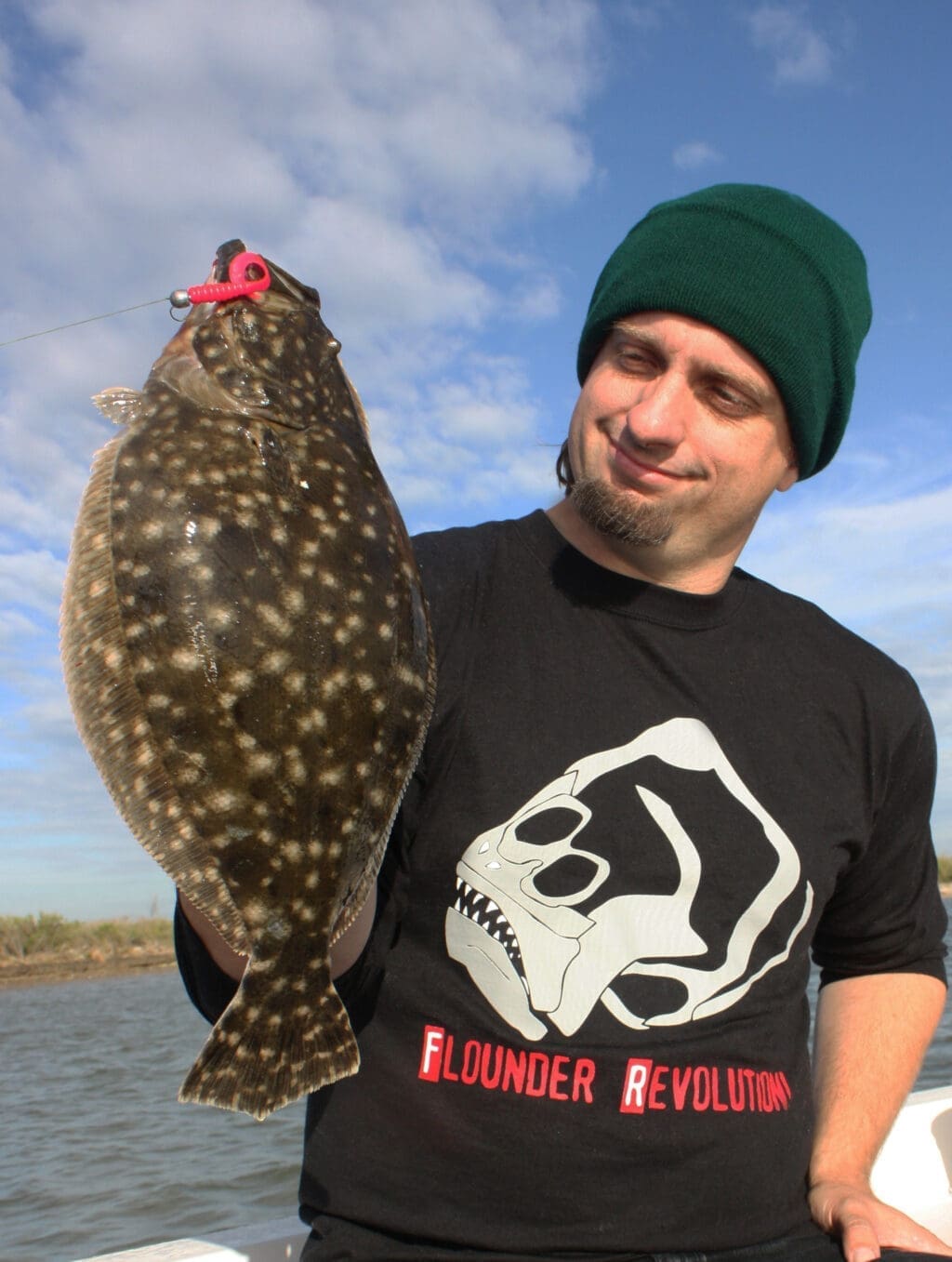
There’s an almost magical window when flounder fishing turns downright electric—and for me, it’s during tropical‑storm tides. Believe it or not, on three different occasions, I’ve experienced the best flounder fishing of my life—all while storm‑tides muddied the bays and stirred up the bait.
Here’s how I do it:
Your first move? Head straight for cuts in bayous, canals feeding into ship‑channels, and any back‑waters inundated with menhaden. These are the secret ambush zones. As Chester Moore writes, “I seek flounder along the main shorelines of bay systems… concentrate on eddies in bayous and along ship channels” where menhaden accumulate
Menhaden (aka pogies or shad) are the flounder’s favorite easy meal. These little fish often gather in slack‑water eddies and give ambush‑hunters like flounder prime pickings FishGame. I’ve seen flounder literally jumping out of the water to eat them during storm tides—on one legendary trip during the surge of Hurricane Alex, I fished a cut packed with menhaden and was pulling flounder after flounder for hours FishGame+1.
I fish along those cuts with a 3‑inch Sassy Shad or a 3‑inch Twister Tail in natural colors unless the water is murky and then I use pink. I thread it onto a 1/8‑ounce jighead and tip it with a bit of shrimp. That shrimp tip gives me just enough scent and texture to entice even a lethargic flatfish. It’s simple, effective, and my go‑to during dirty, roiling water.
Storm tides crank up the water, push bait into unusual places, and force menhaden into tight ambush corridors. You might not even need a full hurricane—just a weak tropical system that raises tides and shakes things up can kick the bite into high gear FishGame. On three separate trips, I’ve had absolutely explosive success in these muddy, stirred‑up settings.
What If We Don’t Get a Storm? Early-Season Strategies
Let’s hope a storm doesn’t have to turn down—but if it doesn’t, don’t sweat it. There’s still an excellent bite window in late August to early September, just a couple months ahead of the full fall run.
-
Watch for cool fronts—even small ones help. After these fronts pass, flounder start staging in main channels and moving in from the marsh
-
Be aware of barometric pressure—high pressure often makes fish finicky; falling or lower pressure trends are better.
-
Focus on small eddies and drains, especially along roseau-cane shorelines. As water falls, menhaden are pushed out, and hungry flounder follow. Narrow your search rather than covering endless shoreline
You might be fishing in a cut that most anglers overlook—muddy, wild, storm-driven—and there you are, watching that 3-inch Sassy Shad disappear into the murk as a hefty flounder strikes. That’s storm-tide magic. And on those non-storm days? Play the front-window game: watch the weather, ride the tides, hunt eddies, and you can still find the bulls of the bay before the mainstream fall migration hits.
Chester Moore