
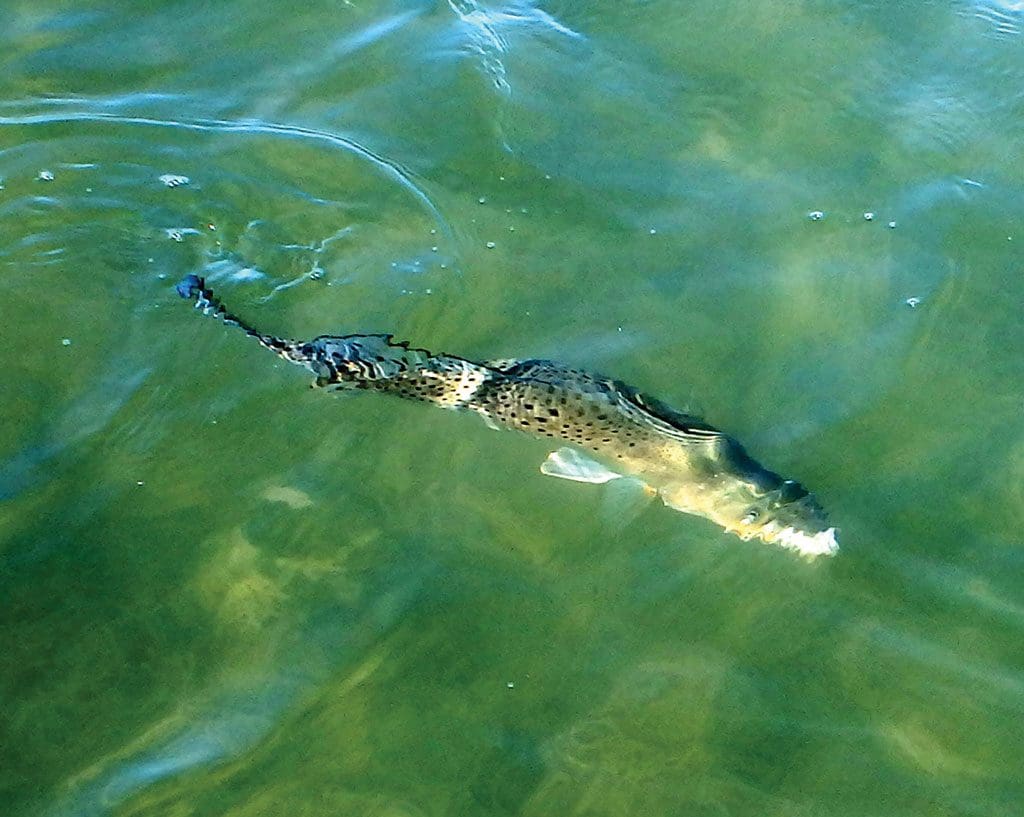
September along the Texas coast is a month of transition, when the heat of summer starts to ease and the first hints of fall roll through with light cold fronts. For anglers chasing specks, it’s one of the most exciting times of the year — baitfish are on the move, water temperatures begin to shift, and the trout respond with aggressive feeding patterns. Knowing where to be and what conditions to watch for can make all the difference in turning an ordinary trip into a memorable one.
1. Work the Early Morning and Late Evening Bites
September still holds summer heat, so trout often feed more aggressively at first light and again before sundown. Wade fishing along shorelines with live shrimp under popping corks or topwater lures can produce solid bites when the water is cooler and baitfish are moving.
2. Adjust to the First Light Cold Fronts
When those early season cool fronts slide through, the wind usually shifts north and pushes water out of the bays. That’s when it pays to target bayou mouths, drains, and channels where bait is funneled. Trout will stage in these spots to ambush easy meals flushed out by the falling tide.
3. Follow the Bait Over Grass and Shell
As September transitions toward fall, mullet and shrimp start moving in bigger schools. Look for slicks, nervous water, or bird activity over grass beds and shell reefs. Throw soft plastics on jigheads or suspending twitch baits to match what the trout are feeding on, and be ready for quick flurries of action when the bait shows up