
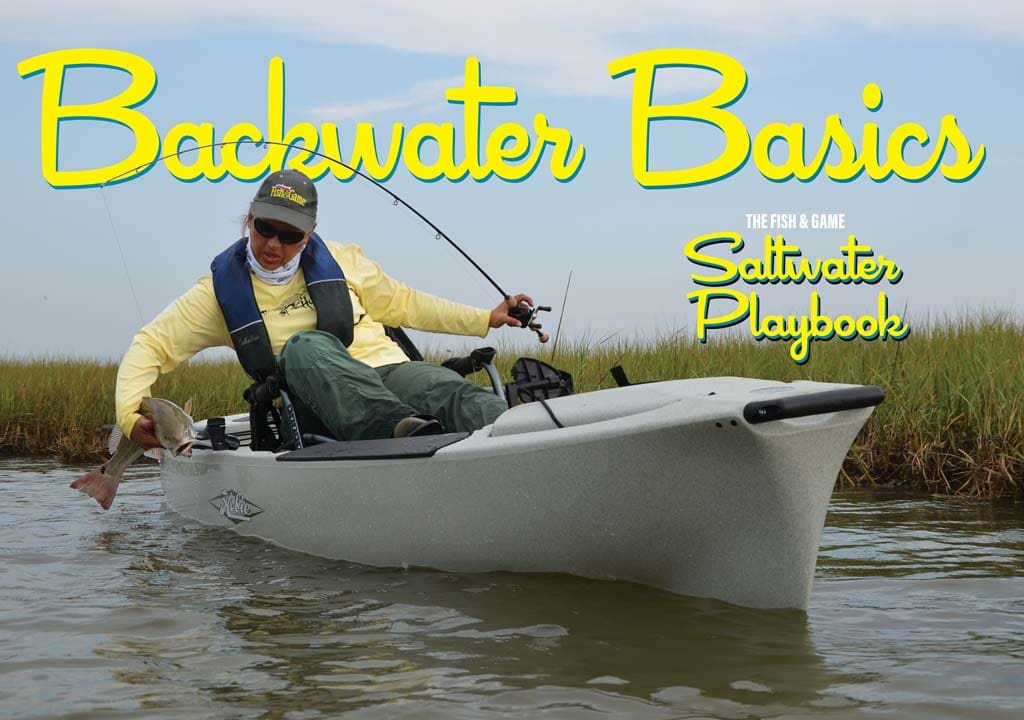
Kayak Strategies for Reds & Black Drum
Feature Article by CHESTER MOORE
LISTEN: (5 min, 56 sec)
SLIDING A KAYAK into a quiet marsh or back bay at first light is one of the purest forms of saltwater fishing. No outboard motor noise, no wake, no pressure—just you, the paddle, and fish that haven’t been spooked yet. It’s here, in the skinny water and winding back creeks, that redfish and black drum thrive.
And if you learn how to approach them the right way from a kayak, you can experience some of the most consistent, exciting inshore action Texas has to offer. This installment of the Fish & Game Saltwater Playbook Series is all about practical strategies for chasing reds and black drum in backwaters from a kayak.
There’s a reason kayaks have exploded in popularity for inshore anglers. They can go where flat boats can’t, like ankle-deep marsh drains, oyster-lined creeks, and grass flats. For redfish, which love cruising skinny water looking for shrimp and crabs, kayaks are the ultimate equalizer.
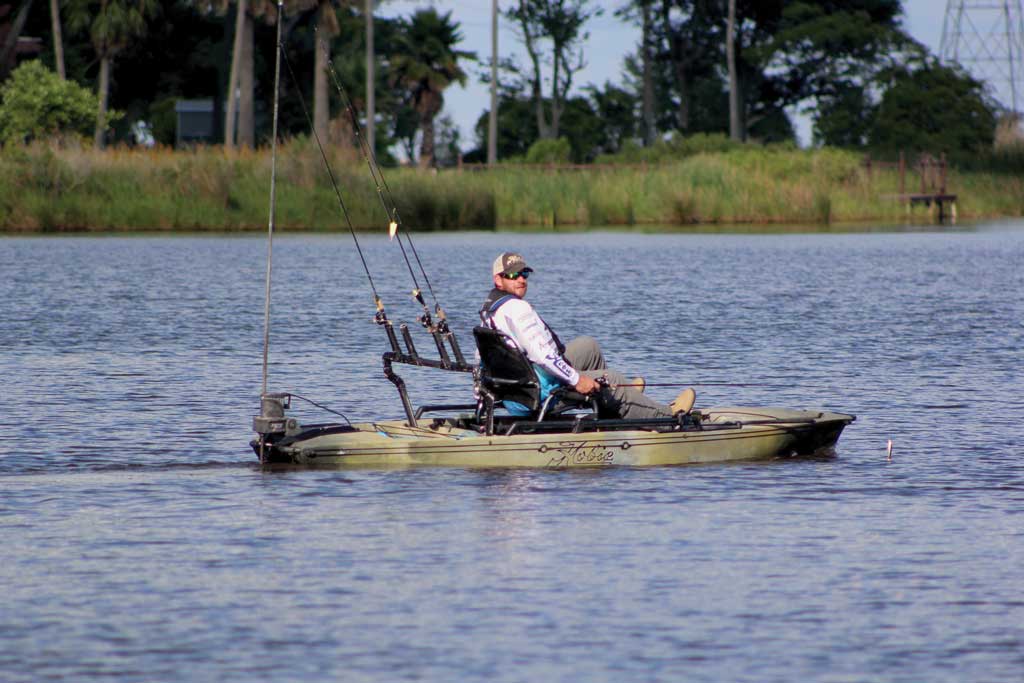 Kayaks can get you where other boats can’t.
(Photo: CHESTER MOORE)
Black drum, meanwhile, may not get the same hype, but they also love soft, shallow bottoms. They root around for crabs, shrimp, and small mollusks in water you’d swear was too thin to hold fish. A kayak lets you reach them quietly, set up without disturbing the school, and hook up where boat traffic rarely intrudes.
The beauty of kayak fishing is you don’t need a huge arsenal. A 7’ medium-heavy spinning rod with 20–30 lb. braid is a versatile workhorse. It can handle bull reds but still has finesse for slot fish. A lighter 7’ medium spinning setup with 10–15 lb. braid is great for smaller drum and finesse presentations. For leaders, 20–30 lb. fluorocarbon is plenty for reds, and up to 40 lb. is smart for big black drum. Circle hooks in the 2/0–4/0 range are perfect for natural baits, while 1/0–3/0 hooks match most artificial presentations. For lures, redfish love paddle tails, shrimp imitations, gold spoons, and topwater plugs at dawn or dusk. Black drum aren’t as lure-oriented, so natural baits like cracked blue crab, shrimp tipped on jig heads, or small crabs under popping corks usually win. Round out your gear with a stake-out pole or folding anchor, polarized sunglasses, and a compact net.
Stealth is everything in the backwater. Both reds and drum are incredibly sensitive to pressure waves and noise. A single paddle slap or dropped plier can spook an entire school. Enter the marsh slowly with smooth paddle strokes, and in very shallow water, consider poling or pushing instead of paddling. Secure your tackle so nothing rattles and let the tide carry you when possible rather than forcing yourself into position. The goal is to move like a heron: quiet, slow, and deliberate.
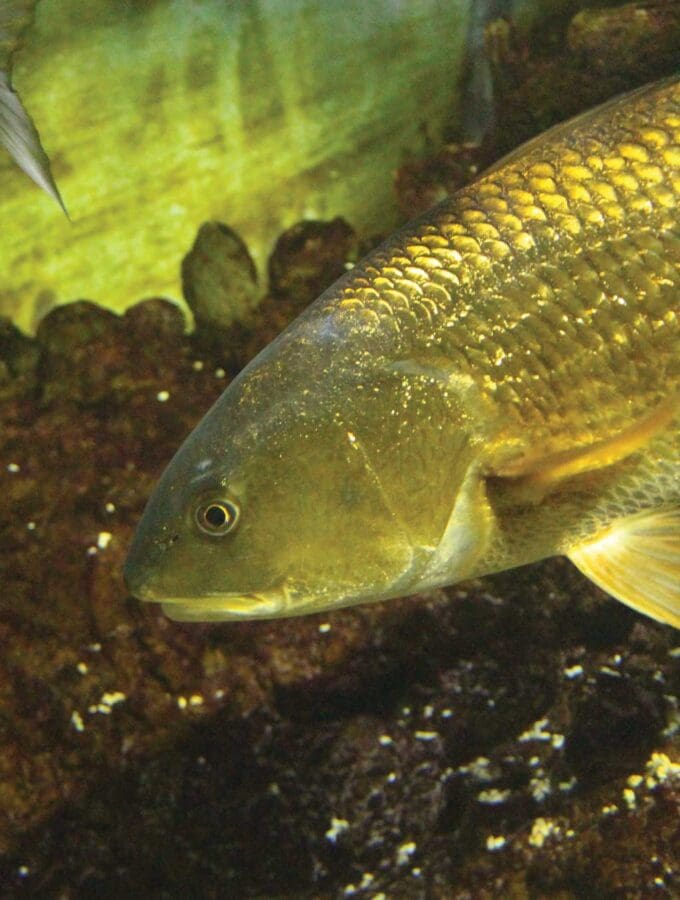 Redfish feeding in the shallows puts them in position for kayak angers.
(Photo: Chester Moore)
The hardest part for new kayak anglers is knowing where to start. The keys are water movement, structure, and signs of life. Marsh drains are classic ambush points, especially on an outgoing tide pulling shrimp and baitfish into the main channel. Oyster beds are magnets for both reds and drum. Reds patrol the edges, while drum root directly in the shell for crabs. Mud flats attract drum that feed nose-down, and you can often spot them by the puffs of mud they stir. Any sign of life is worth investigating—nervous water, tails or backs breaking the surface, or bait scattering ahead of a push wake.
When you spot reds, accuracy is critical. Cast slightly ahead of a moving fish and let your lure or bait intersect naturally with its path. Gold spoons are timeless because they flash and wobble even on a slow retrieve. At first light or dusk, a walk-the-dog topwater can trigger spectacular strikes. If reds are tailing in grass, a weedless shrimp imitation or paddle tail on a light jig head gets in front of them without fouling. Black drum require a different approach. They’re more about rooting than chasing, so patience is key. Cast cracked blue crab or shrimp into an area where you see them tailing or stirring mud. Let the bait sit, and when you feel steady weight, simply reel down with a circle hook and apply pressure. Hooking a 30-pound black drum from a kayak is a workout you won’t forget.
Positioning can make or break a trip. In shallow mud or sand, use a stake-out pole to quietly pin your kayak in place. In deeper water, a small folding anchor works if dropped gently. Always position yourself so current or wind drifts your bait naturally toward the fish, because unnatural presentations will spook both reds and drum.
Backwater kayak trips can be magical but also demanding. Always wear a PFD, pack plenty of water, and know the tides. Nothing is worse than getting stranded in ankle-deep marsh on an outgoing tide. And while both species make excellent table fare in the slot, consider releasing the larger breeders. Big drum especially are critical to sustaining the fishery. Practicing selective harvest ensures these experiences will be around for years to come.
Backwater kayak fishing for reds and black drum strips the sport down to its essence.
No noise, no motor, no distractions. It’s just you, the paddle, and the fish. It’s a return to basics that forces you to rely on stealth, patience, and observation.
Master those fundamentals and you’ll discover that reds and drum aren’t just fish to catch; they’re teachers. They show you how to slow down, pay attention, and fish with purpose. Slide that kayak off the bank, dip your paddle quietly, and head into the marsh. The reds will be tailing, the drum will be prowling around, and if you do it right, you’ll find yourself hooked on the backwater game forever.
—story by CHESTER MOORE
Kayak Construction
