
Across Texas, from the piney woods of the east to the mountains of the far west, a quiet comeback is underway. Black bears once nearly wiped out from the state are returning.
It started in East Texas. Game cameras in places like Rusk and Anderson Counties began catching grainy nighttime images of a dark figure moving through backyards and creek bottoms. Locals couldn’t believe it: bears were back where they hadn’t been seen in decades. Wildlife biologists say these are likely young males dispersing from Louisiana and Arkansas, following rivers, forests, and food sources into new territory. For many East Texans, it’s a reminder that the wilderness isn’t as far away as it once seemed.
Check out this new video on bears in Texas.
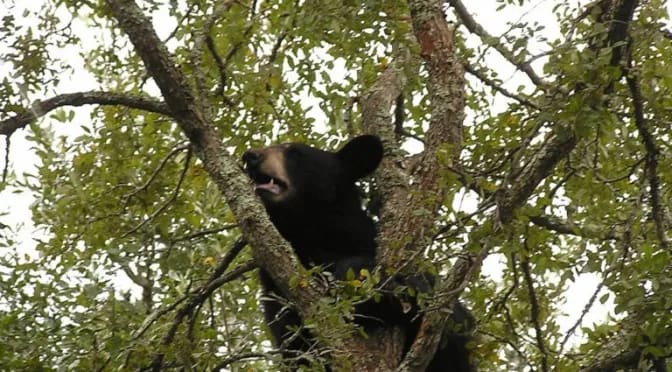
Then came the Bay City bear — a young black bear spotted high in a live oak near the Gulf Coast. Hunters out for hogs stumbled on the sight, stunned to find such an animal so close to the shoreline.
No one knows how it got there. Some believe it wandered from the pine forests in the east; others think it may have traveled all the way from West Texas. Either way, the photo of that bear in a coastal tree became a symbol of wild Texas returning.
In the Trans-Pecos, the comeback is strongest. Along the rugged ridges of Big Bend and the Davis Mountains, black bears are once again denning, raising cubs, and crossing highways under the desert moon. They’re reclaiming old ground, step by step, paw print by paw print.
A Big Black Phase Bear On the Same Game Gam
From the swamps of the Sabine to the cactus flats of the Rio Grande, the bears are back — and Texas is a little wilder for it.