
Improved Conditions Spur Cautious Optimism After Decades of Declining Quail Numbers
Feature Article by TF&G Staff
LISTEN: (6 min, 49 sec)
ASK ANY VETERAN QUAIL HUNTER in Texas and you will hear the same story. There were times when coveys seemed to flush under every mesquite, when a good dog could find birds in county after county, and when quail hunting was not just a pastime but a way of life across rural Texas. Those days are not gone entirely, but they are far harder to find, and the statistics bear it out.
For decades now, quail numbers have trended downward across most of the state. Annual roadside surveys conducted by the Texas Parks and Wildlife Department show a steady long-term decline in bobwhite quail since the 1970s, punctuated by brief spikes in good years when weather lines up just right. Biologists describe it as a boom-and-bust cycle, but with each bust the overall baseline drops lower. Hunters have felt that change in real time. Surveys of residents suggest the number of active quail hunters has dropped by well over half since the 1980s, a reflection not only of bird numbers but of access and opportunity shrinking alongside them.
The most recent statewide survey, last year’s report, showed why the story is complicated. After good early rainfall in the spring of 2023 and another decent pulse in 2024, bird counts in several regions improved.
But optimism has limits. Other regions remained below average, and the overall distribution of birds is much narrower than it once was. Bobwhites historically occurred in all ten of Texas’ ecoregions. Today, their strongholds are essentially South Texas brush country and patches of the
Rolling Plains, with scattered pockets elsewhere only when weather cooperates. That contraction of range is the quieter story which is less visible than a single dry year, but more impactful over the long haul.
Habitat is the culprit most often named, and for good reason. Bobwhites need a very particular mix: bare ground interspersed with native grasses and forbs, herbaceous cover for brooding, and brush clumps for loafing and predator escape. Fragmentation and land-use changes have chipped away at that recipe.
In some regions, heavy grazing has simplified plant communities; in others, fire suppression has allowed woody plants to choke grasslands. In much of East and Central Texas, non-native grasses dominate fields once filled with quail-friendly forbs. All of that adds up to landscapes less forgiving for a bird that lives and dies on nesting success and brood survival.
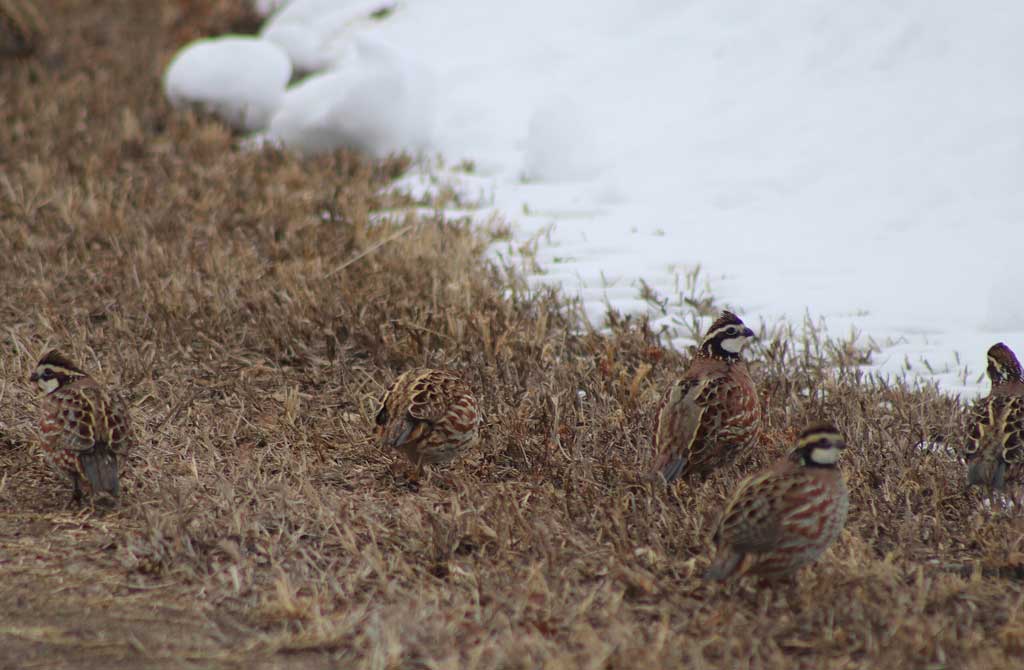 Quail are a classic game bird and their story in Texas is filled with tragedy and triumph.
(Photo: Public Domain)
Weather overlays the habitat story like an amplifier. Bobwhites can respond explosively when conditions are right. One wet spring can produce multiple nesting attempts, with insects booming to feed young chicks. Two or three such years in a row and quail numbers can feel like they have doubled overnight. But drought suppresses nesting, limits insects, and leaves hens too stressed to raise young. The statewide surveys from last year showed exactly that: a modest rebound in many regions thanks to timely moisture but capped by summer heat that limited late nesting.
Then there are the other stressors. Parasites and disease drew national attention during the “quail crash” years of the early 2010s, when researchers in the Rolling Plains documented unusually heavy parasite loads in bobwhites. Later studies emphasized that such issues are closely tied to habitat and weather. Large ranches in South Texas, where habitat mosaics remain intact, seem less affected. The point is less about a single silver bullet and more about how multiple pressures stack up on already stressed bird populations.
The long-term numbers underline the shift. Breeding Bird Survey data estimate bobwhites in Texas declined by roughly four percent annually between 1980 and 2005. Other TPWD reports note that since 1980, bobwhite populations overall have declined more than five percent annually and scaled quail in West Texas by nearly three percent each year. Harvest records tell the same story, with statewide quail harvest falling by more than eighty percent over the past three decades. Even scaled quail, often considered tougher than bobwhites, show similar downward trends.
So what does this mean for hunters today? For one, quail hunting has become far more regional. If you want a realistic shot at multiple coveys, South Texas remains the crown jewel. Wildlife researchers estimate that ten to twelve million acres there still support self-sustaining populations, thanks in part to large ranches managing habitat for both cattle and wildlife. The Rolling Plains can still light up after a wet year, but it is patchier and more fragile than it used to be. Elsewhere, quail have become incidental, something you might bump while deer hunting or walking a fencerow, not the centerpiece of a season.
It also means that “when” has become as important as “where.” Hunters who track rainfall totals in late winter and spring, and who follow TPWD’s annual roadside reports, can time their hunts for the years when birds actually boom. Quail production hinges on nesting cover, insect pulses, and survival through summer—factors tied directly to rainfall. Last year’s statewide report proved the point: the regions that caught timely rains saw noticeable bumps, while the ones that missed out lagged behind.
Finally, expectations need adjusting. Even in a good year by modern standards, most hunters will not see the kind of covey numbers their grandfathers remember. Access is limited, leases are expensive, and public lands are scattered. That does not mean quail hunting is gone, but it does mean the hunter who celebrates each covey rise, each point, and each flush will be happier than the one who measures success only in a heavy game bag.
The decline of quail hunting in Texas is a sobering story. But it is not entirely grim. The birds are still here, and in the right conditions they can still put on a show that rivals anything from the so-called glory days. If you want to help, the path is clear: conserve and restore habitat on the land you can influence, support research and organizations dedicated to quail, and hunt responsibly when numbers are down. And when the rains come, as they did last year, be ready, because the land still remembers, and quail can still remind us why their rise from the grass is one of the greatest thrills in hunting.
—story by TF&G Staff
DIGITAL BONUS: Stewarding the Future of Hunting
