
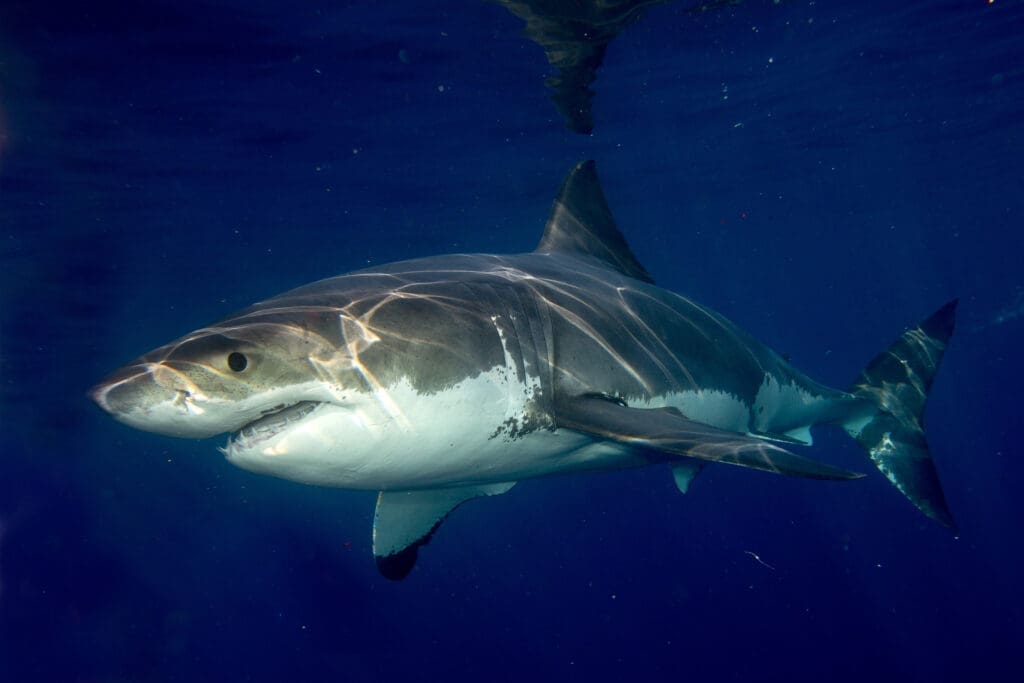
For years, the idea of Great White Sharks roaming the Texas coast has been treated as dock talk—interesting, exciting, but not taken too seriously. Yet the history of whites in the Gulf of Mexico, including Texas waters, is more extensive than most people realize. Your ongoing effort to compile old reports, newspaper accounts, and modern observations shows that the story is broader than a single sighting or headline.
Watch the latest video update here.
Great whites have been verified here for generations. One of the earliest confirmed Texas cases dates back to 1950, when The Brownsville Herald reported a seven-foot great white caught 12 miles off Port Aransas. Days later, another reported catch measured over twelve feet. These encounters were documented at the time, but like many wildlife records from that era, they faded into the background over the decades.

Additional Texas mentions add weight to the historical record. In 1964, a large great white was observed near an offshore platform in Texas waters. In 1978, after a tropical storm, a juvenile great white shark was caught near San Luis Pass, at the mouth of Galveston Bay. And in 2005, a charter captain reported a 14- to 15-foot great white near an offshore rig roughly 56 miles out of Sabine Pass, on the Texas–Louisiana line. These isolated reports don’t imply abundance—but they do establish a long pattern of white sharks occasionally entering Texas waters.
Then came the modern confirmation. In 2021, Texas Fish & Game broke the story of a satellite-tagged great white pinging off the Texas coast. For many people, this was the first contemporary, scientifically verified acknowledgment that whites still pass through the region. It aligned with what shark-tracking programs already knew: great whites make long seasonal movements, and the Gulf of Mexico is a known part of the broader North Atlantic white shark range—rarely used, but unquestionably used.
Beneath Gulf waters swims a cast of giants—sharks that can exceed 10, 12, even 15 feet in length. From aggressive hunters to wide-ranging ocean cruisers, these species play a major role in the marine food chain. This breakdown of the biggest sharks in the Gulf of Mexico reveals just how diverse—and impressive—they really are.
Recognizing that Texas-area reports existed but were scattered among newspapers, memories, and small notes in older publications, I created the Gulf Great White Shark Sightings Database at GulfGreatWhites.com. The purpose isn’t to replace scientific research or make sweeping claims. Instead, it’s to preserve anecdotal reports, historical references, and modern sightings in one place so they aren’t lost over time.
Just as importantly, the database exists to complement—not rival—the organizations advancing actual shark science. Groups like Ocearch, the Harte Research Institute, and the Atlantic White Shark Conservancy have produced world-class studies using satellite tags, acoustic arrays, and long-term tracking. Their work provides the backbone of our scientific understanding. My database simply collects the human side of the record: the sightings, clippings, and stories that add texture to the scientific picture.
Every submission helps. Whether it’s an old photo from a Port Aransas dock, a memory of a pale-sided shark cruising near an offshore platform, or a modern sighting caught on video, these accounts contribute to a fuller understanding of a rare visitor to Texas waters.
If you’ve seen or documented something unusual offshore, you can share it at GulfGreatWhites.com—helping preserve the historical record of one of the Gulf’s most unexpected guests.
Or you can email chester@chestermoore.com
Chester Moore