
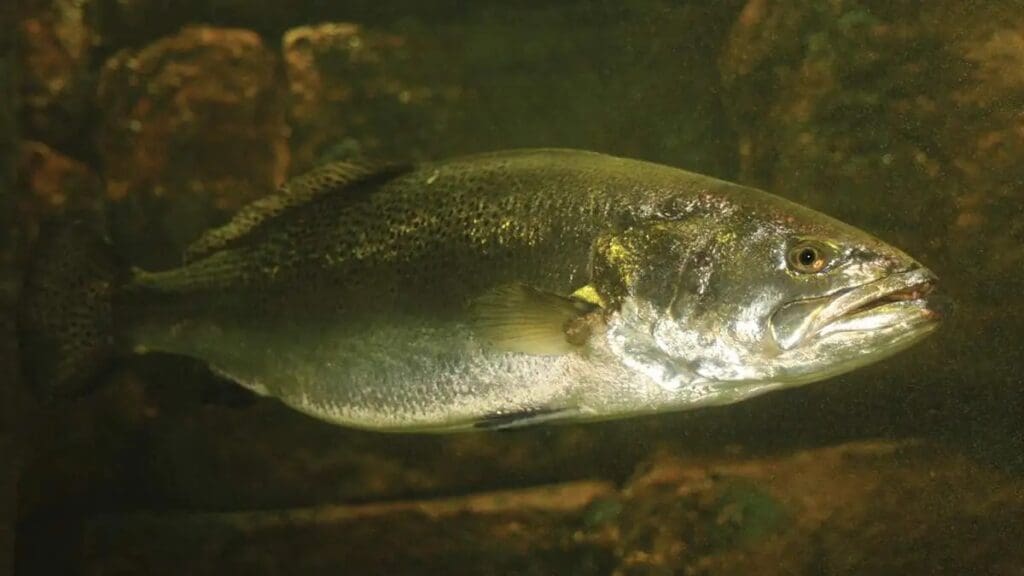
For decades along the northern Gulf Coast, anglers have shared stories of monster speckled trout—fish so long and heavy they seem more at home around nearshore reefs and rigs than in shallow bays. While most specks spend their lives inside estuaries, a combination of Louisiana research and Gulf-wide studies shows that the nearshore Gulf is where the largest trout are consistently found.
Louisiana Sea Grant’s Spotted Seatrout fact sheet states it plainly: “The largest trout are taken in the spring, next largest in winter, then fall and summer, out in the Gulf.” This lines up with long-held angler observations—Gulf waters, with their stable salinity, abundant forage, and expansive habitat, foster the growth of true trophy specks.
The Gulf States Marine Fisheries Commission’s report “The Spotted Seatrout Fishery of the Gulf of Mexico, United States” (Smith et al.) reinforces this, noting that adult trout commonly associate with “sand, sand-mud, or muddy areas, oil platforms, and shell reefs.” Much of this structure lies in or adjacent to the nearshore Gulf. For decades, oil rigs were especially productive for trout anglers—offering shade, bait, and current lines that attracted big fish. But with the removal of many nearshore rigs over the last several years, angler pressure on these fish has dropped dramatically. Today, large specks roaming the Gulf often live in places most fishermen rarely visit, leaving a population of big trout that encounters far fewer artificial lures than their bay-dwelling counterparts.
Tagging studies add still more insight. Specks were long thought to be almost entirely home-range fish, but tracking work shows a more nuanced picture. Louisiana Sea Grant summaries note that roughly 90% of tagged trout are recaptured within a mile of their release point—yet rare cases show significant movement, including trout tagged in Calcasieu Lake later recaptured roughly 96 miles away in Atchafalaya Bay. These exceptions highlight that some mature trout broaden their range, using Gulf-connected habitats when conditions favor food, temperature stability, and spawning behavior.
Across the Gulf, researchers have noted similar tendencies: the biggest, oldest trout are often the ones most likely to shift between bay mouths, surf zones, barrier-island beaches, nearshore reefs, and offshore structure. These movements tend to peak in spring when baitfish concentrate and spawning activity ramps up.
Taken together, the findings paint a clear picture:
-
Oil platforms, reefs, and jetties provide ideal growth conditions.
-
Tagging studies show that larger fish are more mobile and more likely to use Gulf habitat.
-
Reduced fishing pressure, especially after the loss of many nearshore rigs, means these Gulf trout experience far less angler interaction.
-
Seasonal shifts, particularly in spring, lead mature fish out of the bays and into more stable Gulf waters.
Given all this, there are almost certainly many speckled trout that spend most of their lives in the Gulf and never enter a bay at all, or if they do, it may be only briefly, tied to spawning or a narrow feeding window.
If you’ve caught big specks offshore email cmoore@fishgame.com.